Jerome Powell Just Made a Shocking Announcement—You Won't Believe What This Means for Your Wallet!

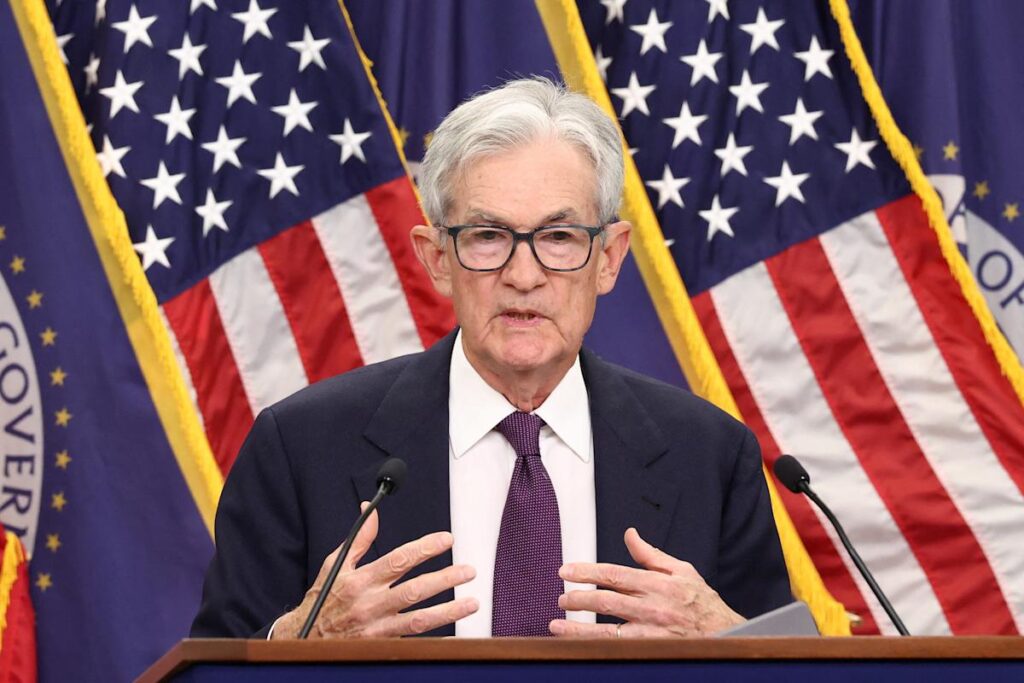
In a surprising turn of events, Federal Reserve Chair Jerome Powell announced on Wednesday that he will remain at the central bank as a governor, following his current term's end on May 15. This decision comes amidst unprecedented legal pressures on the Federal Reserve, which Powell described as "battering" the institution. He expressed concern that these legal challenges could jeopardize the Fed's ability to conduct monetary policy free from political influences.
Powell stated, "These legal actions by the administration are unprecedented in our 113-year history. I worry that these attacks are battering the institution and putting at risk the thing that really matters to the public, which is the ability to conduct monetary policy without taking into consideration political factors." He indicated that he will stay on for “a period of time to be determined,” emphasizing that he will leave when he feels it is appropriate to do so.
His decision diverges from the path taken by his immediate predecessors, including Janet Yellen, Ben Bernanke, and Paul Volcker, who all resigned their positions as governors the same day they stepped down as chairs. Historically, only Arthur Burns and Marriner Eccles have chosen to remain on the board after their chair tenures, with Burns staying for just two months and Eccles for three years.
The political landscape around Powell’s decision is complex, as it sets up potential tensions with President Trump, who has been vocally critical of him. Trump remarked, "I’ll have to fire him," recently indicating his disapproval of Powell's tenure. However, Trump’s ally, Kevin Warsh, has been nominated as Powell's likely successor, but he is expected to fill a seat currently held by Stephen Miran, another Trump appointee.
As Powell navigates these challenges, a significant issue looms over his leadership: a criminal investigation into his testimony regarding renovations at the Federal Reserve’s headquarters. In March, he had stated that he would not leave the Board until the investigation concludes with “transparency and finality.” Recently, U.S. Attorney Jeanine Pirro announced that her office would "close our investigation" and hand it over to an internal Fed probe, though she warned that she would "not hesitate to restart a criminal investigation should the facts warrant doing so."
As the Senate Banking Committee advanced Warsh's nomination on a party-line vote on Wednesday, some Democratic leaders, including Senator Elizabeth Warren, expressed concerns that Trump is using the threat of criminal prosecution to undermine Powell's authority. Warren claimed that Trump continues to wield “the sword of criminal prosecution” over the Fed, thereby maintaining a state of uncertainty regarding Powell's future.
The landscape of the Federal Reserve is significant not only for the institution itself but for the broader U.S. economy. Powell has been at the helm for eight years, first nominated by Trump in 2018 and reappointed by President Biden, guiding the Fed through various economic shifts and challenges. By opting to stay as a governor, Powell retains voting power in shaping U.S. monetary policy until 2028, a move that could have lasting implications for American economic strategy.
As the debate around Powell's position continues to unfold, it is clear that his tenure at the Federal Reserve will be influenced by not only economic conditions but also the complex interplay of political dynamics. The decisions made in the coming months, particularly regarding the ongoing investigation and the prospective leadership of the Fed, will be closely monitored by markets and policymakers alike.
Are You Prepared? Experts Predict a Shocking 6% Stock Surge by 2026—Don't Miss Out!

Disney's Shocking New Rule: Will You Be Forced to Use Your Phone in the Parks? Find Out Now!

Trump's Shocking Surprise for Artemis II Crew: What He Revealed Will Leave You Speechless!

Scientists Uncover Shocking Genetic Secrets Behind Blindness—Are You at Risk?

Salah's Shocking Return: Will He Risk It All to Save Liverpool's Season? You Won't Believe What Happens Next!

You Won't Believe Which Teams Are Facing Off in the 2026 Women's Soccer Schedule—Get Ready for Shocking Showdowns!
You might also like: