
Is Social Media Destroying Democracy? Obama’s Ex-Advisor Reveals Startling Truths You Can’t Ignore!

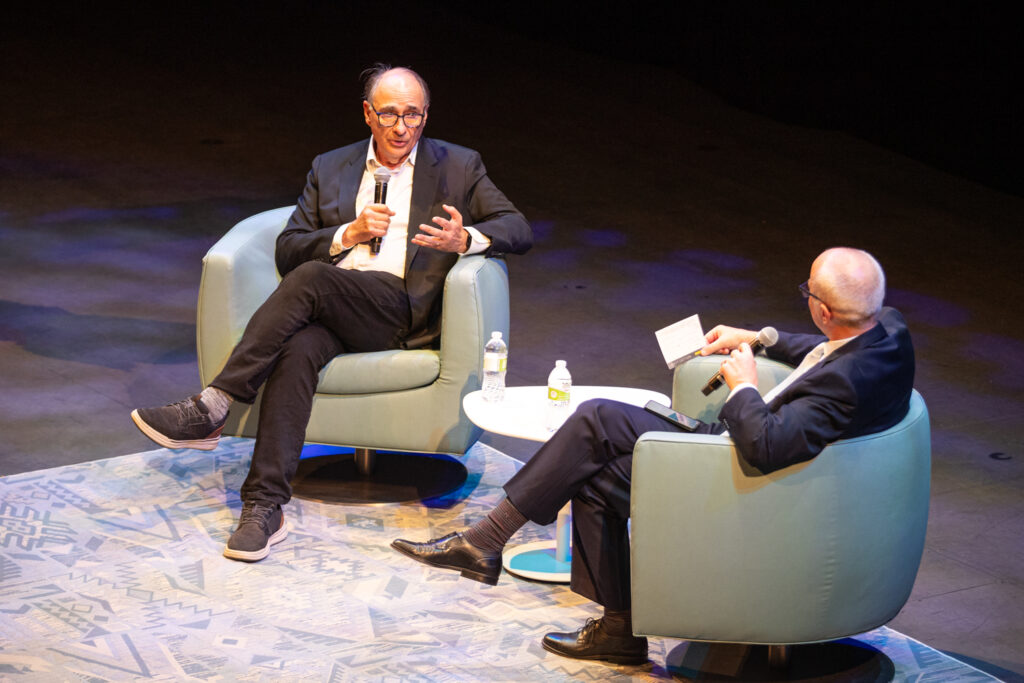
David Axelrod, former chief strategist to President Barack Obama, made a notable return to Iowa on April 28, sharing insights drawn from decades of experience in American politics. Speaking at the Hancher Auditorium as part of the University of Iowa’s Levitt Lecture Series, Axelrod addressed around 1,400 attendees, reflecting on the broader forces shaping today’s political landscape.
Axelrod’s journey, which spans an early career in journalism to pivotal roles in presidential campaigns and policymaking, allows him a unique perspective on contemporary issues. During the event, moderated by Ben Kieffer from Iowa Public Radio, he discussed not only his time in the Obama administration but also the impact of social media on political discourse.
In his introduction, Todd Pettys, dean of the UI College of Law, emphasized Axelrod's significance in American political analysis, stating, “David Axelrod, one of the most prominent political strategists in the United States and former chief strategist for Barack Obama, remains a central voice in American political commentary.”
Axelrod voiced concerns regarding social media, which he argues has redefined political engagement. “We’re more connected than we’ve ever been, and we’ve never been lonelier,” he noted, criticizing the profit-driven algorithms of social media platforms that exacerbate division rather than fostering community. He elaborated, “Rather than bringing us together as one community, the profit model for these social media platforms is to find out what it is that they just want to keep us online.”
This polarization, he suggested, is intensified by how these platforms operate, which creates a cycle of confirmation bias. Axelrod described former President Trump as “a human algorithm,” one who instinctively channels and amplifies the division prevalent in American politics. “In that silo, our views are always affirmed, but not always informed,” he added. This environment, he argued, presents a dangerous dynamic where differing viewpoints are not just seen as alternative perspectives but as threats.
Despite this bleak assessment, Axelrod advocated for the possibility of rebuilding connections through personal stories and empathy. “We all have stories, and what I find is that when you find out people’s stories, there’s always something that binds you to them,” he explained. He urged the audience to resist the temptation to caricature one another and instead delve deeper to understand our shared humanity.
He warned that the current pace of change in politics and society is “moving faster than our ability to fully understand or contain it,” likening it to a “runaway train.” This urgency is compounded by a shift in political dynamics, particularly in Congress, where Axelrod noted a sharp departure from previous eras of accountability. He highlighted how party loyalty and fear of retaliation now overshadow institutional checks on executive power.
Axelrod pointed to the challenges Republican lawmakers face in breaking away from Trump’s influence, stating that “Trump has a very firm grip on his party.” He explained that in many districts, the primary race is the only contest that matters, fostering an environment where fear of retribution leads Republicans to align with Trump, even amid personal reservations.
However, he also emphasized the potential of the younger generation as a source of future leadership and change in American politics. He highlighted emerging leaders from Iowa, such as Rep. Adam Zabner and gubernatorial candidate Rob Sand, as exemplars of this new wave of political involvement. “There are a lot of young leaders in this country who have the capacity to make a difference,” Axelrod noted, framing their role as active participants rather than passive observers in shaping the future of politics.
He concluded with a call to action: “What this time calls for is vigilance, and young leaders who are willing to step into it,” urging the next generation to take the reins and navigate the complexities of today’s political landscape. With Axelrod’s insights, it is clear that the intersection of technology, politics, and societal norms will continue to evolve, shaping the discourse in ways that require both critical engagement and empathy.
Harley-Davidson's Shocking Deal with Dickies Could Change Your Lifestyle Forever—Find Out How!
You Won't Believe What Happens When Access to This Page is Denied—Shocking Consequences Revealed!

NFL’s Fifth-Year Option Deadline is Here: Will These 10 Star Players Be Caught Off Guard?

Your Heart's Future is at Stake: Discover How Early Choices Could Slash Your Disease Risk by 50%!

Unbelievable Comeback! Wakefield Girls' Soccer Shocker: See How They Snatched a 3-3 Draw Against Rappahannock!

Is Your Favorite College Athlete Getting Richer? Shocking NIL Deals You Won't Believe!
You might also like: