
Connecticut's Shocking Vaccine Bill: Will Your Child Be Forced to Get Shots?

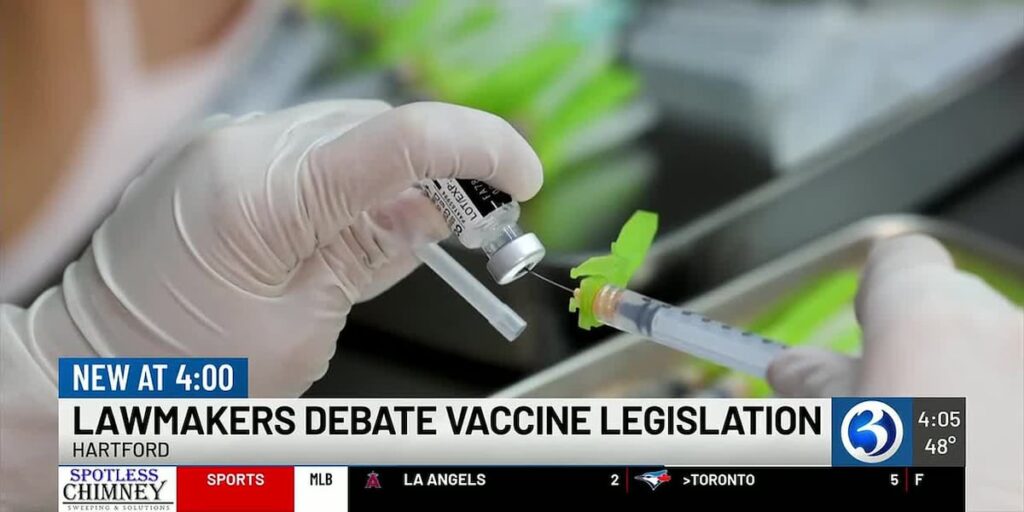
Connecticut lawmakers took to the floor on Tuesday to debate two significant bills aimed at bolstering the state's authority over public health, particularly in the realm of vaccinations. As the House session began in the morning, discussions were expected to extend into the evening, reflecting the contentious nature of the issues at hand.
The proposed legislation aims to expand the Department of Public Health's (DPH) authority, allowing it to directly purchase vaccines and establish standards for distribution. Much of this initiative arises from changes at the federal level and growing concerns that vaccines may not be readily available to those who seek them.
A particularly contentious aspect of the legislation involves strengthening a law passed in 2021 that eliminated religious exemptions for vaccinations required for children in public schools. This law is currently under challenge in Connecticut’s Supreme Court, adding further urgency to the legislative discussions.
Rep. Cristin McCarthy Vahey, chair of the public health committee, emphasized the legislature's intent to clearly communicate its position to the court. “I don’t predict the future, but what I do know is that today we have the ability to be exquisitely clear with the court and with all the plaintiffs that everyone is the state. This is what we are doing as a legislature: we are creating no daylight in that religious exemption question,” McCarthy Vahey stated.
However, not all lawmakers agree with this approach. Rep. Vinnie Candelora, the Republican minority leader, voiced strong opposition, suggesting that the legislature is overstepping its bounds by attempting to interfere with the judicial branch. “What we are attempting to do today is block a lawsuit that would allow people to have appropriate redress for legislation they believe was unconstitutionally passed. The legislature is going to come in and try to interfere with the judicial branch and change the outcome of the lawsuit regarding that legislation. You will hear a lot of opposition from our side of the aisle,” Candelora remarked.
The crux of the lawsuit centers on the assertion that the state law violates the Religious Freedom Restoration Act, passed in 1993, which protects the free exercise of religion unless there is a compelling state interest. Proponents of the bill argue that public health concerns, particularly the potential for a resurgence in measles cases, justify the state's actions.
“This vaccine legislation is stating that there’s no religion that’s against vaccines—it's the ingredients that are in these vaccines. And that’s very concerning…not everyone goes without side effects,” expressed C. Marcella Kurowski, a vocal opponent of mandated vaccinations.
As the House prepares to wrap up its voting by the end of the day, the bill is anticipated to advance to the Senate, which has its own version of the legislation under consideration this week. Meanwhile, the state’s attorney general has maintained that the existing law is a necessary step to protect public health.
The outcome of this legislative debate holds significant implications not just for Connecticut, but potentially for other states grappling with similar public health issues. As lawmakers weigh the balance between individual rights and community health needs, the decisions made in Hartford could set a precedent for how vaccination policies are shaped in the future.
Nevada Election Shocker: What Just Happened Could Change Everything for You!

You Won't Believe Which NBA Star Could Make or Break Your 2026 Playoff Bets!

You Won't Believe the Jaw-Dropping Acts Set to Rock the Bug & Bud Festival — Are You Ready for April 25?

NFL GMs in Uproar: New Draft Time Limit Could Cost Teams Millions! Are You Prepared?

Is Daylen Everette's Shocking Position Change the NFL's Next Big Game-Changer? Discover the Truth!
Shocking Endorsement: Vegas Chamber's Bold Move for Lombardo’s Re-Election Sparks Outrage!
You might also like: