
Paramount’s Shocking Move: Could They Really Buy Warner Bros? Netflix's Exit Changes Everything!

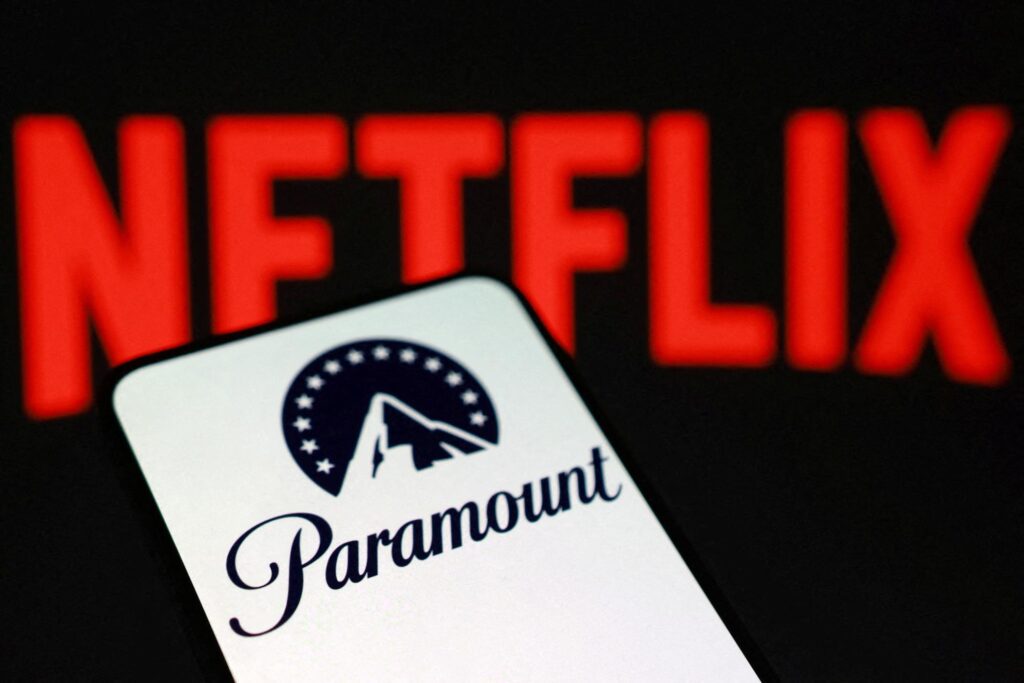
In a significant move for the media landscape, Netflix announced on February 26 that it will not pursue the acquisition of Warner Bros. Discovery (WBD) for $82.7 billion. The streaming giant's decision came in light of a competing bid from Paramount for approximately $110 billion, prompting Netflix's co-CEOs, Ted Sarandos and Greg Peters, to reassess the financial viability of the deal.
In a press release, Sarandos and Peters stated, “At the price required to match Paramount Skydance’s latest offer, the deal is no longer financially attractive, so we are declining to match the Paramount Skydance bid. We believe we would have been strong stewards of Warner Bros.’ iconic brands, and that our deal would have strengthened the entertainment industry and preserved and created more production jobs in the U.S. But this transaction was always a ‘nice to have’ at the right price, not a ‘must have’ at any price.”
This withdrawal raises questions about the future of major media acquisitions, particularly in an industry increasingly characterized by consolidation. Paramount's successful bid positions it as a frontrunner to acquire WBD, an outcome that has industry experts contemplating the potential ramifications for journalism and creative diversity.
Kaitlin McKinley, a student engagement coordinator and graduate student, expressed her concerns regarding the implications of such mergers. “I think continually merging massive companies is bad. I think that it is limiting, as far as the diversity of creators and voices. So to me, any of those combinations of these studio titans is a negative,” she stated.
Experts like Scott Libin, a Senior Fellow at the Hubbard School of Journalism & Mass Communication, emphasize that the acquisition could fundamentally change the landscape of news coverage. “The most significant thing is that Paramount wants to acquire CNN, along with all the other Warner Brothers businesses. That means CNN and CBS, including CBS News, would have the same parent company. That’s a big deal because CNN has operated on its own since 1980. But that’s what interests me most: will we lose a voice in national news coverage?” Libin noted.
McKinley echoed these sentiments, articulating her worry that Paramount's acquisition could stifle creativity within WBD's properties. “It does kind of give me concern for the ongoing legacy of those properties. Because when a big company buys something out, are they going to continue to develop projects with that same character? They’re going to be less risk-taking,” she asserted.
Libin expressed his longstanding connection to CNN, stating, “I have watched CNN frequently for decades now, and CNN could go away as far as we know. Or it could change in fundamental ways with new owners, who have been very activist in their approach to their newly acquired asset in CBS.” He recalled how Paramount significantly restructured CBS after its acquisition, raising the question: “Will similar changes or bigger changes occur at CNN?”
With the trend of media conglomeration becoming more pronounced, McKinley finds the situation troubling, as it impedes indie filmmakers and curtails diversity in entertainment. “I just think it’s a concerning trend. When a handful of massive companies own all of the entertainment, how do indie filmmakers get started, and how do you know different voices get heard? Just the lack of diverse sources of entertainment is concerning,” she lamented.
Conversely, Libin views media conglomeration as a strategic move, arguing that it promotes efficiency. “Conglomeration is occurring all over the media. It’s an established business strategy to combine properties to operate at scale with greater efficiency. There may be some logic in that; in the long term, that’s probably not going to be enough. But I’m sure we will see further conglomeration and further growth of fewer players for the sake of operating at scale and so that they can do business more efficiently,” he explained.
The decision by Netflix not to engage in the bidding war has broader implications for the entertainment industry. As viewers increasingly consume media through streaming services, the stakes for ownership and creative control grow higher. The future of beloved franchises and the diversity of voices in entertainment may hinge on the outcomes of these monumental corporate maneuvers. As such, the coming months may prove crucial in determining not only the fate of WBD but the overall direction of the media landscape.
Trump's Shocking New Neighbor? Epstein’s 'Walk of Shame' Just Steps Away—What Happens Next Will Stun You!

You Won’t Believe How Climate Change is FORCING Major Flood Projects in the East Coast and Beyond!
Britain's Shocking Plan: Will Kids Lose Access to Social Media and Gaming Forever? Discover the Truth!
You Won't Believe How This Meditation Tool Became a Billion-Dollar Lifestyle Brand! Discover the Shocking Secrets!

New Law Targets 10,000 Illegal Immigrants with CDL: What This Means for Your Commute!
Why Are Voters in Dallas City Hall in an Uproar Over THIS Primary Election? Shocking Revelations Inside!
You might also like: