
Dollar & Bonds Soar Amid Shocking War News—Is Your Portfolio Safe from the Chaos?

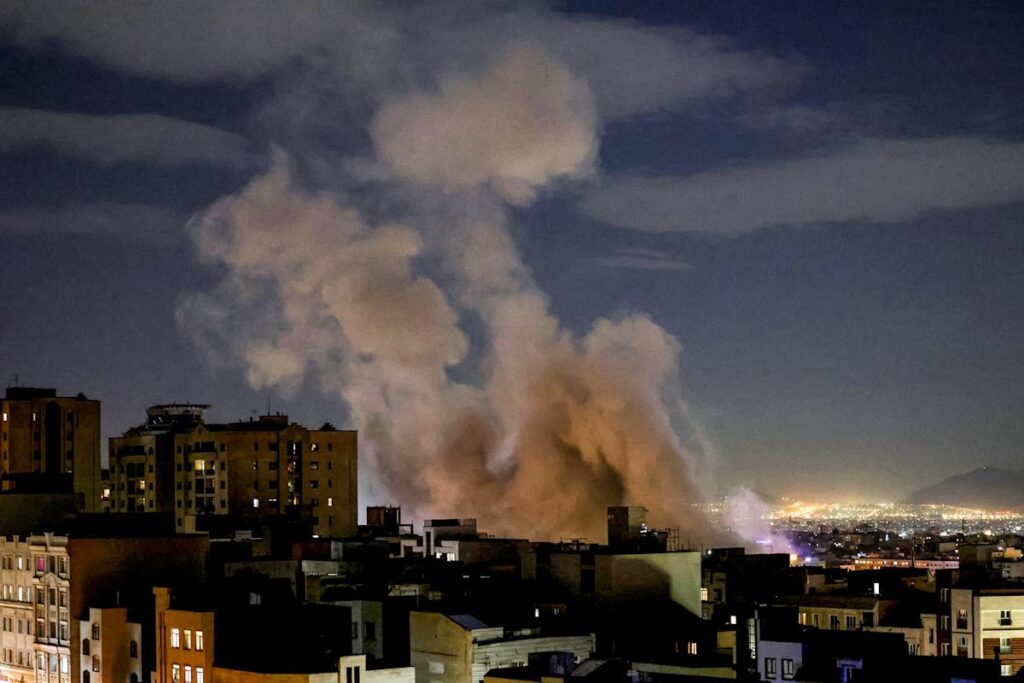
The escalating conflict in the Middle East is once again shaking global markets as investors prepare for the opening of stock, bond, and energy markets this evening in New York. Concerns are heightened as tensions rise, particularly with military actions surrounding Iran, which could have significant repercussions on both oil prices and inflation. The situation is challenging an already sensitive market, already grappling with anxiety over artificial intelligence and potential cracks in credit.
In early trading, the US dollar surged, and the Swiss franc gained slightly against major currencies, while the risk-sensitive Australian dollar fell. Government bonds in Australia and New Zealand experienced a rally as their markets opened, reflecting a cautious investor sentiment.
Benchmark equity indexes in both Saudi Arabia and Egypt slid more than 2% in Sunday trading. Futures for US stocks, Treasuries, oil, and gold were set to begin trading at 6 p.m. New York time, which will serve as the first broad gauge of investor sentiment in light of the escalating conflict. Bitcoin, a barometer for risk appetite, was down 0.4% as of 5:35 p.m. in New York.
“This is all coming at a fragile time as investors are becoming more cautious,” stated Dec Mullarkey, managing director at SLC Management. He emphasized that with US equity markets already sensitive to threats from technology disruptions and emerging credit stress, the prospect of higher commodity prices could lead to a sell-off as investors pull back on risk.
Bloomberg Economics has indicated that a protracted conflict in the Middle East could elevate crude oil prices to $80 a barrel. More alarmingly, if the Strait of Hormuz—a vital chokepoint through which about one-fifth of global oil flows pass—were to be closed, oil could spike to as high as $108. Brent crude closed at $72.48 a barrel on Friday.
Further complicating the situation, digital signals suggest that oil-tanker traffic through Hormuz has nearly ceased. Reports indicate that three ships were attacked near the mouth of the Persian Gulf, raising fears of tightening supplies, although Iran has stated it does not plan to close the passage.
“Even without a formal closure of the Strait of Hormuz, the reality is that vessels rerouting and sharply higher insurance premiums effectively tighten supply conditions,” noted Dilin Wu, a strategist at Pepperstone. He added that this scenario would inject a fresh inflationary impulse into the global economy.
On Hyperliquid, a crypto exchange known for its high-frequency trading, an oil-linked contract surged over 4% to $90.99 a barrel during mid-afternoon trading in New York. Meanwhile, gold rose by 1.10% to $5,379.60 per ounce, and silver traded at $96.65 per ounce, also reflecting a stability-seeking trend among investors.
“Crude oil prices are poised to surge when markets open on Monday,” wrote Elias Haddad, global head of markets strategy at Brown Brothers Harriman, in a note to clients. However, he cautioned investors to be wary of overshooting crude oil prices, given that global oil production currently outstrips demand.
The Broader Economic Risks
Historically, markets have often overlooked geopolitical tensions; for example, stocks showed little reaction to US strikes on Iranian nuclear sites in June. However, analysts now warn that the current conflict could have broader implications for the global economy. Ajay Rajadhyaksha, global chairman of research at Barclays Plc, advised caution against buying equities during this time. “The risk-reward doesn’t seem compelling,” he said, suggesting that unless equities pull back significantly—over 10% in the S&P 500—there may not be a reason to engage in purchasing.
Market strategists from Bloomberg expect an initial "risk-off" sentiment following the weekend's events, with a likely decrease in appetite for buying dips until clearer information emerges about the conflict's scope and duration. Joe Gilbert, portfolio manager at Integrity Asset Management, anticipates that energy and defense stocks will see a rally when equity trading begins, as evidenced by a 3.4% jump in shares of Saudi Aramco, the state-run oil producer, marking its largest increase in more than four months.
Any sustained spike in oil prices would complicate the case for U.S. Treasuries. Although a flight to safety would typically drive yields lower, rising energy costs that permeate the economy and stoke inflation could push yields higher. Maxence Visseau, a Dubai-based director of research at Arkevium, suggested that initial yield movements could drop by 5 to 10 basis points but warned that oil's potential spike could create a complex scenario for long-term yields.
As the conflict unfolds, the financial landscape remains precarious. Investors will have to navigate a climate marked by rising energy prices, geopolitical uncertainty, and a delicate economic recovery.
Sibling Showdown: Will Fano or the Styles Brothers Outshine at the NFL Combine? Shocking Stats Revealed!

Scream 7 Shatters Records: Discover How $64 Million Opened a New Horror Era!

UK Health Official EXPOSED: Why He Just ABANDONED the Puberty Blockers Trial Amid Shocking Bias Claims!

HONOR’s Shocking New Partnership with ARRI: Is Your Smartphone About to Become a Movie-Making Machine?

USC Stars Makai Lemon & Ja'Kobi Lane: Will Their NFL Dreams Crumble After Shocking Combine Results?
Why Did Socorro Suddenly Dump $5.2 Million in Alexandria Real Estate? Shocking Reasons Inside!
You might also like: