
Historic Enslavement Exhibit Restored: What Did the White House Try to Hide? Shocking Revelations Inside!

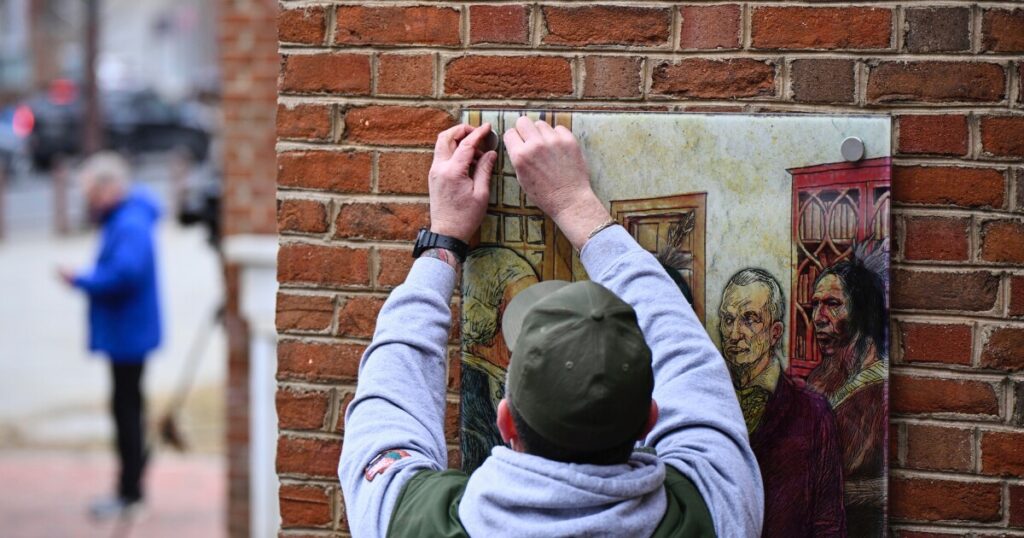
In an important move reflecting the ongoing struggle for historical accuracy and recognition, workers began restoring an exhibit dedicated to the lives of the nine individuals once enslaved at the former President's House in Philadelphia on Thursday. This restoration comes amid a contentious legal battle between the city and the Trump administration over the narrative presented at this significant site on Independence Mall.
Philadelphia Mayor Cherelle Parker visited the site on Thursday morning, expressing her gratitude to the workers for their efforts in reinstating the exhibit. According to spokesperson Joe Grace, the mayor’s support underscores the city's commitment to honoring the history of those enslaved by President George Washington.
The urgency of the situation was heightened by a federal judge's order, which set a deadline for the Interior Department to restore the exhibit by Friday. As of now, the U.S. Attorney's Office has declined to comment on the restoration process. This follows a shocking decision last month when park service workers abruptly removed exhibits from the site, leading the city and advocates to file a lawsuit against the federal government.
On Monday, Senior U.S. District Judge Cynthia Rufe granted an injunction that mandates the restoration of the materials while the lawsuit continues. This ruling also prevents Trump administration officials from altering the historical narrative of the site. In her 40-page opinion, Judge Rufe made a striking comparison between the actions of the Trump administration and the totalitarian regime depicted in George Orwell's dystopian novel “1984,” noting that the federal government does not have the authority to “dissemble and disassemble historical truths.”
“If the President’s House is left dismembered throughout this dispute, so too is the history it recounts,” Rufe, an appointee of Republican President George W. Bush, stated in her ruling.
Rufe elaborated on the implications of replacing the original exhibits with an "alternative script," which she described as a “more permanent rejection of the site’s historical integrity.” Such actions, she warned, would lead to irreparable damage to the narrative of American history as it pertains to slavery, a crucial aspect of the nation's past that deserves acknowledgment and reflection.
The legal actions surrounding this exhibit highlight the broader cultural struggle over how history is portrayed in public spaces. The conflict is not merely about a single exhibit but also raises essential questions about who gets to tell the stories of America’s past, particularly those of marginalized communities. This case serves as a stark reminder of the ongoing efforts to confront and reconcile with America's complex history, especially regarding slavery and its lasting repercussions on society.
The outcome of this case, as well as the reinstatement of the exhibits, could set a precedent for how historical narratives are managed in national parks and other public sites across the country. It emphasizes the imperative of ensuring that history is accurately represented, particularly in places that hold significant cultural and historical weight.
As the restoration work progresses, it remains to be seen how the ongoing legal battle will unfold and what it will mean for the future of historical exhibits throughout America. For now, the city’s commitment to restoring the narrative of those once enslaved at the President's House stands as a vital act of preserving history, ensuring that their stories are not forgotten.
You Won't Believe How Porzingis Shocked Everyone in His Warriors Debut with Only 12 Points!

You Won't Believe How Xingtailian Group's Stock Skyrocketed 100%—And What This Means for Your Wallet!

Celtics Crush Warriors Without Curry: You Won't Believe How Brown Led the Charge!

AWS Outage Shocker: Did AI Tools Just Cost Thousands Their Jobs? You Won't Believe What Happened!

You Won't Believe These 7 Healthy Snacks Are Actually Delicious – #3 Will Shock You!
You Won’t Believe What They’re Hiding: Shocking Details Behind the Legal Scandal Exposed!
You might also like: