
Could Hungary's Orban Finally Face Downfall? Shocking Polls Reveal a 20% Swing!

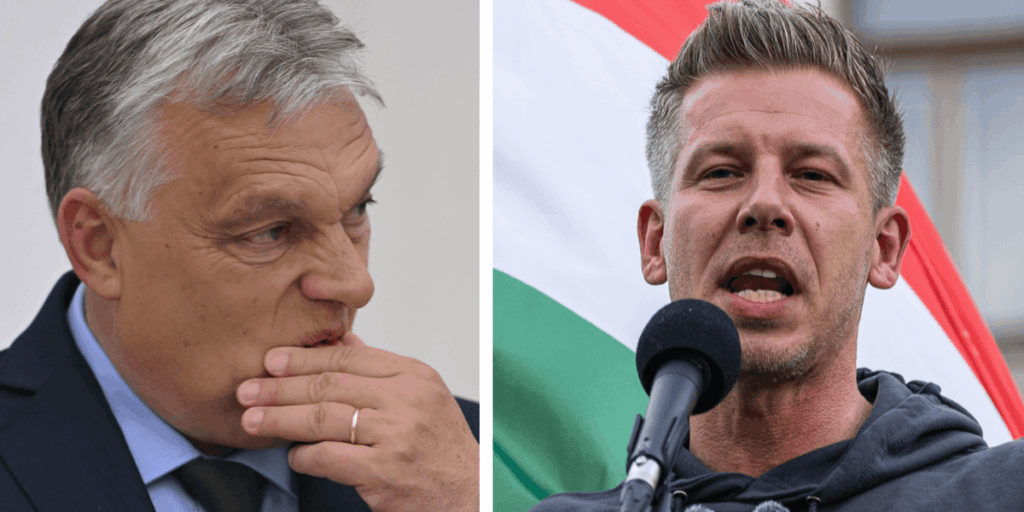
With just two months remaining before Hungary's parliamentary elections on April 12, Prime Minister Viktor Orban and his ruling Fidesz party are gearing up for their most formidable challenge since they first took power in 2010. Recent polls indicate that Péter Magyar, the leader of the Tisza party (Respect and Freedom), is gaining significant traction among voters, presenting a substantial threat to Orban's longstanding dominance.
As the campaign intensifies, Orban has sought to leverage his international relationships, particularly his ties with U.S. President Donald Trump, positioning himself as a prominent figure among Europe's right-populist and Eurosceptic movements. This strategy reflects an attempt to galvanize support amid a growing anti-incumbent sentiment in Hungary.
Magyar's campaign has resonated with citizens dissatisfied with social and economic conditions and Hungary's estrangement from mainstream European Union politics under Orban's leadership. While the official campaign period begins in March, the atmosphere has been charged since mid-January, with Hungarian society polarized and energized by this genuinely competitive race.
📰 Table of Contents
The Stakes Beyond Hungary
This election holds significant implications not only for Hungary but also for the emerging right-wing political landscape across Europe. Orban has capitalized on themes of sovereignty, anti-migration, and traditional values, which resonate with many voters but clash with the EU's broader ethos. A loss for Orban could signal a downturn for the populist right in Europe, potentially influencing upcoming elections, such as the French presidential race, where the National Rally party currently leads in the polls.
The importance of this election is reflected in the endorsements Orban has received from prominent right-wing figures, including Marine Le Pen of France’s National Rally, Alice Weidel of the Alternative for Germany, and Georgia Meloni, the Italian Prime Minister. The outreach extends to leaders like Czech Prime Minister Andrej Babiš, former Polish Prime Minister Mateusz Morawiecki, Serbian President Aleksandar Vučić, Israeli Prime Minister Benjamin Netanyahu, and Argentine President Javier Milei.
On February 6, President Trump endorsed Orban’s re-election, further solidifying the Prime Minister's standing among right-wing factions. Additionally, Secretary of State Marco Rubio plans to visit Hungary after the Munich Security Conference, a move likely to be viewed as an endorsement of Orban's leadership.
Orban's Strategic Focus
At the heart of Orban's campaign is a staunch opposition to perceived external pressures, particularly from Ukrainian President Volodymyr Zelensky and European Commission President Ursula von der Leyen. Orban has framed Magyar as a proxy for Ukraine, suggesting that his election could embroil Hungary in a devastating conflict. Through this lens, the election has become a referendum on public support for Orban's refusal to provide military or financial aid to Ukraine and a rejection of EU pressures to align more closely with pro-Ukraine policies.
Orban has escalated tensions with Zelensky, labeling Ukraine an "enemy" due to Zelensky's push for a complete ban on Russian oil and gas imports into the EU, which Hungary relies on. Both Hungary and Slovakia have been exempted from EU sanctions, citing a lack of alternative energy sources. The campaign rhetoric has also included accusations against Magyar, claiming he is complicit in foreign interference in Hungarian elections.
Interestingly, Magyar's manifesto does not advocate for funding or military support for Ukraine but promises to improve relations with both Ukraine and Poland while opposing any fast-track EU accession for Ukraine.
Magyar has adopted a more subtle approach, emphasizing generational change rather than a direct challenge to Orban's Ukraine policy. As a former member of Fidesz and ex-husband of Orban’s former justice minister, he represents a faction of the establishment that aims to present itself as a more viable alternative while potentially sharing some of Orban's conservative views.
His campaign focuses on tackling corruption, enhancing judicial independence, and restoring independent media. However, he faces significant obstacles from Fidesz loyalists entrenched within governmental institutions. Moreover, with recent changes to electoral rules that critics argue favor the incumbent, the election could spark protests if it remains closely contested.
The potential implications of this election extend far beyond Hungary. While a Magyar victory might not erase Orbanism, it could serve as a significant blow to the broader right-wing momentum in Europe. It could embolden European leaders resistant to peace initiatives that do not favor Ukraine, complicating relations with the U.S. and potentially embarrassing President Trump.
Conversely, a Magyar victory could encourage establishment center-right and center-left parties across Europe to view electoral defeat of the new right as a tangible possibility, making it less necessary to isolate such groups politically. This election, therefore, is not merely about Hungary's future but could have reverberating effects throughout European politics.
You Won't Believe What Lantana's New Lifestyle Director, Gillian Brown, Has Planned!

Estonia's Startups Are Raking in Millions—What Are Investors Betting On? Don't Miss Out!

Are You Throwing Away $500 a Year? The Shocking Truth About Premium Features Revealed!

You Won't Believe Which Samsung Budget Smartphone Outsold the Other by 200% – Find Out Why!

10 Shocking Mobile Games You Won't Find on GamStop – Discover the Hidden Gems Before They're Gone!

Garamendi’s Shocking Re-Election Bid: What He’s Hiding Could Change Everything!
You might also like: