
Zktor's Launch Could Change Social Media Forever—Are You Ready to Miss Out?

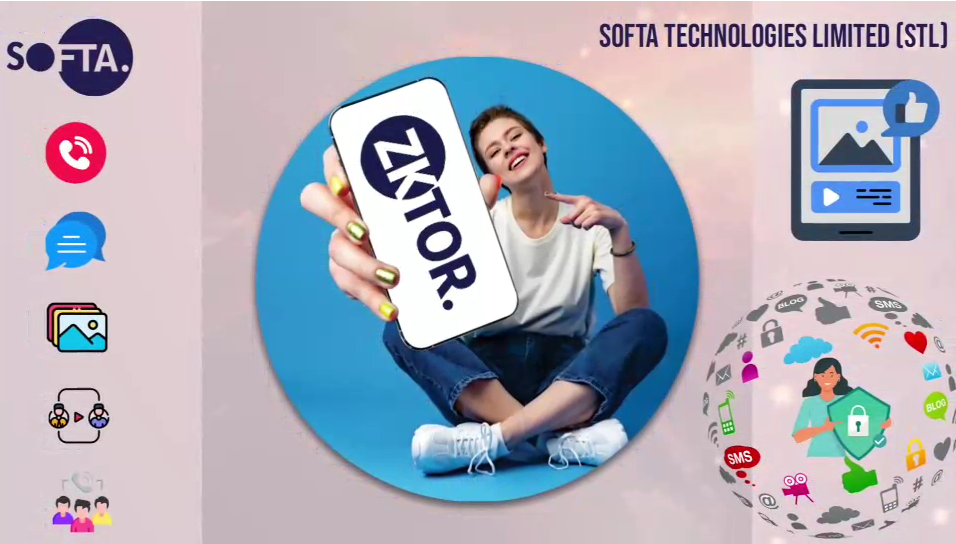
As American and Chinese social media platforms continue to dominate the global digital landscape, a new contender is emerging from South Asia. The Indian social media app, Zktor, is set to launch with a bold mission: to be a platform that is "free from digital colonialism." At a press conference held in Kathmandu on Saturday, Zktor's representatives shared their vision for a social media experience that prioritizes user autonomy, privacy, and dignity.
In a statement, Zktor declared, "Zktor is not just another app; it is a declaration of digital emancipation for South Asia." This ambitious platform aims to challenge the current social media paradigms established by Silicon Valley giants, asserting that users should not be treated as products but as human beings whose rights cannot be compromised by algorithms. The app's foundation is reportedly built on the unique realities, struggles, and cultural sensitivities of South Asia, a region often overlooked in the tech discourse dominated by Western perspectives.
Zktor is being hailed as the world’s first "By-Design Freedom Platform." This term reflects its commitment to integrating values of security, dignity, privacy, and autonomy directly into the platform's architecture rather than relying on policies that can be easily undermined. Central to this innovative approach is Zktor's zero behavior tracking model, which distinguishes it from many existing platforms that meticulously track user interactions to create detailed psychological profiles.
The company emphasizes that users on Zktor will experience a social media environment devoid of algorithmic manipulation. "In a world where social platforms meticulously log every click, scroll, pause, facial cue and behavioral pattern to build psychological fingerprints, Zktor shatters the entire chain," the statement asserted. This means no tracking, no profiling, and no engineered feeds—users will have the agency to view only what they choose. Zktor promises that user data will be encrypted to such an extent that even the platform itself will remain unaware of individual user activities.
In an era where concerns over data privacy and surveillance are at an all-time high, Zktor's approach could resonate with a demographic increasingly wary of how tech companies manage their information. The app's commitment to user data security is further reinforced by its pledge that messages, media, identity, and activity will remain sealed from any form of misuse or profiling.
Moreover, Zktor has signaled its intention to create a "women-first social structure," which aims to empower female users in a digital space that has often been criticized for its gender biases. This focus on inclusivity is not just a marketing gimmick; rather, it is part of a broader effort to foster an environment where all users can feel safe and respected.
The launch of Zktor comes at a time when discussions around digital sovereignty are increasingly prominent. As nations examine the implications of relying on foreign platforms, Zktor’s emergence could represent a shift towards localized solutions that prioritize regional values and user rights. The app aims to fill a void in a market where the dominant players have often faced backlash for unethical data practices and lack of user control.
As Zktor prepares for its debut, it will be interesting to observe how well it navigates the competitive landscape filled with established giants while remaining true to its guiding principles. With its unique value proposition and focus on user agency, Zktor could not only change the social media game in South Asia but also inspire similar initiatives worldwide that seek to challenge the status quo of digital interaction.
Thieves Return Stolen Phones—But Only if They’re NOT iPhones! You Won’t Believe Why!
Your Browser is Putting You at Risk! 7 Shocking Reasons You MUST Upgrade NOW!

Is Your Home's Value About to Plummet? Shocking Secrets About the Stock Market Crash Revealed!

How Medfield’s Girls Soccer Shockingly Avenge Last Year’s Heartbreak to Clinch the Div. III Title!
UK's Shocking Plan: Will You Be Affected by the End of Smartphone Imports? Discover the Hidden Consequences!

You Won't Believe What This $40 App Can Do – Transform Your Phone Into a Scanner That Outsmarts $500 Devices!
You might also like: