
You Won't Believe Why the National Park Service Just Yanked a Climate Change Sign at Fort Sumter!

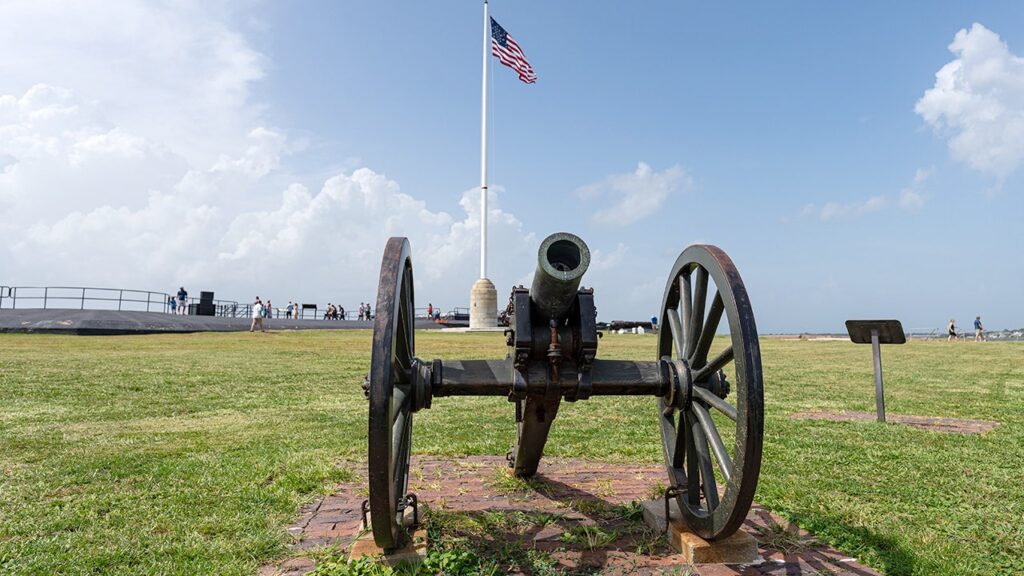
The National Park Service (NPS) recently made headlines by removing a sign at Fort Sumter in South Carolina that warned visitors about the potential impacts of climate change on the historic site. Fort Sumter is notably recognized as the location where the American Civil War began in 1861, making its preservation a matter of both historical and environmental significance.
According to a report by The New York Times, the sign, which had informed visitors that "as the earth’s climate changes, rising seas could inundate most of the fort’s walls," was taken down earlier this month. It highlighted the alarming possibility that the ground could become "constantly submerged" if sea levels in Charleston Harbor were to rise by four feet. This warning aligns with broader scientific consensus regarding the effects of climate change on coastal areas.
The removal of the sign appears to be linked to President Donald Trump's executive order issued in March, which called for the elimination of what he termed "improper, divisive, or anti-American ideology" from federal sites, including national parks and museums. Three anonymous federal employees cited in the The New York Times report suggested that the action to remove the sign was in accordance with this directive.
In response to inquiries from Fox News Digital, Elizabeth Peace, a spokesperson for the Interior Department, stated that the NPS is "taking action to remove or revise interpretive materials" to maintain "accuracy, honesty and alignment with shared national values." However, she did not provide specifics regarding the decision to remove the sign related to climate change.
Kristen Brengel, the senior vice president for government affairs at the National Parks Conservation Association, criticized the move, asserting that it amounted to "censoring climate science." Brengel remarked, "There was no justifiable reason to remove a sign that educates visitors about the changes they are seeing to Fort Sumter with their very eyes." She emphasized that the staff at the NPS have long been sounding alarms about the threats posed by rising sea levels to this important historical site, advocating for its protection.
The Fort Sumter National Monument, which operates under the NPS, is not just a custodian of Civil War history but also a crucial player in the ongoing conversation about climate change. In the broader context of rising sea levels—a direct consequence of climate change—the fort is at risk of significant damage, prompting the need for public awareness and educational initiatives about these environmental challenges.
As climate change continues to pose risks to various ecosystems and coastal communities, the removal of educational materials like the Fort Sumter sign raises critical questions about transparency and public access to information regarding environmental issues. This act of censorship can be viewed as part of a larger trend where science and facts are sometimes relegated to the background in favor of political narratives.
In addition to the sign's removal, the Trump administration also directed the NPS to review and eliminate any materials related to diversity or perceived anti-American ideology from its merchandise and gift shops. This policy reflects a broader ideological shift in how historical narratives are framed within national parks and monuments, raising concerns about historical accuracy and educational integrity.
As American society grapples with the realities of climate change and its impacts, the ongoing preservation of sites like Fort Sumter—and the information shared about them—becomes increasingly relevant. The implications of suppressing scientific discourse extend beyond historical interpretation; they affect public awareness and understanding of pressing environmental challenges that threaten both heritage sites and communities along the coasts.
The debate surrounding the removal of the climate change sign at Fort Sumter is emblematic of the tensions between political agendas and the dissemination of critical information. As visitors to this historic site continue to explore its significance, the hope remains that educational resources will be reinstated to foster a comprehensive understanding of both its historical context and the environmental challenges it faces.
Is Your Favorite Fitness Influencer Hiding THIS Shocking Secret? The Alarming Trend You Must Know!

You Won't Believe What Jolie Martinez Revealed About Her Shocking Fitness Transformation!

Japan's Snack Market is Changing Fast: Discover Shocking Trends That Could Cost You!
You Won't Believe What Happened When This Celebrity Tried to Silence the Truth!
What TikTok's Shocking New Deal with the White House Means for Your Privacy—You Won't Believe It!

The Home Fitness Equipment Boom: 2026 Predictions That Will Leave You Speechless!
You might also like: