
You Won't Believe Who's Inducted into the 2026 John B. McLendon Hall of Fame—Find Out Now!

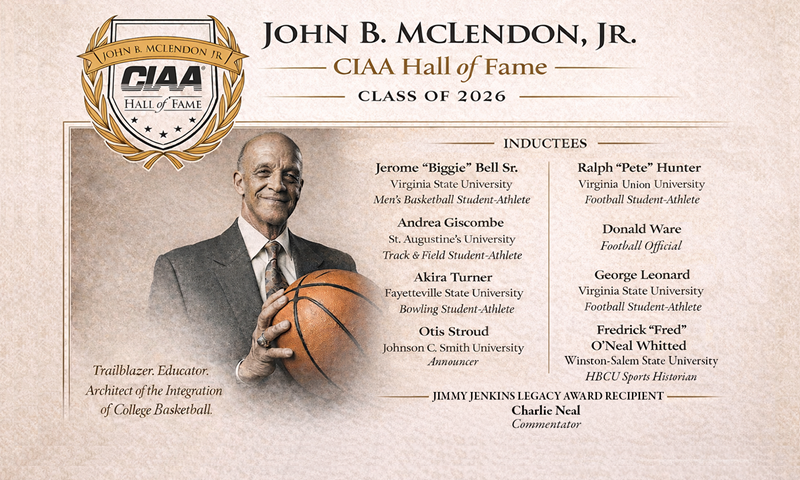
Charlotte, NC (January 5, 2026) — The Central Intercollegiate Athletic Association (CIAA), the nation’s oldest historically Black athletic conference, has announced its 2026 John B. McLendon Hall of Fame Class. This year's inductees exemplify a rich legacy of competitive excellence, leadership, and service that has significantly contributed to the success of the CIAA and its member institutions over the years.
The 2026 Hall of Fame Class includes:
- Jerome “Biggie” Bell Sr. (Virginia State University, Men’s Basketball Student-Athlete)
- Andrea Giscombe (St. Augustine’s University, Track & Field Student-Athlete)
- Akira Turner (Fayetteville State University, Bowling Student-Athlete)
- Otis Stroud (Johnson C. Smith University, Administrator/Supporter)
- Ralph “Pete” Hunter (Virginia Union University, Football Student-Athlete)
- Donald Ware (CIAA, Football Official)
- George Leonard (Virginia State University, Football Student-Athlete)
- Fredrick “Fred” O’Neal Whitted (CIAA, HBCU Sports Historian)
The formal induction ceremony will take place on February 27, 2026, during the CIAA Men’s and Women’s Basketball Tournament.
Celebrating Legendary Athletes and Contributors
Jerome “Biggie” Bell Sr. made a remarkable impact as a playmaker during his tenure at Virginia State University from 1974–79. Known as “The Magician,” Bell earned accolades such as All-CIAA honors and Co-Rookie of the Year in his freshman year. He remains a benchmark for excellence, leading Virginia State to its highest national ranking and holding records for career assists (791) and single-game assists (24) in Virginia State history.
Andrea Giscombe transformed St. Augustine’s Track & Field program, capturing five NCAA Division II individual titles and six CIAA championships from 1996–97. Her leadership helped guide the Lady Falcons to their first NCAA DII Outdoor National Championship in 1997. Following her stellar athletic career, Giscombe served as an assistant coach, contributing to 21 NCAA national titles.
Otis Stroud, a beloved figure in CIAA sports, has been the voice of the conference for over four decades. Beginning his announcing career at Johnson C. Smith University in 1977, Stroud became a fixture at the CIAA Basketball Tournament, known for his professionalism and engaging showmanship.
Ralph “Pete” Hunter, celebrated for his versatility in football, led Virginia Union University to the 2001 CIAA Championship and became the only CIAA player drafted in the 2002 NFL Draft. His outstanding career included stints with the Dallas Cowboys and New York Jets.
Donald Ware has dedicated over 31 years to officiating football games in the CIAA, earning a reputation for professionalism and leadership. His contributions extend beyond the field as he has mentored many young officiating talents, ensuring the maintenance of high standards in the sport.
George Leonard is regarded as one of the finest running backs in Virginia State history, amassing a staggering 3,575 rushing yards from 1976–79 and earning CIAA Player of the Year recognition in 1977. His influence reached beyond the conference as he participated in the 1979 Black College All-Star Game.
Fredrick “Fred” O’Neal Whitted served as an HBCU sports historian, dedicating over 30 years to preserving the legacies of Black college athletics through his writings and foundational projects, such as the Black College Sports Encyclopedia.
The Hall of Fame induction not only commemorates these individuals' achievements but also highlights the rich history of the CIAA as a cornerstone of collegiate athletics, particularly for historically Black institutions. Founded in 1912, the CIAA has played a pivotal role in promoting athletic excellence and community engagement among its member institutions.
As the CIAA prepares to honor these distinguished individuals during the upcoming basketball tournament, it reflects on its legacy of empowering student-athletes and enriching the cultural fabric of sports in America. This year’s honorees are not just celebrated for their athletic prowess but also for their enduring contributions to their schools and communities, reinforcing the vital role that HBCUs play in the landscape of American sports.
You Won't Believe What Hyderabad's SmartGreen Aquaculture Just Launched—India's First Trout Farming Project!
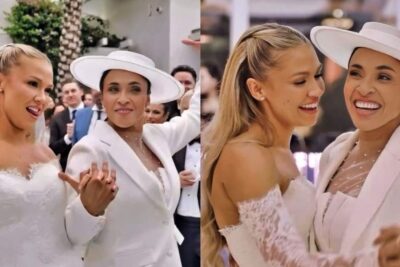
Marta's Shocking Secret: Why Her Marriage to U.S. Star Carrie Lawrence Will Change Soccer Forever!
2026 Movie Preview: Are You Ready for the SHOCKING Superhero Twist That Will Change Everything?

Scientists Just Unveiled a Controversial Fentanyl Vaccine—Is This the Key to Ending the Epidemic?

Is Your Hepatitis D Vaccine Safe? Shocking New Guidance Reveals Alarming Risks You MUST Know!

UCC DECLARES: NO INTERNET SHUTDOWN? You Won't Believe What's Really Happening!
You might also like: