You Won’t Believe What Your Snack Cravings Reveal About Your Health—Top Experts Weigh In!

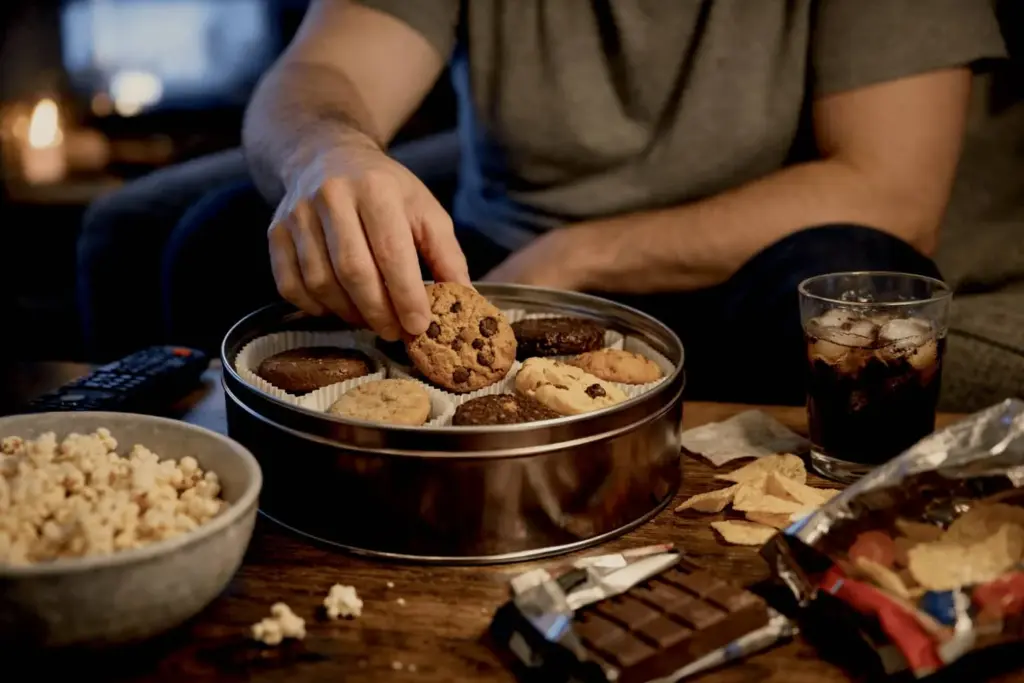
After a satisfying dinner, you may find yourself battling the urge to indulge in another snack. The allure of that biscuit tin isn’t just a matter of willpower, according to recent research from the University of East Anglia (UEA). This disconnect between our cravings and our stomachs suggests that our brains and bodies are not in sync when it comes to food.
In an age defined by delivery apps, drive-thrus, and omnipresent snack advertisements, the study reveals that our brains continue to respond to enticing food cues even after we feel full. This mismatch could be a significant factor in the ongoing rise of obesity, despite our collective awareness of healthy eating.
Lead researcher Dr. Thomas Sambrook from UEA’s School of Psychology states, “Obesity has become a major worldwide health crisis. But rising obesity isn’t simply about willpower – it’s a sign that our food-rich environments and learned responses to mouth-watering cues are overpowering the body’s natural appetite controls.”
📰 Table of Contents
Understanding the Brain's Snack Response
To delve deeper into how our brains react to food when we’re already satiated, Dr. Sambrook and his team conducted experiments with 76 volunteers who were wired to Electroencephalogram (EEG) brain scanners. Participants engaged in a reward-based learning game using real foods like sweets, chocolate, and popcorn—temptations that often derail our diets.
Midway through the experiment, participants were provided with a full meal until they reported feeling genuinely satisfied. Based on typical measures, they indicated a significantly reduced desire for that specific food and demonstrated diminished value for it in the game. Yet, the EEG data painted a different picture. Even when participants felt full, the brain regions associated with reward continued to react vigorously when presented with images of the very same food.
“What we saw is that the brain simply refuses to downgrade how rewarding a food looks, no matter how full you are,” Dr. Sambrook points out. “Even when people know they don’t want the food, their brains continue to fire ‘reward!’ signals the moment the food appears. It’s a recipe for overeating.”
This suggests that visual cues—like a glossy picture of a doughnut—can lead to overeating, even when we’re physically satisfied. The researchers argue that these responses seem to operate independently from conscious decision-making, making it feel like our brains are wired for habitual overeating.
Dr. Sambrook elaborates, “These habitual brain responses may operate independently of our conscious decisions. So, while you might think you’re eating because you’re hungry, your brain may simply be following a well-worn script.”
Importantly, the study found no correlation between an individual’s ability to make deliberate choices and their brain’s resistance to devaluing food. This means that even those with strong self-control can be vulnerable to automatic neural responses triggered by food cues.
The Environment and Its Impact
The implications of this research are profound, especially in a society where ultra-processed foods and constant visual cues are ubiquitous. Supermarkets strategically position high-calorie options at eye level, streaming services serve snack advertisements during shows, and workplaces often celebrate with desserts rather than healthier options.
In this environment, the findings from UEA and the University of Plymouth highlight that rising obesity rates are not merely due to individual weaknesses. Rather, they are a predictable outcome of brains that are hardwired to respond to food cues in a landscape designed to encourage eating.
Published in the journal Appetite under the title “Devaluation insensitivity of event-related potentials associated with food cues,” the study shifts the focus of blame. If our brains refuse to lessen the appeal of snacks, the challenge becomes less about sheer willpower and more about controlling what our brains are exposed to.
This insight holds significant implications for personal dieting strategies and public health messaging. If a mere image can trigger a reward response even after a meal, limiting exposure to food cues—especially for children—should be part of the conversation on addressing obesity.
For individuals grappling with cravings, this research reframes the narrative. It suggests that rather than viewing oneself as lacking discipline, one might consider that their brain is responding to an ingrained habit reinforced by their environment.
Practical Strategies for Managing Cravings
So, how can you navigate this complex landscape? While the study does not provide a specific diet plan, it does highlight several practical approaches:
- Control the cues, not just the calories: Keep tempting snacks out of sight to minimize visual triggers.
- Change the script, change the habit: Instead of pairing snacks with coffee, consider alternatives like a walk or fruit.
- Plan for your weak spots: Decide in advance what healthy options you’ll allow yourself during late-night snacking.
- Reduce decision fatigue: Limit food choices to designated times to avoid frequent temptations.
- Forgive, then adjust: If you give in to a snack, remember that your brain is responding to automatic cues, not just a lack of willpower.
In conclusion, the research from UEA and the University of Plymouth doesn’t solve the obesity crisis, but it clarifies the issue. As our brains remain wired for reward amidst an environment designed to tempt, understanding this dynamic is crucial. The next time you find yourself reaching for a late-night snack, remember: your brain is still on alert, even if your stomach is satisfied. Perhaps the most effective strategy is to minimize the cues that trigger such cravings in the first place.
You Won't Believe the Shocking Stats from Saturday's Top Prospect Performances! Are These Future Stars Worth the Hype?

Hilary Duff's Heartbreaking Revelation About Lizzie McGuire Co-Star's Tragic Death Will Shock You!
Is Your Browser Putting You at Risk? Discover the Shocking Truth About Security Flaws NOW!
Urgent: Connecticut's Democrats Unveil SHOCKING Emergency Bills for Election Security – What You MUST Know Now!

You Won't Believe How No. 2 Arizona Shocked No. 14 Kansas and Secured Their Big 12 Title!

NYC Influencer Shocks the Internet: Spends $10,000 on a Wedding Dress—Solo! You Won't Believe Her Reason!
You might also like: