
You Won't Believe What UCI Students Discovered About Academic Freedom – Shocking Revelations Inside!

By Robert Munrayos
In March, Florida made headlines by banning sociology from the core curriculum at state universities, a move that reflects a growing trend of legislative actions aimed at limiting academic freedom across the United States. This follows a similar policy enacted by the University of Texas system in February, which allows students to graduate without studying "unnecessary controversial subjects" and mandates faculty to disclose their syllabi for state review. Indiana's legislation, introduced two years ago, requires universities to deny tenure to professors viewed as "unlikely to foster a culture of free inquiry," compelling them to adhere to state guidelines on "subject matter" and "perspectives" taught.
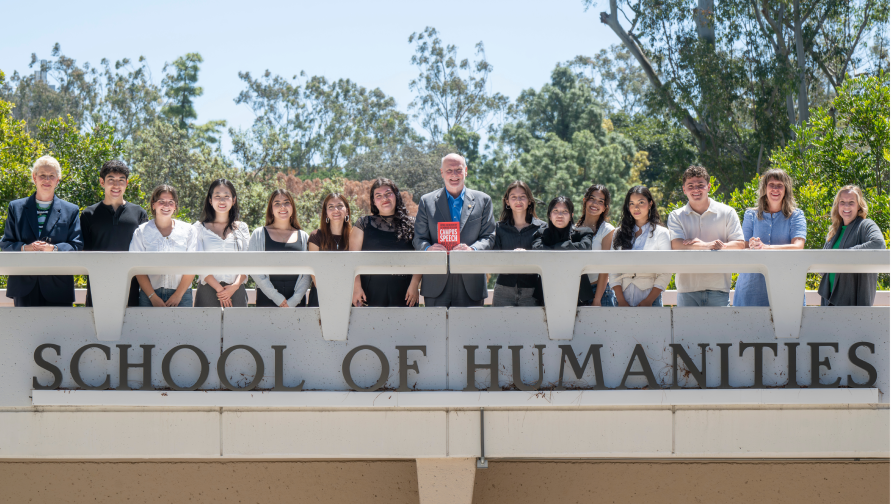
While the national conversation surrounding academic freedom intensifies, the University of California, Irvine’s (UCI) School of Humanities has launched a groundbreaking undergraduate course titled Social Media Storytellers: On Academic Freedom. This course centers students in an essential dialogue about what academic freedom means today, why it is significant, and who it impacts.
Conceived by Kelly Anne Brown, Director of Communications for the School of Humanities, and Dean Tyrus Miller, this course fills a crucial gap in the understanding of academic freedom. Traditionally, academic freedom has been understood as a principle that protects faculty research and teaching, but much less attention has been given to how undergraduate students perceive and are influenced by it. Social Media Storytellers invites students to reflect on their classroom experiences and engage in real campus debates through the lens of social media.
Students have expressed that the course challenges them in ways that extend beyond academic content. Second-year history and English double major Guadalupe Sánchez stated, "This class has challenged me to reflect on topics that I already knew a bit about, but it pushed me to be comfortable asking questions and to really take up opportunities to learn."
Supported in part by a VOICE grant from the UC National Center for Free Speech, the course emphasizes hands-on storytelling about free expression. Students, referred to as “fellows,” conduct interviews, shape narratives, and create social media content aimed at reaching broader audiences. The course opened with a call for proposals in fall 2025, attracting over 40 applications for just five initial positions, prompting Miller and Brown to expand the program to accommodate 12 students in the two-quarter course.
Throughout the winter quarter, fellows met weekly with faculty members from various disciplines within the School of Humanities. This included Dean Miller, Professor Jane Newman (comparative literature), Professor Patricia Pierson (literary journalism), and Professor Anke Biendarra (European languages and study). These collaborative sessions allowed students to explore the multifaceted definition of academic freedom as it applies to different national and institutional contexts. Topics ranged from viewpoint diversity and artificial intelligence to the international dimensions of academic freedom.
Academic freedom itself refers to the rights and privileges of faculty to educate students and convey knowledge without institutional interference. While it often overlaps with free speech—freedom to express ideas unencumbered by government censorship—the two concepts diverge, especially within the realm of publicly funded universities.
Dean Miller noted, "The humanities provide a natural space for examining issues like academic freedom because they draw on interdisciplinary ways of thinking and interpreting. Humanities students are well-equipped to understand the importance of these debates, both generally and for their own learning and academic experience."
Adding further depth to the course, UCI Chancellor Howard Gillman, a constitutional law scholar, participated in a session, discussing his recent book, Campus Speech and Academic Freedom (Yale University Press, 2026), and engaging students in conversations about scholarly texts related to the topic. His involvement marked a pivotal moment in the students’ exploration of academic freedom, as they prepare to present this knowledge to their peers.
A key feature of Social Media Storytellers is its focus on social media as a vital platform for student voices. The course encourages discussions that extend beyond classroom walls, allowing students to engage with their peers in formats that resonate with their daily lives. Brown emphasized, "We know that so many of us, and especially our students, use social media platforms in increasingly sophisticated ways. We think the impact of humanistic explorations of a topic like academic freedom should absolutely engage with this daily part of students’ lives."
Students are also involved in workshops led by communications experts and experienced alumni, honing skills in podcasting, video production, social media analytics, and crafting compelling narratives. Sánchez shared, "Creating good social media content requires you to really know your audience, and also to make it accessible on social media by making it approachable and avoiding too much academic language."
Some students critically engage with the limitations of social media. Leisa Komyo, a fourth-year film and media studies and literary journalism double major, remarked, "I think social media can be very polarizing and, at times, feel unsafe. The pressure to be concise often comes at the cost of nuance, which can lead to misunderstandings or oversimplified takes." The course encourages students to navigate this tension, balancing creativity with accuracy and responsibility.
This spring, fellows are developing original media projects such as short videos, interviews, graphic illustrations, visual essays, and street-style conversations with peers, which will be disseminated across the School's social media platforms. Beyond intellectual engagement, the course fosters collaboration and professional development, with students working together on social media projects and participating in feedback sessions.
Ultimately, Social Media Storytellers serves as a pilot program exploring the potential of student-centered, multimedia approaches to education. By amplifying undergraduate voices on a topic that directly impacts their academic lives, the class invites the broader community to consider how academic freedom is experienced and why it is crucial. Students will leave the course not only with a richer understanding of academic freedom but also with practical skills in storytelling and public engagement—valuable competencies that extend far beyond the classroom.
Mr. Beast's Shocking Denial: What His Ex-Staffer Claims Could Change Everything!
Why Did 'Call of Duty' Co-Creator Vince Zampella Pass Away at Just 41? Shocking Details Inside!

You Won't Believe What Happens in Survivor Season 50, Episode 9 – Find Out How to Watch the Shocking Twists!

Shocking College Baseball Tournament Projections: Which Top 5 Teams Are Set to Collapse by April 22nd?

NJ's Shocking Investment Scams: Are You One of 10,000 Potential Victims on Social Media?

NFL Coach's Alarming Warning About 3,800-Yard QB: Could This Draft Be a Disaster?
You might also like: