
You Won't Believe What Scientists Discovered on This Groundbreaking Antarctic Voyage!

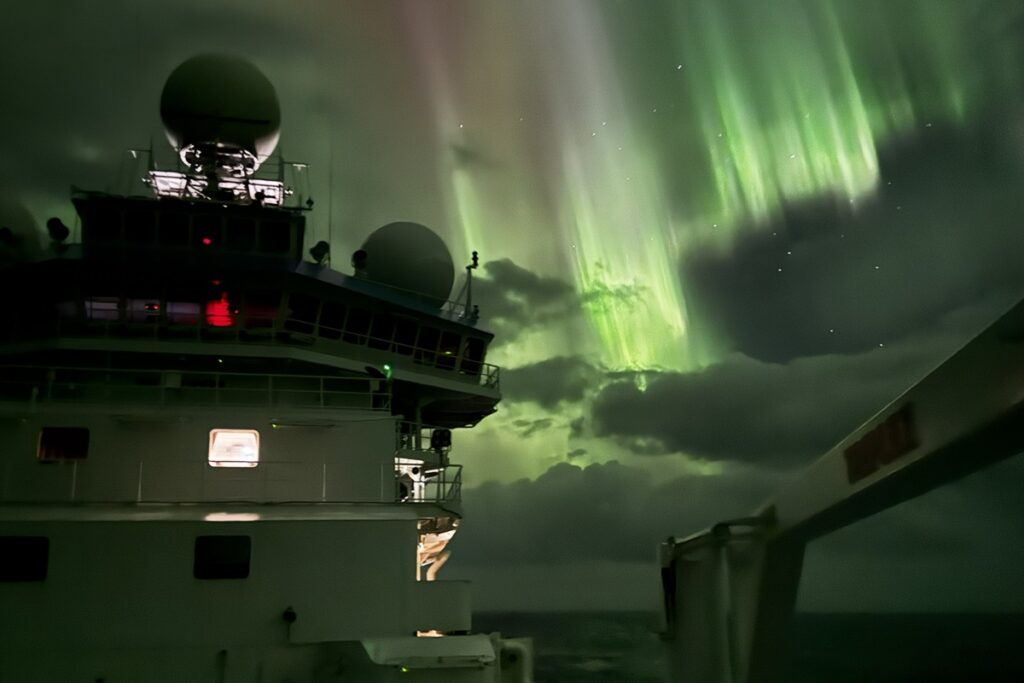
A crucial milestone in Antarctic research has been reached as the CSIRO research vessel (RV) Investigator completed a significant mission in the uncharted waters of East Antarctica. The voyage, known as the COOKIES mission, saw a multinational team of researchers navigate through harsh weather conditions, making strides in our understanding of climate change's impact on the Cook Glacier marine region, an area previously overlooked in scientific studies.
Over a grueling 55 days at sea, the RV Investigator traveled more than 6,500 nautical miles (12,000 kilometers), contributing to a cumulative total of one year spent at sea since its commissioning over 11 years ago. This represents more than 10% of the vessel’s operational time dedicated to Antarctic scientific endeavors.
📰 Table of Contents
Unlocking Climate Secrets
The COOKIES mission aimed to uncover vital clues about how Antarctica has responded to past warming periods and what that might forecast for the future. Dr. Linda Armbrecht, the Chief Scientist from the University of Tasmania’s Institute for Marine and Antarctic Studies (IMAS), highlighted the importance of this research. “Sediment cores, simply imagined as tubes of mud, act as time capsules,” she noted. “The uppermost layers record the last few centuries, while deeper sediment cores can reveal evidence from hundreds of thousands, even millions of years ago.”
Each layer of sediment offers insights into ancient ecosystems, including microfossils, chemical markers, and fragments of ancient DNA that help reconstruct historical ocean conditions. This natural archive is crucial for predicting future changes as climate patterns evolve.
During the voyage, researchers employed advanced technology to collect high-resolution seabed mapping data and sample sediment layers. RV Investigator’s multibeam echosounders mapped areas where less than 30% of the global seabed has been documented to modern standards. Notably, the journey achieved a record retrieval with a 20.5-meter-long tube of sediment, providing an extensive library of more than 10,000 sediment samples for future analysis.
The findings are significant; they promise to deepen understanding of how changes in the Antarctic environment affect global climate systems, offering vital context as the world grapples with the impacts of climate change.
Continuous Monitoring and Biodiversity Exploration
In addition to seabed studies, RV Investigator’s ongoing sampling systems collected crucial data regarding the surface waters, atmosphere, and oceanic conditions encountered throughout the journey. More than 130 seawater samples were collected for analyses of plankton, environmental DNA (eDNA), and microbial life. These efforts are essential for mapping how life and chemical processes shift across vast oceanic distances.
Equipped with a CTD (conductivity, temperature, and depth) instrument, researchers obtained detailed measurements of the ocean’s biological and chemical structure. The data illustrates how warm and cold water layers mix and interact, influencing the marine ecosystems dependent on these environmental conditions.
As Dr. Armbrecht explained, “Small changes in the ocean, whether in temperature or nutrients, can lead to big changes in ocean productivity and ecosystem function.” The mission also deployed a specialized trace metal rosette to gather water samples for analyzing trace metals, which are essential for marine life but exist in scarce concentrations. These metals play a pivotal role in the productivity of phytoplankton, the backbone of oceanic food webs.
On the ecological front, the researchers conducted surveys on the Antarctic continental shelf using RV Investigator’s advanced imaging systems. The Deep Towed Camera captured over 10,000 still images and hours of video footage, revealing a rich biodiversity that includes everything from soft corals to unusual jelly-like animals known as tunicates, which form fields resembling glass tulips on the seafloor.
The mission documented around 400 different marine organisms, with samples collected for DNA analysis. Together with ocean data, these biological surveys offer deeper insights into the resilience and complexities of Antarctic ecosystems, essential for understanding the region's role in global climate dynamics.
For Andrew Martini, Program Director with the CSIRO Marine National Facility, the findings from this voyage mark significant progress in unlocking the mysteries of one of the planet's critical climate laboratories. “Despite years of research, Antarctica remains a place of unanswered questions, and each voyage reveals just how much more there is to discover,” he remarked.
Ultimately, the knowledge gained from the COOKIES mission will contribute to a broader understanding of our oceans, climate, and life on Earth, highlighting the importance of continued investment in Antarctic research.
This mission was supported by a grant of sea time on RV Investigator from the CSIRO Marine National Facility and contributes to various collaborative Antarctic research programs, including the Australian Centre of Excellence in Antarctic Science (ACEAS) and Securing Antarctica's Environmental Future (SAEF).
You Won’t Believe Who Wore WHAT at the 2026 Academy Awards – Shocking Fashion Fails Revealed!

Soccer Icons Shock Fans at SXSW with a Secret adidas Collaboration—What You MUST Know!

City Hall's Shocking Move: $200M Health-Care Funds Vanishing to Fix Budget Crisis—What’s Next?
Voter Watch: Did You Spot Election Day Shenanigans in Kane County? Here’s How to Report Them NOW!

Why This Israeli Fund Just Invested $100 Million in Defense Tech Startups – The Shocking Truth Behind Military Innovation!

UP Health System Cuts Essential Services Amid Severe Weather—What This Means for You!
You might also like: