You Won't Believe What Matt Eley Revealed About Language and Memory – A Shocking Truth Awaits!

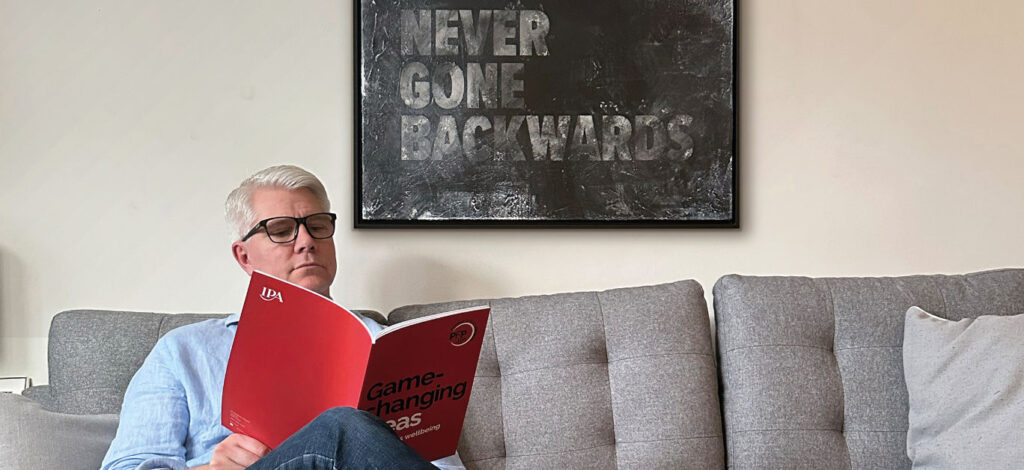
In an age where language often feels ephemeral—reduced to scrollable fragments and digital noise—British artist Matt Eley is making a quiet yet powerful statement: words can carry weight. Eley's artistic journey takes a bold direction, transforming language from mere symbols of communication into emotional markers that shape our experiences. Through his unique, tactile approach to typography, Eley invites viewers not just to read, but to truly feel the essence of each word.
After more than three decades in graphic design, Eley’s transition to painting represents a conscious departure from the transient nature of commercial campaigns. His canvases now serve as spaces for reflection, allowing fragments of thought, emotion, and experience to linger long after they are encountered. In recent interviews, Eley has shared insights into this evolution, delving into what it means for words to transcend their functional roles.
“Words stopped being purely functional when I realized they were the most honest material I had,” Eley reflects. In the realm of graphic design, words often serve a specific purpose—selling products, providing instructions, or clarifying messages. Yet, for Eley, the words that resonate are those laden with personal significance—whispers from arguments, unspoken sentiments, and echoes of memories. His artistic shift represents a move away from surface-level meanings toward exploring the profound emotional currents that words can stir within the body.
So, what does painting allow Eley to express that graphic design never could? “Graphic design is largely a problem-solving skill,” he explains. “It serves a client’s brief and aims for a particular pre-agreed outcome.” Painting, in contrast, provides a sanctuary for ambiguity and complexity. Here, Eley can embrace contradiction, grief, joy, and uncertainty without the need for resolution. “Graphic design asks for clarity, whereas painting allows for ambiguity or even discomfort,” he emphasizes.
Eley's work also challenges the expectation that visual art should always be uplifting. He observes that contemporary visual art often shies away from emotional depth, particularly sadness, because it is frequently tied to decoration and aesthetics. “If a painting hangs in a living room, it becomes part of the architecture of someone’s daily life,” he points out. Conversely, music can explore sadness within a brief time frame—allowing listeners to engage and then move on. Eley seeks to push back against the tendency of visual art to cater to positive affirmations, advocating for a space where sadness can exist as a valid emotional experience.
When it comes to audience engagement, Eley suggests that collectors are often drawn to the aesthetic qualities of his work—its scale, texture, and distressed typography. However, the deeper connection often comes from personal recognition. “I have seen people go quiet in front of a single sentence,” he shares, noting that this response is about personal memories and emotions rather than technical aspects like kerning or composition. The words resonate with viewers, evoking relationships and personal narratives they may have thought long buried.
But how fixed is the meaning of a word once it is painted? Eley asserts that meaning is never static. “I bring my history to the canvas, but the moment it leaves the studio, it begins to gather other histories,” he explains. A word painted in anger might be interpreted as liberation by another viewer, enriching the artwork rather than diluting it. “I see my paintings as a prompt, that the viewer finishes with their own lived experience,” he adds.
In a world inundated with disposable messaging, Eley’s art aims to restore a sense of permanence to language. “We scroll past thousands of words every day, and they are weightless and temporary,” he notes. By enlarging words or phrases and forcing them into physical space, he challenges viewers to slow down and engage with the text rather than swipe past it. This approach is not merely a nostalgic longing for permanence but a form of resistance against disposability. For Eley, language shapes identity, and it should never be treated as throwaway.
Through his innovative work, Matt Eley invites us to reconsider our relationship with language in a digital age. As art evolves, so too does our understanding of the words we use, the stories we tell, and the emotions we express. In reclaiming the weight of language, Eley reminds us that words can be powerful carriers of memory and meaning—worthy of contemplation and feeling.
The Shocking Truth: How the Human Rights Council Could Save Our Planet—Or Destroy It!

Why Dr. William Stevenson’s Shocking Exit from the Board of Health Changes Everything – You Won’t Believe the Consequences!
Is Antithesis's Risky Software Strategy a Game-Changer or a Total Disaster? You Won't Believe the Consequences!
WWE Star Hit with $100K Fine for Shocking Social Media Rant—What Did They Say?
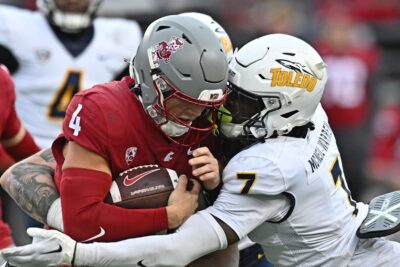
Bears' Shocking 2026 NFL Mock Draft: 7 Game-Changing Defense Stars You Won’t Believe!

You Won't Believe How Taylor Frankie Paul Is Fighting Back After Losing Everything—Find Out Her Shocking Defense!
You might also like: