
You Won’t Believe What Happened When New Marine Energy Tech Was Tested – Shocking Results!


At the University of Washington’s Harris Hydraulics Lab, researchers are engaged in an unusual yet crucial experiment aimed at ensuring the safe integration of marine energy technology into our oceans. Collaborating with the Pacific Northwest National Laboratory (PNNL), they repeatedly pass a small rubber model of a marine animal through a large tank filled with flowing water, which is equipped with a spinning turbine. The objective? To simulate the potential collisions between marine wildlife—like seals, birds, and fish—and submerged turbines, a concern as we explore renewable energy sources.
“We want to make sure we’re minimizing the chances of a collision in the first place,” said Aidan Hunt, a senior research engineer in mechanical engineering at the UW and a member of the Pacific Marine Energy Center (PMEC). “But if a collision were to occur, we want to be able to detect it and potentially avoid it in real time. The available evidence suggests that collisions are rare, but we’re taking a ‘trust-but-verify’ approach.”
Marine energy, harvested from tides, waves, and currents, holds immense promise as a clean, renewable resource. Yet, significant gaps remain in our understanding of how large-scale installations of underwater turbines or power-generating buoys could impact marine ecosystems. These impacts could range from increased environmental noise to habitat changes and direct interactions with marine life.
The marine collision experiments are part of the Triton Initiative, a series of projects led by PNNL to investigate the environmental consequences of marine energy technologies. Recently, the initiative built on previous studies involving a prototype turbine that was installed at the entrance to Sequim Bay. During this study, researchers monitored the turbine with an underwater camera for 109 days, cataloguing over 1,000 instances of marine animals approaching or interacting with the turbine blades. Notably, there were only four recorded collisions, all involving small fish.
“This study was a first step, but a promising one,” stated Chris Bassett, a research scientist at the UW Applied Physics Lab and co-author of the study. “We didn’t see any endangered species in our study, and the risk of collision for seals and sea birds seemed to be quite low. We’re excited to get back out there with the camera and learn even more.”
While the Sequim Bay experiment generated valuable data, researchers acknowledge that such intense monitoring may not be feasible for larger commercial installations in the future. Instead, they are exploring cost-effective solutions, such as the impact sensors currently being tested at the Harris Hydraulics Lab, which log the impacts of the rubber model against the turbine blades.
This project is funded by the U.S. Department of Energy’s Hydropower & Hydrokinetics Office, through the Pacific Northwest National Laboratory’s Triton Initiative and the TEAMER program. As our nation pushes towards a more sustainable energy future, understanding these interactions becomes ever more critical. By prioritizing the safety of marine wildlife while harnessing the power of our oceans, scientists aim to strike a balance that could pave the way for broader adoption of marine energy solutions.
For further inquiries, researchers can be contacted: Aidan Hunt at [email protected] or Emma Cotter at [email protected].
You Won't Believe Which Hollywood Stars Joined the White House for a Shocking 'Justice' Video!

Why 80% of People Turn to Junk Food When They're Depressed—You Won’t Believe the Shocking Truth!

Shocking Aussie Study Reveals Vaccine Could Leave You Vulnerable to Gonorrhea—What You Need to Know!
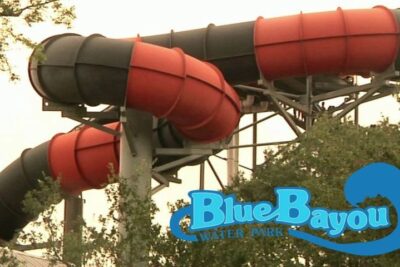
Why Blue Bayou's Shocking Transformation This May Will Leave You Breathless—Don't Miss Out!

Why 90% of Young Women Are Missing Out on This Life-Changing Mentorship Opportunity!

Why Bitcoin's Strike Just Won a Game-Changing License in New York – Will You Be Left Behind?
You might also like: