
You Won’t Believe What Happened When Five Drones Went to War—Autonomous Tech Takes a Shocking Turn!

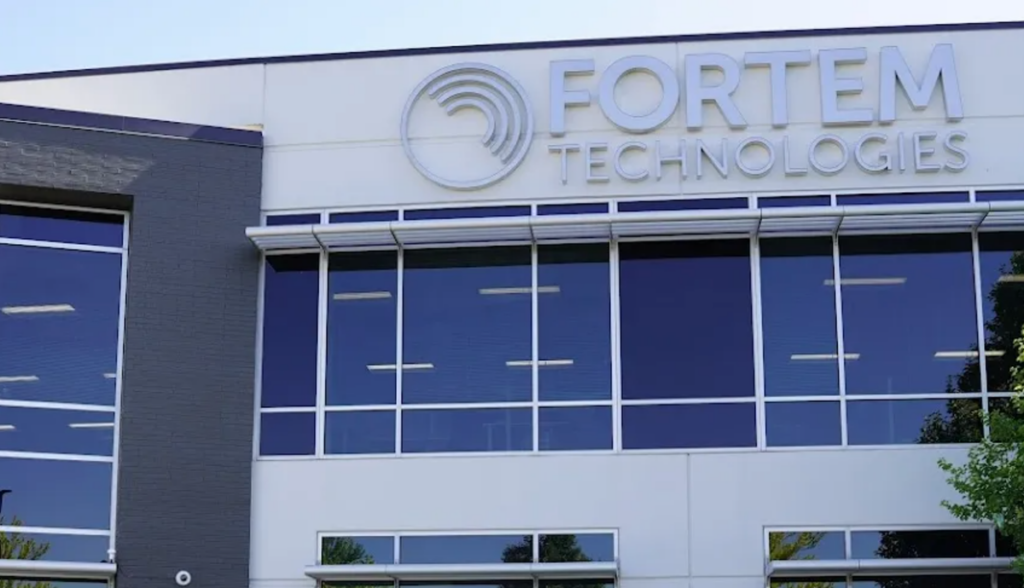
Lindon, Utah — February 4, 2026 — As drone warfare evolves, the emergence of coordinated, semi-autonomous drone swarms presents a formidable challenge to military defenses. A company based in Lindon, Utah, believes it has made a significant leap forward in meeting this challenge. Fortem Technologies, specializing in airspace security, has announced a breakthrough in counter-drone technology that could redefine how nations protect their airspace.
The ongoing war in Ukraine has accelerated the transformation of drone attacks, moving from isolated aircraft operated by remote pilots to swarms of low-cost, semi-autonomous drones. These swarms are designed to outmaneuver defenses through speed, redundancy, and the ability to adapt in real-time, often operating in challenging electronic warfare environments. The pressing question has been whether counter-drone systems can keep pace with these advancements.
In a recent live demonstration, Fortem Technologies executed what it claims to be the world's first fully autonomous five-versus-five drone intercept. This test involved AI-coordinated defensive drones capturing five incoming autonomous attack drones without human intervention and without causing collateral damage. The demonstration utilized Fortem's SkyDome® system—an advanced AI-driven command-and-control platform—integrated with five DroneHunter® F700 interceptor drones.
During the test, each attacking drone followed a pre-programmed autonomous mission. The SkyDome system successfully detected, tracked, and assigned intercept paths in real time, allowing the DroneHunter drones to neutralize all five threats simultaneously. This capability not only demonstrates the efficiency of the system but also raises the bar for autonomous drone defense.
Fortem's advancements are critical, especially as drone swarms become increasingly common in military and civilian airspace. Reports of drone incursions disrupting major European airports highlight vulnerabilities in both military and commercial infrastructures. Fortem’s ability to employ autonomous drone-on-drone interceptions could change the landscape of air defense, providing a scalable alternative to traditional, costly missile systems and reducing reliance on human operators.
“As hostile drone capabilities become more autonomous and scalable, defending against swarms is no longer a theoretical problem,” said Fortem CEO Jon Gruen. “This shows that autonomous defense can match autonomous attack—safely and at scale.”
Unlike many counter-drone systems that rely on fixed responses or signal libraries, Fortem’s SkyDome platform is informed by real-world operational data. This data, collected from live deployments and allied training environments, feeds directly into the AI models, enabling the system to adapt to new drone behaviors and engagement strategies without the need for manual reprogramming. This feedback loop played a crucial role in coordinating the five DroneHunter interceptors during the recent test, ensuring safety and operational efficiency even in constrained airspace.
The DroneHunter F700 interceptors used in this demonstration mark a significant redesign over earlier models, boasting enhanced onboard autonomy, maneuverability, and reliability. The Pentagon has already taken notice, selecting Fortem for rapid operational deployment programs aimed at bolstering field-ready counter-drone capabilities.
Fortem’s achievement also emphasizes Utah's growing status as a hub for defense technology, particularly in areas of autonomy, sensing, and aerospace systems. Companies like Fortem are part of a broader initiative in the state to accelerate defense innovation, supported by organizations such as 47G, Utah's defense and aerospace industry association. These efforts are connecting startups with military stakeholders, fostering an ecosystem that prioritizes the swift transition from prototype to operational capabilities.
Moreover, Fortem claims it remains the only company authorized to deploy a drone-on-drone kinetic interceptor in U.S. airspace. This regulatory clearance not only reflects their technical prowess but also their ability to navigate a complex regulatory landscape—a critical factor in the adoption of counter-drone technologies. Combined with repeat orders from U.S. allies and operational use in contested environments, Fortem stands out as a leader in the counter-drone sector, with systems that are now considered operational rather than experimental.
As drone warfare continues to evolve from isolated platforms to fully coordinated, autonomous systems, Fortem’s advancements suggest that future air defense may rely less on centralized firepower and more on rapid, autonomous aerial engagements. This shift could fundamentally alter how nations defend their airspace in an age where speed and automation are becoming paramount in military strategy.
For more information, visit fortemtech.com.
Bella Hadid & Adan Banuelos: The Shocking Lifestyle Clash That Ended Their Romance! What Really Happened?
You Won't Believe What Happens When Access is Denied – This Shocking Truth Could Cost You!

The Shocking Truth About Healthy Snacks: Are You Eating the Wrong Ones? Discover 2023's Game-Changer!

You Won't Believe What Happened When This Homeowner Fought Back Against Heartless Developers!

Winter Olympics Could Be Moved Up by 3 Months! Is Climate Change Already Changing Sports?
Winter Olympics in Jeopardy? IOC's Shocking Plan to Move Dates Amid Climate Crisis!
You might also like: