
You Won’t Believe What ‘Bridgerton’ Got Wrong About the Regency Era—3 Shocking Facts!

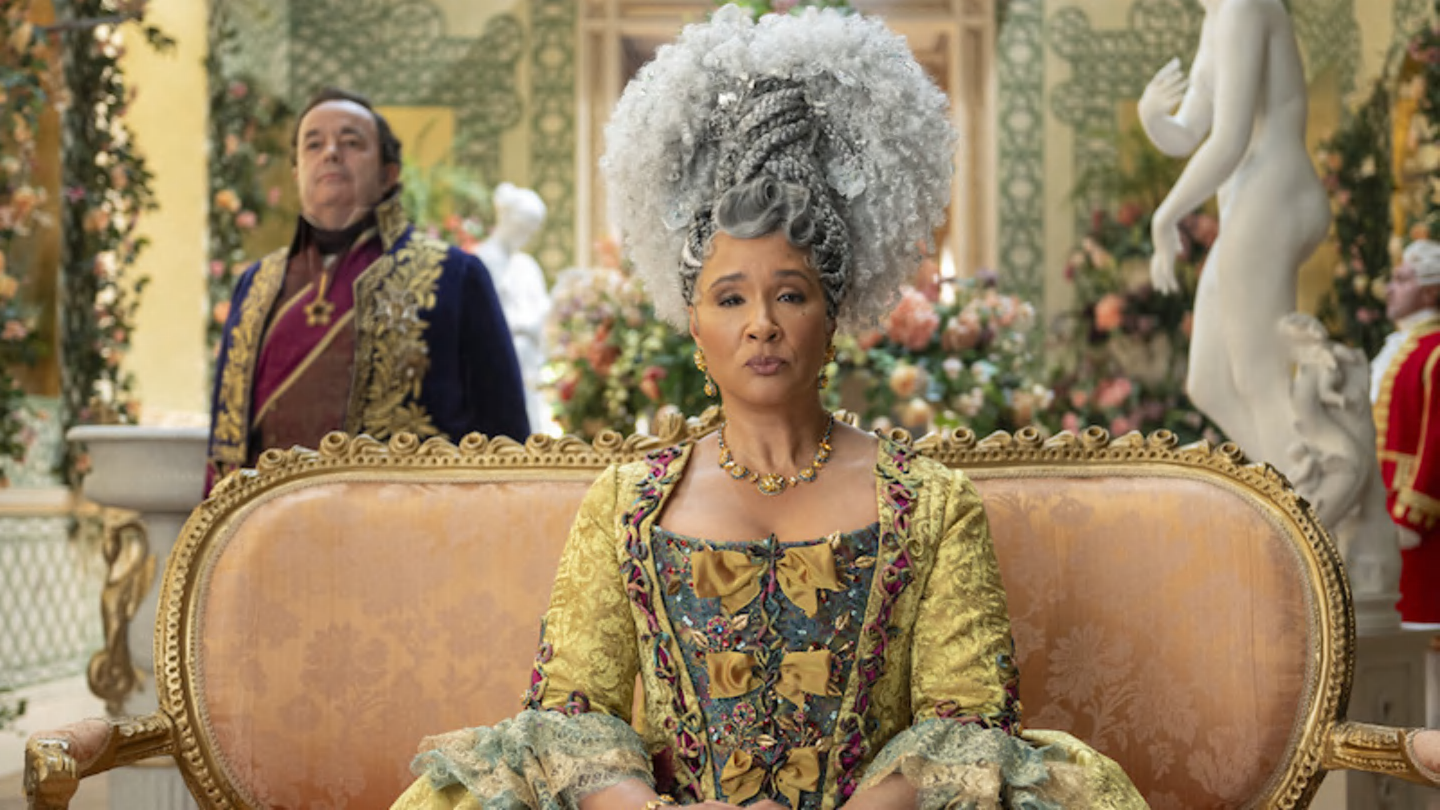
Fans of the hit Netflix series Bridgerton often find themselves captivated by the show's lush visuals and romantic storylines. However, beneath the glamour lies a tapestry woven more from fantasy than historical fact. While the series, based on the novels by Julia Quinn, does capture some elements of the Regency era in England, it also takes significant creative liberties, especially in its portrayal of society and social norms. With the upcoming Season 4, it’s worth examining the mixture of fact and fiction that fuels its narrative.
Fact vs. Fiction in Bridgerton
One of the few authentic elements in Bridgerton is the presence of “scandal sheets.” These gossip columns were indeed a staple during the Regency era, known for chronicling the lives of the elite. Lady Whistledown’s Society Papers mirror the real “scandal sheets” that thrived on rumors and societal happenings. With the advent of looser printing restrictions, such publications became popular for sharing the latest news about the upper echelons, including marriages and scandals.
Equally accurate is the term “the ton,” referring to the high society of the time. Derived from the French phrase le bon ton, meaning “good manners,” it encapsulated the wealthy aristocrats and families whose behaviors and fashions set the era's standards. During the London Season, when Parliament was in session, strict social rules governed interactions, from introductions to the presentation of debutantes, underscoring a rigid yet elaborate social structure.
Another factual aspect depicted in the series is the annual debutante ball hosted by Queen Charlotte. Established in 1780 by King George III to celebrate the queen's birthday, this event quickly became the highlight of the London social calendar. The balls served not just as glamorous social gatherings but also as vital marriage markets, giving young women a chance to be introduced to society and allowing families to make advantageous matches. Etiquette was paramount, dictating everything from how many dances a debutante could accept to the manner of introductions at court.
However, not all of Bridgerton's depictions align with historical accuracy. The show portrays a level of racial diversity in elite circles that was largely fictional. While there were certainly people of color present in Regency England, especially in urban areas and port towns, the elite “ton” was predominantly white. There were a few notable exceptions, such as South Asian women who gained entry into British society through marriage, but these instances were rare. The show’s representation of a Black Queen Charlotte granting social equality and characters like Kate Sharma seamlessly navigating high society is largely a modern reimagining.
Additionally, the series takes creative liberties with the fashion of the time. The corsets worn by characters like Nicola Coughlan's Penelope are visually stunning but not historically accurate. Regency women typically wore lighter corsets or stays that offered support without the extreme cinching seen in the show. The exaggerated hourglass shapes depicted on screen would have been nearly impossible to achieve, as tight-lacing wasn’t common during that era. Furthermore, while the show opts for vibrant gowns and decorative hats, historical accuracy would dictate the use of bonnets and more subdued colors.
Lastly, the portrayal of Queen Charlotte as a powerful figure in governance is misleading. In reality, when King George III suffered from health issues starting in 1811, it was their son, George IV, who assumed the role of Regent. Although Queen Charlotte held the title of guardian over the royal children, she had little political authority and withdrew from public life, focusing on family matters rather than ruling the kingdom. This portrayal in the series accentuates her character as a strong leader, contrasting sharply with the more constrained reality of her actual role.
As Bridgerton prepares to debut its fourth season, fans revel in both its romantic escapism and the rich historical backdrop it provides, albeit with notable embellishments. The show invites viewers to enjoy a world where love stories thrive amid social intrigue while reminding us that true history often tells a different tale—one that is less bright, less diverse, and far more complex.
You Won't Believe How Jeff Cook's Real Estate Team Gave Back Over $100K Last Year!

Samsung Galaxy S26: Shocking Leaks Reveal $200 Price Drop & Features You Won't Believe!

Winter Storm Hits Hard: Is Trump's Climate Claim Really a Lie? Shocking Science Reveals the Truth!

ECU Health's Shocking Plan: Can One Nonprofit Save 10,000 Kids from Illiteracy? Find Out!

Oregon's Shocking New Public Defense Chief Could Change Everything—Find Out How!

College Football's Shocking New Jersey Patch Deal: Will Your Team Cash In or Crash Out?
You might also like: