
You Won’t Believe the Shocking Climate Impact of Those White Airplane Trails—Discover the Hidden Truth Now!

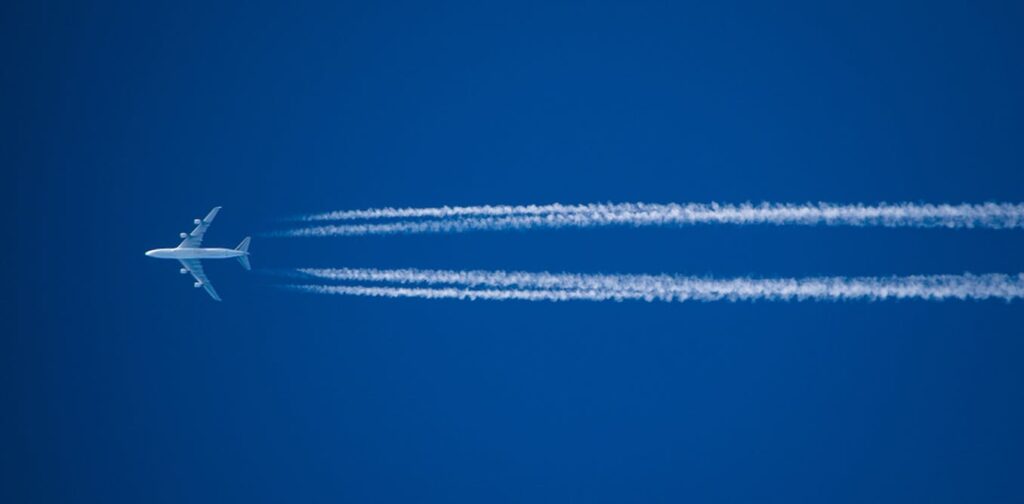
Contrails, the white streaks that trail behind aircraft, are more than just a common sight in our skies; they play a significant role in the ongoing conversation about climate change. Officially known as condensation trails, these man-made clouds fall into a specific category in the international cloud atlas: cirrus homogenitus. While they may appear innocuous, contrails contribute to the warming of our planet, primarily due to the carbon dioxide emitted by aviation. Although the precise impact of these wispy formations remains uncertain, recent findings indicate that reducing the number of contrails could significantly lessen the climate impact of air travel.
Made up of tiny ice crystals, contrails reflect sunlight, which has a cooling effect by reducing the energy that reaches the Earth's surface. However, they also trap some of the Earth's outgoing infrared radiation, leading to a net warming effect. Studies show that, on average, the warming effect of contrails predominates when considering their global impact throughout the year.
The Formation of Contrails
Contrails form at altitudes of approximately 10-11 kilometers in cold, humid regions of the atmosphere. Here, water vapor condenses onto soot particles emitted by aircraft engines, creating liquid droplets that freeze into ice crystals. The regions with the most frequent contrail formation are over Europe, the North Atlantic, and eastern North America, while they are considerably rarer in Asia.
Interestingly, while soot particles are essential for contrail formation, even engines that produce minimal soot can create them. This is because other particles generated in the engine plume can facilitate contrail development. Ongoing research into different fuel and engine technologies may lead to innovations that can either reduce the number of contrails formed or diminish their climate impact.
The characteristics of contrails depend on several factors, including the size and shape of the aircraft and its engine position. However, atmospheric conditions ultimately play a more significant role. In dry atmospheres, contrails dissipate within a few minutes, covering a small surface area and having a negligible climate impact. Conversely, in cold and moist conditions, contrails can linger for hours, merging to form extensive fields of ice clouds known as contrail cirrus. These expansive formations can significantly affect the climate, sometimes covering entire countries, as demonstrated in the UK and France.
Research suggests that some contrail cirrus clouds can exert a climate impact equivalent to tens or even hundreds of tons of carbon dioxide. This potency stems from two key effects: first, while contrails start from just a few hundred kilograms of water vapor and several grams of soot released per flight minute, they can gain mass from the surrounding humidity. Second, ice crystals within contrails absorb infrared radiation across a broad spectrum compared to carbon dioxide, which only absorbs in specific ranges. Thus, although the warming caused by a flight is initially dominated by contrails, carbon dioxide's effects endure far longer, influencing climate for centuries.
To mitigate the warming effects associated with aviation, one effective strategy could be rerouting flights to avoid regions where contrails are likely to form. However, scientists emphasize the need for improved weather forecasting of humidity at flight altitudes to facilitate this planning. Projects like Mist, which involves collaboration among Honeywell Aerospace UK and Boeing UK, aim to develop advanced humidity sensors to monitor contrail formation. These sensors could be integrated into commercial aircraft to enhance our understanding of how better humidity measurements can impact the predicted climate influence of contrails.
Many ongoing research initiatives are dedicated to quantifying the climate impact of contrails and exploring methods to generate fewer warming contrails. While advancements in fuel and engine technology may take time, optimizing flight trajectories based on real-time weather data presents a quicker route to reducing contrail formation—potentially slowing down the climate warming effects of the growing aviation sector.
You Won't Believe How This One Neighborhood's Real Estate Prices Skyrocketed by 200%—Find Out Why!

Is Climate Change Fueling a 300% Surge in Extremism in Kenya? The Shocking Truth Revealed!

Texas A&M's 2026 NFL Draft Shockers: You Won't Believe Where These Future Stars Are Heading!

Shocking Twist: Lakers' Game 5 Announcement Could Change Everything—What You NEED to Know!

Spotify's Shocking New Fitness Partnership Will Change Your Workout Forever—Are You Missing Out?

Unlock the Shocking Secrets of the GWS 2026 Wellness Symposium—Don’t Miss Out on May 12!
You might also like: