You Won't Believe How U of I Students Reacted to a Shocking ICE Post – Outrage or Support?

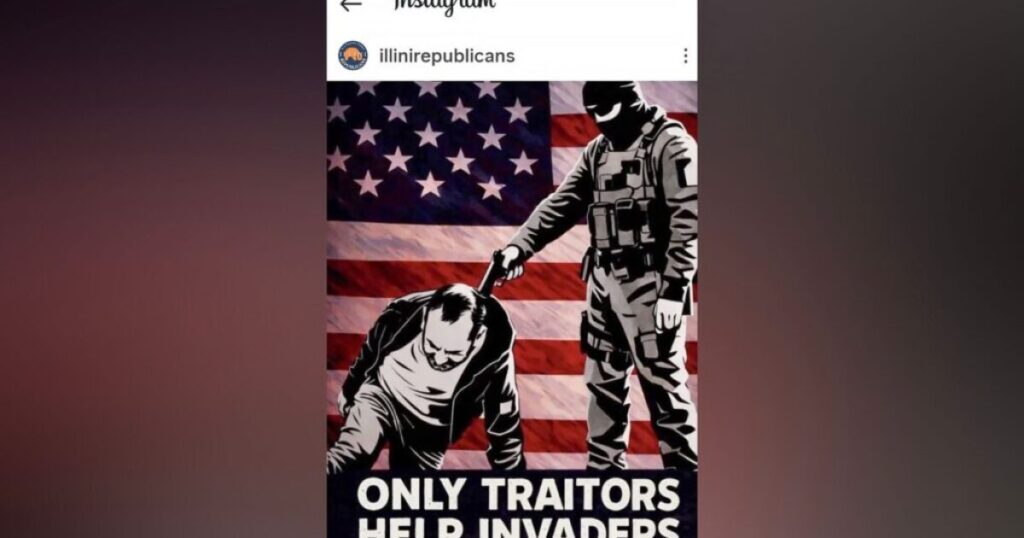
The Illini Republicans, a registered student organization at the University of Illinois Urbana-Champaign, recently faced backlash over a controversial social media post that depicted the shooting death of Alex Pretti by federal agents. This Instagram post, which has since been removed, was part of a larger statement in which the organization declared its support for the Immigration and Customs Enforcement (ICE). The post sparked over 1,500 comments, many of which criticized the group's sentiment that "only traitors help invaders."
Patrick Wade, spokesman for the University of Illinois Urbana-Champaign, clarified the university's stance on the matter, stating that registered student organizations operate independently. “They are responsible for managing their own affairs, and their social media accounts represent their own views, not those of the university,” Wade said. He emphasized that while these organizations must comply with university policies, the institution cannot impose disciplinary actions based solely on the content of protected speech. Wade added that the university does not condone hate and intolerance, and the post has been reported to the Title IX Office for review.
This incident occurred just hours after a significant protest at the University of Illinois and Urbana High School, where more than a thousand students walked out of classes to demonstrate against the Trump administration's stringent immigration policies. Finlay McIntosh, president of the Illini Republicans, defended the organization’s post, claiming it was an exercise in political expression protected for student groups at public universities. “Our organization supports an America First approach to public policy, including support for ICE and DHS carrying out their lawful duties under U.S. immigration law,” McIntosh stated. “Our advocacy is focused on policy and enforcement of existing law, NOT on targeting or threatening individuals or groups.”
Students at U of I voiced their strong reactions to the post, highlighting the deep divisions on campus regarding immigration issues. Sophomore Robin Stevens expressed her disgust, particularly at the graphic's portrayal of an ICE officer aiming a weapon at a person. “That really got me good,” she said. Stevens criticized the Republican organization for what she sees as a troubling embrace of alt-right perspectives within the party. “I think that what ICE is doing is really deplorable, and I think that having an established Republican community on campus supporting that is not ideal for the state of the Republican Party,” she added.
Freshman Luke Gaston, a Christian, shared his concerns about the devaluation of human life in the rhetoric surrounding immigration policy. “I think when we devalue humans like that… we’re truly doing a great wrong,” he said. Gaston characterized the graphic as violent and suggested it spread hate rather than constructive dialogue. He emphasized the importance of being mindful of the content shared, especially when representing the university's values.
Jackson Ward, another U of I freshman, found the post to be insensitive but acknowledged the dilemma surrounding free speech. “I feel like they should be able to post whatever they want because it’s what they believe,” he commented. However, he recognized the potential consequences of promoting violent imagery and rhetoric. “It can be tough because violence could be provoked and bad things can happen from it,” Ward added.
Junior Jack Hooker delved into the complexities of the First Amendment, stating that advocacy for violence against civilians should not be tolerated. “Since the post is advocating violence against civilians, children, nonviolent people who are just trying to live their lives, I would say they should not really be allowed to post to advocate for that sort of violence,” he noted. Hooker reflected on his past views, expressing hope that individuals could evolve and reconsider harmful beliefs. “I hope that someday they can sort of see what’s wrong with what they’re saying and what they’re believing,” he said, urging a shift towards a more compassionate approach to policy and advocacy.
The uproar surrounding the Illini Republicans' post highlights the contentious nature of immigration discourse in America, particularly among younger generations. As the nation grapples with divisive policies and their implications, student organizations at universities play a pivotal role in shaping the narrative and influencing public opinion.
You Won't Believe What Happens When Access to This Secret Page is Denied – Shocking Truth Revealed!
Adrienne Adams Shocks NY: Is She the Game-Changer the Governor's Race Desperately Needs?
This Underdog at SBVC Just Raised Eyebrows—You Won’t Believe His Shocking Stats!
Miran’s Shocking White House Exit: What Did He Know That Could Change Everything?

Shocking Twist: Cole Palmer's Future Hangs by a Thread as James and Neto Battle for Fitness!

Shocking Truth: 70% of Americans Skip Flu Shots—Could YOU Be Next? Find Out Why!
You might also like: