You Won't Believe How Robert F. Kennedy Jr. Is Shaking Up Politics—The Shocking Truth Revealed!

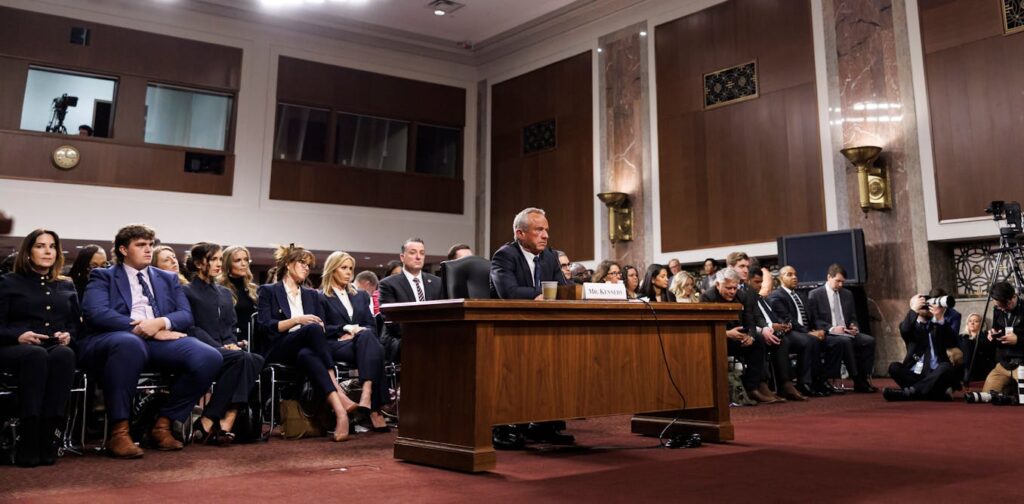
Robert F. Kennedy Jr. is not merely a controversial figure in American politics; he has transformed suspicion into a defining aspect of his political identity. This has allowed him to weaponize the language of transparency, effectively eroding public confidence in health institutions and practices. His journey is not just about vaccines; it unveils a larger narrative about how distrust is cultivated, turning uncertainty into a perceived norm.
Born in 1954, Kennedy is the nephew of John F. Kennedy and the son of Robert F. Kennedy, a lineage steeped in American idealism. However, as noted by the French newspaper Le Monde, he has increasingly become tied to conspiracy-laden activism and vaccine skepticism, creating a complex blend of legacy and rebellion. His early career centered on environmental law, where he established credibility by challenging corporate polluters and advocating for communities harmed by environmental degradation. This formative period laid the groundwork for a rhetorical style that portrays powerful entities as threats to the vulnerable.
The pivot in Kennedy’s focus to public health began in the mid-2000s when he took on a leadership role with the Children’s Health Defense, a prominent organization in the anti-vaccine movement. He has continuously promoted discredited claims linking vaccines to autism, despite overwhelming scientific consensus rejecting such assertions. This trajectory reveals a troubling shift: from environmental advocacy focused on tangible harm, Kennedy transformed vaccines into symbols of institutional failure.
Crafting the Rhetoric of Doubt
Kennedy's unique approach to rhetoric is marked not by outright opposition to vaccination, but by a careful construction of language that fosters doubt. He often asserts, “I am pro-safety… I am not anti-vaccine… All of my kids are vaccinated.” This disclaimer is a calculated strategy that allows him to maintain an appearance of moderation while simultaneously propagating skepticism. By framing doubt as a rational position, he normalizes distrust in health authorities without directly claiming to oppose vaccines.
During the COVID-19 pandemic, this rhetoric gained even more traction. Nature identified him as a leading figure in spreading vaccine misinformation, while NPR highlighted how he amplified skepticism toward public health officials. His narrative often frames vaccination as a coercive government action, positioning himself as a voice for concerned parents against an elite establishment. His statements, such as “Submit to the government, do what you’re told,” encapsulate this dichotomy between ordinary citizens and perceived elites.
This shift in discourse moves the discussion away from scientific evidence toward themes of freedom and betrayal. Kennedy’s method relies on the cultivation of uncertainty. He suggests that a lack of definitive proof is grounds for skepticism: “There isn’t proof… so shouldn’t we be open-minded?” This approach reframes scientific consensus as a premature conclusion, suggesting that skepticism is a virtue.
At times, Kennedy goes as far as to redefine the notion of science itself, claiming, “Science doesn’t say anything… Science is a dispute.” This recharacterization has far-reaching implications; if science becomes merely a collection of debates, then no amount of evidence can settle public discourse. As a result, doubt takes on a permanence that is difficult to challenge.
To lend credence to his dissent, Kennedy often resorts to moral storytelling. He invokes figures like Francis Kelsey, the FDA scientist who famously resisted thalidomide approval, suggesting that today’s dissenters may be tomorrow’s heroes. However, this analogy is misleading; questioning regulatory shortcomings does not equate to undermining decades of rigorous vaccine research.
When confronted, Kennedy frequently counters consensus with alternative studies, claiming that if he is wrong, he will “publicly apologize,” while maintaining that there are numerous other studies. This tactic defers closure indefinitely, creating a landscape where discussion never leads to resolution.
Moreover, Kennedy’s influence extends beyond rhetoric; it has begun to reshape public health institutions. Lawmakers have accused him of destabilizing vaccination governance, especially after he dismissed all 17 members of a key advisory committee, labeling the action as unprecedented and reckless. The American Public Health Association has criticized his record for propagating misinformation and poor scientific judgment. The journal The Lancet has warned that his actions could exacerbate global vaccine hesitancy, referencing the measles outbreak in Samoa as a tragic consequence of eroded trust.
Kennedy operates within a broader ecosystem that frames him as a persecuted purveyor of truth. A report from U.S. Senator Elizabeth Warren describes his leadership as a systematic pattern of anti-vaccine disruption. What emerges is not merely a narrative of individual skepticism, but a movement where distrust is foundational, and transparency serves as a political tool.
The critical question that RFK Jr. poses to American society is not simply about the safety of vaccines—an issue that has been extensively validated by scientific research—but rather about the very survival of democratic societies in the face of a strategic assault on shared reality.
As we consider the implications of Kennedy's rhetoric, it becomes apparent that the story transcends one man's claims. It challenges us to reflect on how doubt can become a form of identity and questioning a tool of power. In a world where the language of science becomes a battleground rather than a methodology, the implications for public discourse and trust are profound. Science risks losing its role as a common reference point, becoming instead a flashpoint for conflict, with competing narratives shaping who gets to define reality.
Kennedy may have started as an environmental advocate, but he has evolved into a prominent figure in public health dissent. Today, he represents a more troubling aspect of political life—one whose influence lies not in resolving uncertainty but in perpetuating it. As we navigate this complex landscape, we must grapple with the urgent question: what does Kennedy’s rhetoric enable in our society?
Barnes' Shocking Utility Rate Overhaul: Will Your Bill Soar or Drop? Discover the Truth Now!
Your Browser Might Be Putting Your Privacy at Risk—Find Out How 90% of Users Are Unknowingly Exposed!
Iranian Women’s Soccer Team in Crisis: 10 More Players Risk Everything for Freedom!

You Won't Believe Which SEC Towns Are the Hidden Gems and Total Duds! Find Out Now!

Oil Prices Are on the Edge of Chaos—Are You Prepared for the Shocking Fallout?

NYC’s First Infrared Yoga Studio Promises Shocking Weight Loss Results—Find Out How!
You might also like: