
You Won't Believe How One Kenyan Filmmaker Is Shocking the World With Her Climate Change Message!

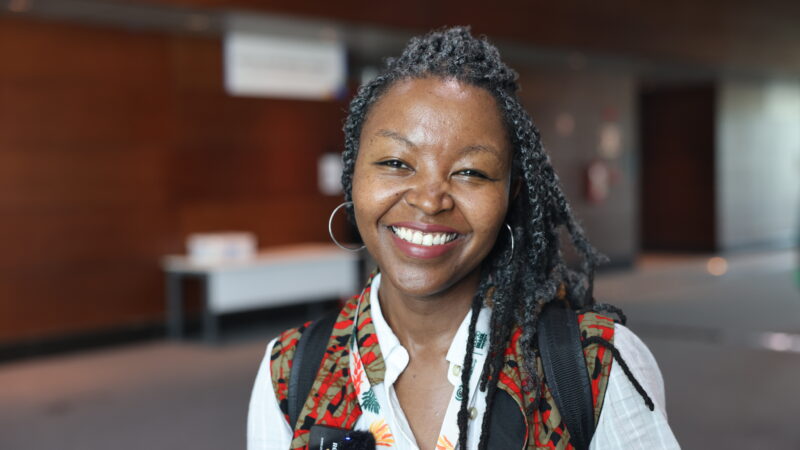
As the world grapples with the escalating climate crisis, voices from the Global South are becoming increasingly vital in shaping the narrative. One such voice is that of **Emily Wanjiru Nderitu**, an impact producer with **Doc Society**, a global organization dedicated to empowering independent storytellers. At the **2025 United Nations Climate Change Conference (COP30)** in **Belém, Brazil**, Nderitu emerged as a compelling advocate, emphasizing the need for African voices to be central in the global climate conversation. Strikingly, she noted, “COP is an event. Climate is not an event.” This perspective underscores the urgency of integrating local experiences into the broader discourse on climate change.
Every village in Africa carries its own story about the rain—stories rooted in prayers, warnings, and the shared memories of a land that once gave abundantly. Nderitu has dedicated her career to helping these narratives gain visibility and recognition on the international stage. Her work is part of a broader movement of young African change-makers who are determined to ensure that the continent's unique narratives are not sidelined in global discussions.
📰 Table of Contents
Changing the Climate Conversation
For nearly a decade, Nderitu has been at the forefront of transforming the way the world discusses climate change. Through the **Democracy Story Unit** and the **Climate Story Labs**, she coordinates efforts that bridge the gap between storytelling, science, and policy. “We bring together storytellers, scientists, and policymakers to ask: what are the stories we need right now, in this place?” she explained. Her approach diverges from the typical technical communication often associated with climate debates; instead, she focuses on a deeply human, emotionally resonant perspective.
Her journey began in **2016** with the award-winning documentary, **Thank You for the Rain**, which followed **Kisilu Musya**, a Kenyan farmer turned climate activist. This experience revealed to Nderitu the potent role storytelling plays in connecting lived experiences with global policy. “That film changed me. It made me realize storytelling could be the missing piece… the bridge between lived experience and global policy,” she recalled.
Nderitu's philosophy maintains that Africa's intrinsic connection to land and nature gives it a unique advantage in the climate fight. “In Africa, we don’t always say ‘climate change.’ We talk about delayed rains, the cows, and the crops,” she observes, emphasizing that climate discussions are embedded in daily life. “Nature is not out there; it’s intertwined with how we live, how we farm, how we pray.”
According to Nderitu, this connection provides a treasure trove of wisdom for climate adaptation. “We have generations of wisdom on how to adapt—on when to plant, how to share water, how to rebuild after loss,” she stated. Yet, she lamented that global discussions often overlook these invaluable insights in favor of more scientific approaches. “They speak science; we speak survival.”
Storytelling as a Tool for Change
The work Nderitu leads at the Climate Story Labs serves as a creative incubator, uniting diverse groups—from scientists to local leaders—to craft a shared narrative about climate change. “We treat stories as living organisms,” she said, noting that the collective effort works to ensure these stories create lasting impact in their communities.
She has seen firsthand how impactful storytelling can lead to tangible change. For instance, a film screening on land rights in Kenya catalyzed a town hall meeting that compelled local leaders to revise outdated water policies. Similarly, in South Africa, a community photo project on drought inspired the development of new school garden programs. These stories may not have garnered international headlines, but to the communities involved, they were life-altering. “Impact doesn’t have to trend. It just has to work,” Nderitu affirmed.
Her unwavering optimism is evident, even amid the challenges that climate diplomacy often faces. “The real work begins after COP—in the fields, in the films, in the small rooms where people decide what to do next,” she explained. For Nderitu, the urgent realities of climate change in regions like **Machakos**, **Kilifi**, or **Karamoja** underscore the necessity for immediate action that acknowledges the lived experiences of those most affected.
As COP30 progresses, Nderitu and her colleagues are advocating for a new form of climate diplomacy—one that prioritizes truth over targets. “If you want to change how people act, change what they believe,” she stresses, adding that belief begins with storytelling. In a conference steeped in data and numbers, her emphasis on empathy stands out as a potential game-changer, presenting a pragmatic approach to a crisis that often feels overwhelming.
Emily Wanjiru Nderitu is not just promoting African stories in climate discussions; she is reshaping the very framework through which we understand climate change. As she pushes for a future where local narratives inform global priorities, it is clear that her work is not just about visibility—it’s about transforming the values that drive climate action worldwide.
Will Your Next Smartphone Cost You $500 More? Experts Reveal Shocking Predictions for 2026!

You Won't Believe How Sieh Bangura Shocked Everyone with 149 Yards in Ohio's Stunning Frisco Bowl Win!

Discover the 10 Surprising High-Protein Snacks Nutritionists Say You MUST Try This Winter! Don’t Miss Out!

Media Giants Demand BILLIONS from Google, Meta & Apple—What Happens Next Will Shock You!

Tomorrow's Market Opens: Are You Prepared for THIS Shocking Turn? Experts Predict a 500-Point Drop!

Why Investing in Newsmax Stock Could Cost You More Than Just Money—Find Out How!
You might also like: