You Won’t Believe How Much Texas College Athletes Are Making—The Shocking Truth Revealed!

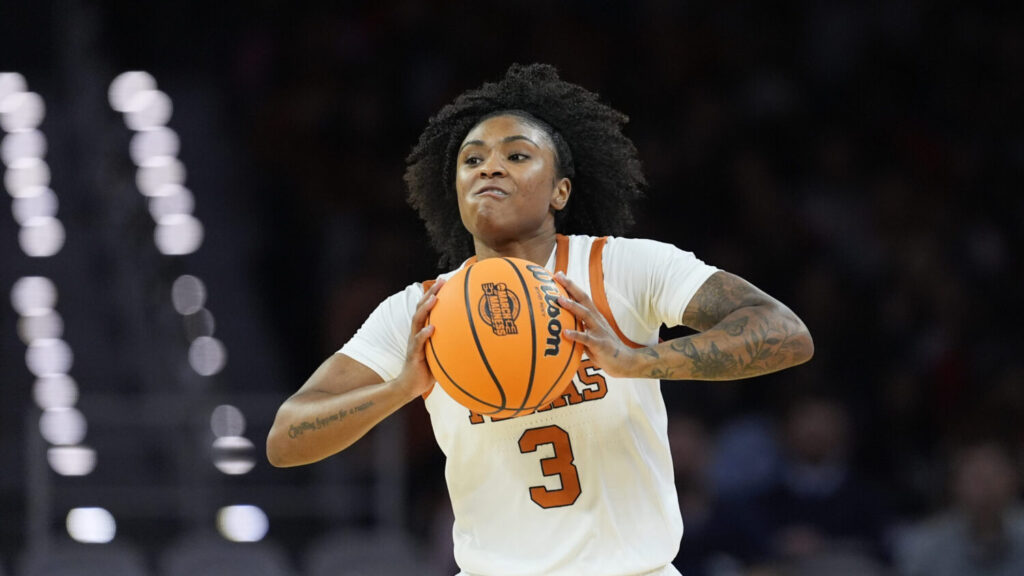
As the NCAA basketball season reaches its climax, a new era defined by student-athlete compensation is raising significant questions about fairness and transparency in college sports. The recent Sweet 16 matchup in Fort Worth, Texas, showcased Texas guard Rori Harmon making decisive plays, but off the court, the implications of player compensation are creating ripples that could change the nature of competition.
Since July 2025, schools across the U.S. have been allowed to distribute $20.5 million annually in revenue sharing to student-athletes, a development stemming from a multibillion-dollar settlement against the NCAA. Additionally, since 2021, student-athletes have been permitted to enter into Name, Image, and Likeness (NIL) deals with private companies, further complicating the landscape of college athletics.
In an effort to shed light on how much athletes in Texas are making, Houston Public Media submitted public records requests to 11 Texas universities—including the University of Texas at Austin (UT-Austin), Texas A&M University, and the University of Houston—asking for financial information related to student-athlete compensation. However, the universities largely declined to provide these records, citing state legislation that keeps NIL payments confidential.
Daniel Libit, an investigative reporter for Sportico, argues that the refusal to disclose this information represents a troubling trend in transparency for public institutions. “Now that college athletes are getting directly compensated, they should fall under the same scrutiny as anyone else benefiting from tax dollars,” Libit stated, emphasizing that public records laws are designed to enable scrutiny of financial dealings.
Interestingly, while UT-Austin provided details about its coaching salaries—showing that head football coach Steve Sarkisian earns a $4.4 million base salary—information on athlete compensation remained elusive. The school reported distributing $13.5 million in revenue-sharing payments to student-athletes from July 2025 until March 2026, indicating a potential trajectory toward the $20.5 million cap set by the settlement.
Meanwhile, Texas Tech and the University of Houston also disclosed coaching compensation figures, but when it came to student-athlete pay, they referred to the Texas Attorney General's office, citing state privacy laws and federal protections under the Family Educational Rights and Privacy Act (FERPA).
State Representative Carl Tepper, who authored the legislation allowing for direct athlete compensation, expressed concerns about transparency as well. He posited, “It seems to me that disclosure is always a good thing, but if that puts us at a competitive disadvantage with other states, we’d have to look at it.”
This issue is not unique to Texas. Across the U.S., universities are wrestling with how to balance institutional interests with public accountability. For example, in Louisiana, three news organizations recently filed a lawsuit against Louisiana State University after being denied access to detailed compensation records for student-athletes.
The backdrop to these developments is a significant shift in the NCAA's operational structure. For decades, college athletics adhered to an amateur model, limiting student-athletes to scholarships. As Tommy McClelland, vice president and director of athletics at Rice University, recounted, even the most minor benefits were once deemed violations of NCAA rules. Yet, with recent court rulings allowing NIL compensation and subsequent revenue-sharing provisions, the landscape has irrevocably changed.
As the current NCAA tournament unfolds, questions remain about the impact of these financial changes on competition. Historically, March Madness has seen underdog teams, or “cinderellas,” making surprising runs deep into the tournament. The 2022 success of St. Peter's University, a No. 15 seed that advanced to the Elite Eight, serves as a stark contrast to this year's Final Four, which consists entirely of higher-seeded teams.
“When you congregate these dollars into these top programs, it makes cinderella stories less likely,” McClelland noted, acknowledging that while upsets did happen this year, they were fewer in number. The implications for the future of college sports, particularly for smaller programs and schools, are significant and troubling for many advocates of amateur athletics.
The ongoing debate about student-athlete compensation reveals a complex web of challenges. As schools navigate this new landscape, the need for transparency is paramount. With the current system lacking clear regulatory guardrails, there is a palpable sense of uncertainty surrounding how these financial relationships will evolve and impact both athletes and institutions.
As policymakers grapple with the implications of these changes, the future of college sports—and the question of who truly benefits—hangs in the balance. With increasing financial pressures and a landscape shaped by competition for talent, the need for accountability and transparency has never been more critical.
Bucks Fans: Don’t Miss Out on These 3 Shocking Final Four Draft Prospects That Could Change Everything!

Unbelievable! Eight Arrested in Shocking $2 Million Health Care Fraud Scandal—What You Need to Know!
Heart-Stopping Moment: How Villanova's Trainers Rescued Coach Josh Steinbach in a Life-or-Death Crisis!
You Won't Believe What I Discovered About the Garmin Forerunner 970—#3 Will Shock You!

Wealth Firm Shockingly Sells 50% of Its Stake in Controversial Oklo Nuclear Startup – What’s Next?

Is This Shocking Trade the Only Hope to Save Ja Morant's Career by 2026?
You might also like: