
You Won't Believe How Much More Rain Your City Will Get—Shocking Stats Inside!

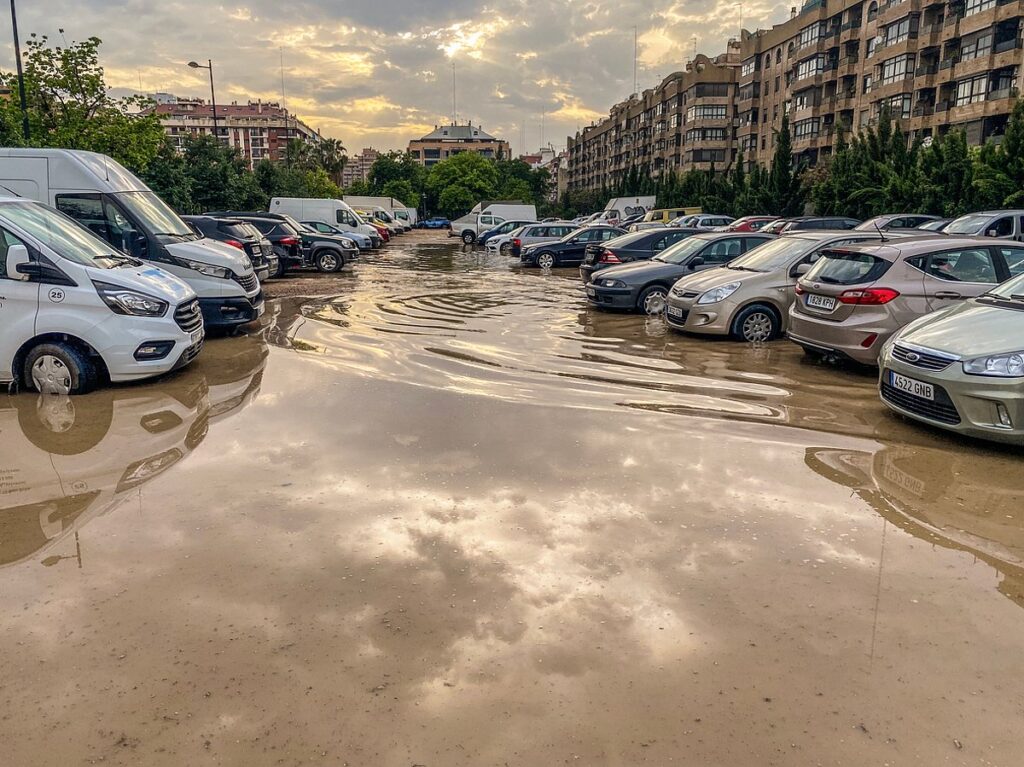
The recent severe flooding in Valencia, Spain highlights an urgent reality: extreme weather patterns are increasingly influenced by global warming. An in-depth analysis published in the journal Nature Communications on February 17, 2026, has shed light on the October 2024 flash floods that resulted in over 200 fatalities—the deadliest flood-related disaster in Europe since 1967. The region experienced an astonishing 771.8 mm of rainfall in just 16 hours, with a record-breaking 185 mm falling within a single hour.
The analysis reveals that this intense rainfall was exacerbated by climatic changes, particularly the increased moisture in the atmosphere due to global warming. According to the study, which involved scientists from various research institutions in Spain, Italy, and Switzerland, the warming effect strengthened the one-hour rainfall rate by approximately 20% for every degree Celsius increase in temperature. This figure is striking, as it is nearly three times greater than what is traditionally expected based on the Clausius-Clapeyron equation, which suggests a 7% increase in atmospheric moisture for each degree of warming.
The flash floods were triggered by a series of intense thunderstorms, spurred by a phenomenon known as a cut-off low—a condition where cold air in the upper atmosphere collides with warm air from the North Atlantic. This dramatic atmospheric contrast created instability, leading to the formation of thunderstorms. Moreover, the cut-off low attracted moisture from the Mediterranean Sea and northwest Africa, manifesting as atmospheric rivers that further contributed to the deluge.
The research revealed that other characteristics of the rainfall during this storm event were also linked to climate change. The analysis indicated that the rate of rainfall over six hours was intensified by 21% and the area experiencing total rainfall above 180 mm increased by 55% compared to pre-industrial times (1850-1900). Additionally, the overall volume of rainfall in the River Jucar catchment area rose by 19% due to the warming trend.
While rapid attribution analyses, such as those conducted by organizations like World Weather Attribution and ClimaMeter, are valuable for providing quick assessments of the role of climate change in extreme weather events, the authors of this study emphasize that such analyses do not capture the full picture. Rapid methods typically use probabilistic models focusing on surface parameters like total precipitation and wind speed. In contrast, the physical-based approach taken in this study delves into the underlying atmospheric dynamics, offering a more thorough understanding of how warming influences storms at a sub-daily level.
This detailed methodology allows researchers to assess changes occurring in shorter time frames—such as hourly or three-hour increments—something that is often overlooked in daily-based analyses. The findings point to a fundamental change: the increased water vapor in the atmosphere due to evaporation from warming not only heightens storm intensity but also alters the very mechanics of storm development. The result is stronger storms capable of delivering more rainfall in shorter periods.
“This study highlights that future projected scenarios for extreme rainfall events are already becoming evident,” the authors concluded. They emphasized the pressing need for accelerated climate change adaptation strategies to enhance urban resilience, particularly in the Western Mediterranean region, which is increasingly susceptible to such extreme weather events.
The implications of these findings extend beyond Europe. They underscore a global trend where cities and regions must prepare for more frequent and intense weather events linked to climate change. The Valencia floods serve as a grim reminder of the escalating risks we face and the urgent need for comprehensive climate adaptation measures.
You Won't Believe Which All-Conference QB Just Transferred to a Playoff Contender! Shocking Details Inside!

Wall Street on Fire: Can AI Fears Really Fade as Dow Soars? Shocking Fed Insights Await!
Trump and Xi's Shocking Taiwan Talks: What You MUST Know Before It's Too Late!

The Webster Hotel's Shocking Transformation: Are You Ready for This Game-Changer This Summer?

Shocking Revelations: What the Fulton Election Raid Is Hiding from You!

You Won't Believe What These Bipartisan Housing Bills Could Mean for Michigan Homeowners!
You might also like: