
You Won't Believe How Drones Are Saving Your Data from Cell Tower Failures—Find Out Now!

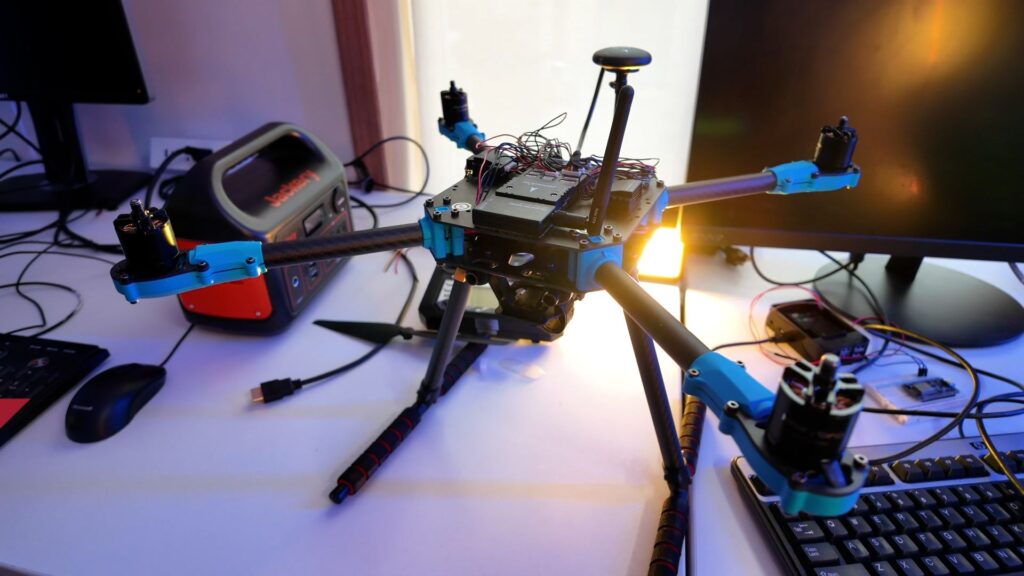
As our reliance on mobile networks grows, so does the challenge of maintaining reliable connectivity. Traditional cell towers, while effective, often struggle during peak times or when infrastructure fails unexpectedly. A promising solution is emerging from the Stevens Institute of Technology, where researchers are exploring the potential of drone swarms to function as temporary cell towers. This innovative approach could revolutionize how we think about mobile communications, especially in urban environments.
The system, aptly named AURA-GreeN, employs coordinated drones that act as mobile radio units. Unlike fixed towers, these aerial nodes can adapt their positions and roles based on real-time network conditions, effectively creating a flexible layer of coverage that operates alongside existing infrastructure. Ying Wang, an associate professor at Stevens' Department of Systems Engineering, emphasizes the significance of this innovation, particularly in densely populated urban areas. “That will be felt particularly hard in big cities with large populations and fewer spaces to add more cell phone towers,” she explains. “In busy cities — especially during things like traffic management, disasters, or search-and-rescue — we need fast, reliable wireless communication.”
What sets AURA-GreeN apart is its dynamic coordination system. It continuously evaluates various factors such as signal quality, interference, and traffic load to determine the most efficient way to route data and allocate spectrum. This adaptability aims to keep connections stable even during times of congestion or partial network failure, making it a critical asset in emergency situations.
Beyond maintaining connectivity, AURA-GreeN enhances the “age of information,” a concept that refers to how current and relevant the transmitted data remains. According to Ishan Aryendu, a PhD candidate involved in the research, the system significantly improves data freshness, achieving a remarkable “460% improvement in the age of information.” This means that users are more likely to receive updates that accurately reflect real-time conditions, which is crucial in scenarios where timing is vital.
However, the challenge lies in balancing multiple objectives such as reducing delays, optimizing spectrum use, and ensuring stable connections while staying within energy constraints. While initial testing shows promise, the real-world deployment of AURA-GreeN could introduce complexities that controlled environments do not fully capture.
The potential applications for this technology extend beyond just emergencies. Large gatherings, such as concerts or sporting events, often see an influx of smartphone users that can overwhelm traditional networks. AURA-GreeN could provide much-needed coverage during these high-demand periods. The research team notes that even beginner drones used for filming could contribute to this effort, stating, “We are piggybacking on drones that already provide the coverage of the event.”
This innovative approach to mobile communication not only addresses current limitations but also anticipates future challenges. As urban populations continue to grow and the demand for reliable connectivity rises, solutions like AURA-GreeN could become integral to our communication infrastructure. With further development and real-world testing, the deployment of drone swarms as temporary cell towers may pave the way for a more resilient and adaptable mobile network, enhancing connectivity where it's needed most.
Dow Plummets 500 Points! What Wall Street Analysts Are Saying – Are Your Investments Safe?

Sun Life's Shocking $1.5 Billion Acquisition: What This Means for Your Investments!
Smartphone Sales Plummet 9% — Is Your Favorite Brand Next to Disappear?

Unlock Your Galaxy's Hidden Power: Record Videos Directly to Storage—Most Users Don't Know This Trick!

You Won't Believe Why My Client Stormed Out in Just 3 Minutes—The Shocking Truth Revealed!

Why Did USL’s Deputy CEO Justin Papadakis Make a Shocking Exit? The Real Story Revealed!
You might also like: