
You Won't Believe How Coral Reefs Shaped Earth's Climate for 250 Million Years!

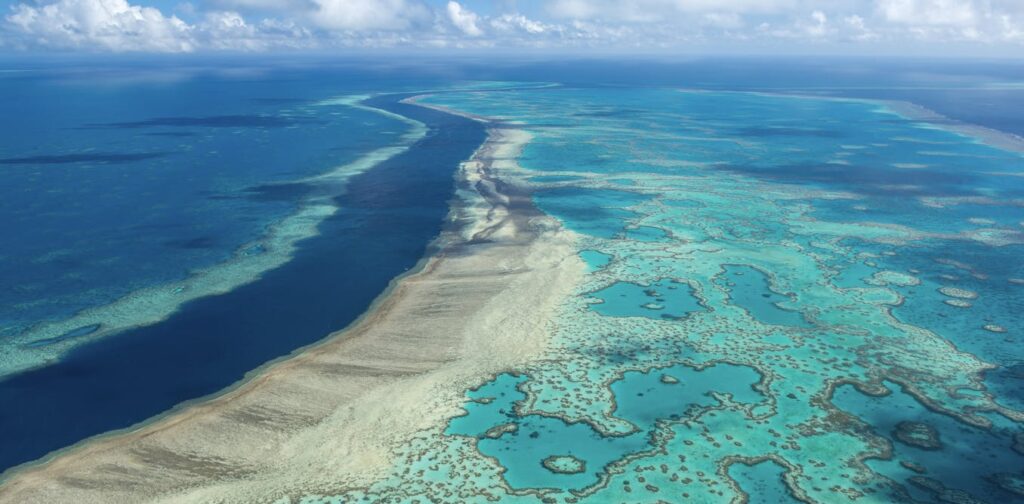
When we think of coral reefs, we often envision vibrant fish darting through crystal-clear waters and a kaleidoscope of colorful corals. However, recent research has revealed that coral reefs have played a critical role in shaping our planet's climate and biodiversity for over 250 million years. A new study published in the Proceedings of the National Academy of Sciences highlights how these underwater ecosystems are integral to Earth's climate system.
The study emphasizes the interconnectedness of geology, chemistry, and biology that coral reefs foster, creating a complex feedback loop that has profound implications for climate regulation. Over millions of years, the rise and fall of coral reefs have significantly influenced the recovery from historical carbon dioxide spikes, offering essential lessons for today's climate challenges.
Shifting Climate Patterns
Earth's climate has experienced dramatic fluctuations between hot and cold periods throughout its history. These shifts are largely linked to variations in atmospheric carbon dioxide levels—higher carbon concentrations lead to increased temperatures. The dynamics of this process often hinge on chemical interactions on land and the burial of carbonate minerals in the ocean.
A central factor in this balance is ocean alkalinity, which refers to the ocean's capacity to neutralize acids and absorb carbon dioxide. To understand how coral reefs have historically influenced this process, researchers reconstructed ancient geographical and climatic conditions spanning back to the Triassic Period, roughly 250 to 200 million years ago—the era when the first dinosaurs emerged. Their findings indicate that reefs significantly impacted the speed at which Earth recovered from major carbon dioxide releases.
In their analysis, researchers identified two major modes of Earth’s climate system that shift based on the state of coral reefs. The first mode occurs when tropical shelves—shallow, submerged continental areas in tropical zones—are expansive and reefs are thriving. In this scenario, calcium carbonate, the compound that forms coral structures, accumulates in shallow seas, which in turn decreases ocean alkalinity. As a result, the ocean's ability to absorb carbon dioxide diminishes. Consequently, when carbon levels rise due to volcanic eruptions or other factors, recovery can take hundreds of thousands of years.
The alternative state arises when climate changes, sea levels drop, or tectonic activities limit shallow habitats, leading to the decline or disappearance of reefs. In this phase, calcium builds up in the deeper ocean, increasing alkalinity and enhancing the ocean's capacity to absorb carbon dioxide more efficiently. This dual mechanism has been in operation for over 250 million years, influencing climate rhythms and the evolution of marine life.
As coral reefs collapse, an additional transformation occurs: nutrients that migrate from coastal regions to the open ocean stimulate plankton growth. These tiny organisms play a crucial role by absorbing carbon from surface waters and sequestering it in deep-sea sediments when they die. The fossil record also indicates that more diverse types of plankton emerged during periods of reef collapse, while evolutionary change slowed during phases dominated by reefs due to limited nutrients in the open ocean.
The cyclical nature of coral reefs has thus not only structured the carbon cycle but has also profoundly impacted biological evolution within marine ecosystems. This relationship stresses the influence that ecological dynamics can exert on broader climate patterns.
In light of contemporary climate challenges, the implications of these findings are stark. Humanity is currently adding carbon dioxide to the atmosphere at a rate comparable to some of the most significant carbon disruptions in Earth's history. Simultaneously, coral reefs are under severe threat due to global warming, ocean acidification, and pollution.
If current trends in reef decline parallel ancient reef-collapse events, a significant shift could occur, with calcium and carbonates potentially moving to the deep ocean once again. While this transition could enhance long-term carbon dioxide absorption, it would come with a catastrophic loss of biodiversity and ecological integrity. The key takeaway from this research is clear: while Earth will eventually recover, the timeline stretches into the thousands and even hundreds of thousands of years—far beyond human timescales.
As we grapple with the ongoing climate crisis, understanding the historical significance of coral reefs may be pivotal in guiding our responses to the challenges ahead. The lessons learned from these ancient ecosystems highlight the importance of preserving the natural balance of our oceans, ensuring a healthier planet for future generations.
Michigan's Shocking Doula Triumph: What Experts Say Will Change Maternal Health Forever!

You Won't Believe How Social Media Is Shrinking While Our Lives Expand—Find Out Why!

Urgent Warning: Zootopia 2 Popcorn Buckets Linked to Life-Threatening Hazard in Aussie Cinemas!

eXp's Shocking Move: How 'Consumer Choice' Could Cost Agents Millions—Are You Ready for This?

Is Your Vitamin C Habit Sabotaging Your Heart? Discover Shocking Truths That Could Save Your Life!

Why 247 Million iPhones Sold in 2025 Will Change Your Smartphone Game Forever!
You might also like: