
You Won't Believe How Climate Change Is Threatening the Last Monarch Butterflies—Time Is Running Out!

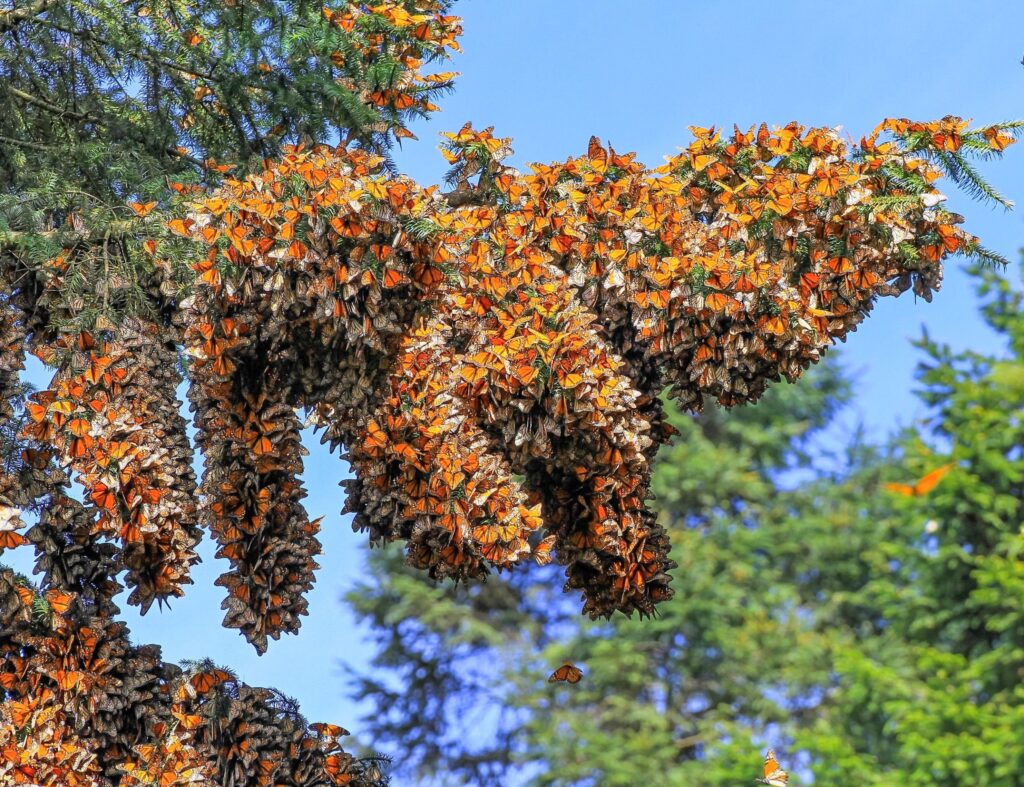
The majestic monarch butterfly undertakes an extraordinary journey each year, migrating from Canada and the United States to the mountainous regions of central Mexico. This delicate trek, while appearing graceful, relies heavily on precise weather conditions and the availability of specific plants. Recent research from the National Autonomous University of Mexico indicates that climate change could significantly disrupt this fragile balance, threatening the survival of these iconic insects.
The study delves into the entire lifecycle of the monarch, focusing not only on the adult butterflies but also on their vulnerable early stages—eggs and caterpillars. These life phases are especially sensitive to changes in temperature, rainfall, and plant availability. Every fall, a unique generation of monarchs sets off on their thousands-of-miles journey to winter in high mountain forests, including protected areas such as the Monarch Butterfly Biosphere Reserve.
However, recent years have seen a disturbing decline in the number of butterflies reaching their wintering grounds in Mexico. Several factors contribute to this decrease, including habitat loss, increasing prevalence of parasites, and unpredictable weather patterns. Most notably, rising temperatures have added an additional challenge to the monarchs’ annual migration.
The Importance of Milkweed
Central to the monarch's lifecycle is the milkweed plant, of which there are 46 species along the migration routes in Mexico. Female monarchs lay their eggs exclusively on milkweed leaves, and when the caterpillars hatch, this plant serves as their only food source. Additionally, milkweed provides crucial protection, containing chemicals that render both caterpillars and adult butterflies unappetizing to predators. Thus, the health of the milkweed population directly impacts the survival of monarchs.
To assess current breeding areas, researchers utilized data from Red Monarca and the citizen science program Journey North, creating a clearer picture of where monarchs reproduce today. Using computer models, the study estimates potential shifts in suitable habitats caused by climate change. The researchers prioritized factors such as temperature and rainfall patterns, milkweed distribution, and land use—including forests, farmland, and areas near water.
Projections for 2030, 2050, and 2070 indicate that as temperatures rise, suitable breeding areas for monarch eggs and caterpillars are likely to migrate southward within Mexico. One model predicts a potential reduction of suitable habitat by about 40 percent by 2070, while another estimates a decrease of around 8 percent. Even the lower estimate represents a significant loss and highlights a concerning trend.
Warmer temperatures affect not just survival rates but also influence when migration begins. If key areas become too warm, monarchs may misinterpret environmental cues, delaying their northward journey. This could lead to significant alterations in their migratory patterns over time.
Future predictions also suggest that milkweed zones may shift south, with some areas becoming suitable for growth. However, optimal conditions for milkweed, butterflies, and land must coincide, which may lead to smaller or less accessible habitats. While land use in parts of Mexico remains stable, the overarching threat appears to stem more from rising temperatures than from agricultural expansion.
The implications of this research extend beyond environmental concerns. The migration of monarchs creates a unique connection across Canada, the United States, and Mexico, requiring concerted conservation efforts that transcend political boundaries. As climate change continues to redraw the map of suitable habitats, the iconic monarch butterfly migration may be altered in ways that challenge its traditional routes and behaviors.
Researchers caution that while the species itself may not face direct extinction due to climate change, the migratory process is under threat. As suitable habitats shift further south in Mexico, some butterflies might abandon long-distance migrations altogether, with potential consequences for their physical attributes and survival strategies.
As this iconic migration faces unprecedented challenges, it serves as a reminder of our shared responsibility to protect the environment across borders. Climate change does not recognize political boundaries, and neither do the butterflies. The future of the monarch migration may look vastly different by the end of the century, urging immediate action for conservation efforts.
This pivotal study is published in the journal PLOS Climate, illuminating the urgent need for coordinated efforts to ensure the survival of these remarkable creatures.
You Won't Believe Why Aristotle Fund Just Dumped Alexandria Real Estate—The Shocking Truth Revealed!

Lake Oswego Man’s Shocking Threat to Police on Social Media Leads to Arrest – What He Revealed Will Stun You!

You Won't Believe What Real Estate Tokenization Is Missing—Find Out Before It’s Too Late!
Why Are Mosquitoes Swarming Europe? Shocking Health Risks You Must Know NOW!

You Won’t Believe What Happens When Crook County’s New Recovery Run Club Kicks Off – Join or Miss Out!

Trump's Shocking Move: Are New Election Rules Set to Change Everything? 5 Key Details You Can’t Ignore!
You might also like: