
You Won't Believe How Climate Change Is Threatening 1 Million Haor Farmers – Act Now!

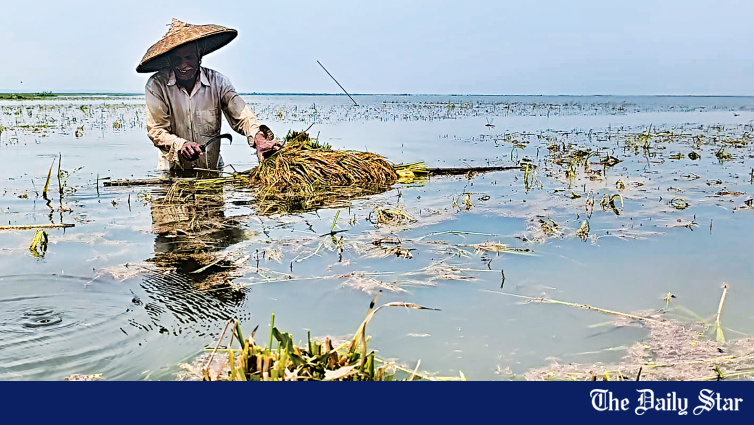
In Bangladesh's haor regions, the arrival of March and April brings not just the promise of harvest but also a wave of anxiety for farmers. The risk of flash floods—triggered by heavy rainfall and upstream runoff—can destroy crops just weeks before they’re ready to be harvested. Despite significant public investment in crop protection dams, farmers still face uncertainty about their yields, raising critical questions about whether these structures are truly the best solution for safeguarding agriculture in these vulnerable areas.
Historically, the elderly residents of the haor remember a time before crop protection dams became prevalent. Farmers relied on local knowledge, seasonal adjustments, and earthen barriers built communally. Following Bangladesh's independence in 1971, the establishment of a haor development board in 1974 marked the beginning of structured embankment construction, which ramped up significantly in the 1990s.
The turning point came with the catastrophic flash floods of 2017, which devastated crops and incited widespread protests across the haor region. In the aftermath, farmers demanded that the responsibility for dam construction be shifted from contractors to local stakeholders. This led to revisions in the Kabita Nitimala 2017 and the establishment of Project Implementation Committees (PICs) composed mainly of local farmers and community members.
Haor agriculture heavily relies on the cultivation of Boro rice during the dry season, accounting for nearly 30 percent of Bangladesh's total Boro rice production. In Sunamganj alone, Boro cultivation spans more than 223,500 hectares, supported by approximately 602 kilometers of embankments constructed in the current cycle, with the Bangladesh Water Development Board allocating around Tk 148 crore for these efforts. Despite such investments, farmers continue to grapple with the threat of crop loss and financial instability.
The necessity for crop protection dams cannot be overlooked. The haor regions remain particularly susceptible to flash floods, which arrive at critical times, often just before harvest, resulting in devastating losses. The memory of the 2017 disaster looms large over farmers who depend on their annual crop for their livelihoods. Dams provide at least a semblance of security, yet their reliability is frequently called into question.
Issues such as construction delays, subpar quality, inadequate monitoring, and premature rainfall undermine the effectiveness of these protective measures. In many instances, embankments are incomplete by their deadlines or develop cracks soon after construction. The increasing frequency of heavy rainfall and hailstorms in recent years has compounded these challenges, leading to crop damage even before harvesting. Such failures point to deeper institutional problems surrounding governance, planning, and accountability in dam construction.
Given the growing frequency of flash floods—exacerbated by climate change—there's a pressing need for a more comprehensive approach beyond crop protection dams. To enhance agricultural resilience, improving natural drainage systems is critical. Dredging rivers within the haor basin can bolster drainage capacity, while dredging downstream rivers like the Bhairab and Meghna may also be necessary to ensure a smooth flow of floodwater to the sea. Climate change has altered the timing of floods, with events now occurring as early as late March instead of late April, necessitating earlier harvesting strategies. If shorter-duration rice varieties, taking about 120 days to mature, could be developed and made available, reliance on dams could be significantly reduced.
Moreover, addressing the underlying causes of flash floods is essential. Heavy rainfall in the Meghalaya hills contributes significantly to the flooding in haor regions. Enhancing weather forecasting and early warning systems could empower farmers to make timely decisions. Restoring canals, wetlands, and natural drainage systems could also help mitigate sudden pressure on embankments. The government's canal excavation program, if effectively implemented, could provide substantial benefits to haor communities.
Crop diversification is another crucial strategy. Overreliance on a single crop heightens vulnerability to environmental shocks. Therefore, increasing attention to fish production and ensuring fishermen's rights to the wetlands could help create a more resilient agricultural system. Additionally, cultivating dry-season vegetables on elevated land, investing in fisheries, livestock, and floating agriculture can help spread risk. Using mechanized and faster harvesting technologies may also allow farmers to gather crops before floods hit.
For the construction of dams, it's imperative that PICs are composed based on eligibility and proximity rather than political affiliations. Local farmers, who depend directly on these structures, should play a more significant role in planning and monitoring their construction.
While crop protection dams are necessary, they often lead to unintended ecological consequences. The extraction of soil for these embankments can disrupt local ecosystems and lead to waterlogging in some areas while increasing flood pressure in others. Poorly designed dams can obstruct natural water flow and negatively impact fish migration routes, ultimately affecting biodiversity and fisheries.
To navigate these challenges, a research-based, long-term planning approach should accompany infrastructure development in the haor regions. Ensuring timely construction and independent quality monitoring of dams is vital. Prioritizing early-maturing rice varieties, crop diversification, improved forecasting, and restoring natural drainage systems can significantly enhance resilience. Most importantly, the active involvement of local communities through transparent governance mechanisms is essential for the sustainability of agriculture in Bangladesh’s fragile wetland ecosystem.
In conclusion, while crop protection dams play a critical role, they cannot serve as the sole solution. The repeated failures and their increasing negative impact on the haor ecology underscore the urgent need for a broader, integrated approach. Rethinking haor crop protection through ecological, technological, and nature-based strategies is fundamental to ensuring sustainable livelihoods and long-term food security in these vulnerable regions.
Kashmir Reza is president of Poribesh o Haor Unnoyon Sangstha (POHUS). He can be reached at [email protected].
Canada's Banking Giants in Crisis: Anthropic's AI Could Spark a $2 Trillion Meltdown!

Is Bitcoin About to Break $100K? Experts Predict a SHOCKING Surge – Don’t Miss Out!

Is Big Tech Hiding Secrets? Discover the Shocking Truth Behind AI Anxiety—You Won't Believe What They Fear!

Shocking Revelations: 3 College Athletes Face 5-Year Betting Ban—Is Their Future at Stake?

Shocking NBA Standings: Can the Raptors Survive This Week's Must-Win Showdown?

Is AI's Future in the Hands of Religious Leaders? Shocking Revelations Inside!
You might also like: