
You Won't Believe How Arbor Plans to Power Data Centers with 5 GW—Is Your Tech Future at Risk?

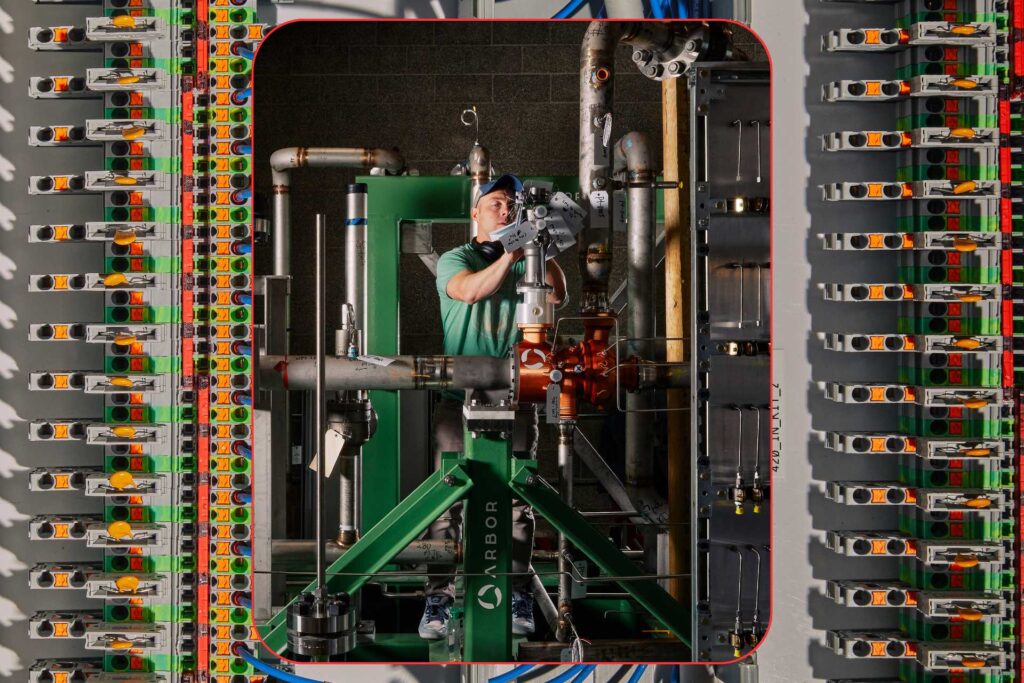
Carbon removal startup Arbor is making significant strides in the clean energy landscape, recently securing its first agreements to deliver turnkey power solutions specifically for data centers. This move comes less than a year after Arbor finalized one of the largest offtake agreements with the Frontier Coalition.
Starting in 2029, Arbor plans to build and develop up to five gigawatts of its innovative 3D-printed, modular, fuel-agnostic turbines for GridMarket, a platform designed to connect clean energy projects with available sites and buyers. Notably, these turbines will primarily utilize natural gas rather than the waste biomass that initially defined Arbor's carbon removal focus. In this process, the turbine converts fuel into syngas, which is then combusted with pure oxygen to heat carbon dioxide and rotate the turbine blades, generating electricity. The carbon dioxide produced is subsequently cooled, recompressed, and stored underground.
In an interview, Arbor's CEO and co-founder Brad Hartwig, a former engineer at SpaceX, emphasized that the company aims to maintain hands-on control over the development of these projects. "At the beginning, we’re working with data center developers…so that we can transact for power, rather than turbines," he explained. This approach allows Arbor to leverage its engineering expertise directly in the manufacturing and deployment phases, establishing itself as a one-stop shop for clean baseload power.
The innovative pitch from Arbor focuses on providing a baseload power solution for data centers that is not only faster and cleaner but also more adaptable and cost-effective than traditional gas turbines. The modular nature of Arbor's turbines, each producing 25 megawatts, contrasts sharply with standard large-frame units that generate around 500 megawatts. This smaller scale allows for the easy addition of extra turbines for reliability—a critical aspect for data center operations. "For a 500 MW data center, adding a few additional 25 MW turbines for redundancy is a relatively small capital expenditure," Hartwig noted, indicating that speed in deployment remains a top priority for Arbor.
Despite the promising developments, Arbor is still in the early stages of ramping up its manufacturing capabilities. The company raised $55 million in a Series A funding round late last year to complete its 1-megawatt pilot project and initiate commercial deployment of its 25-megawatt turbines. Moreover, Arbor is constructing a demonstration plant in Louisiana, which will operate using waste biomass and provide carbon removal credits to its Frontier Coalition buyers. The first turbines are expected to be operational by 2028, with plans to ship over 100 turbines annually by 2030, contributing more than 1 gigawatt of new capacity each year.
The Carbon Removal Angle
While Arbor is pivoting towards the data center market, its origin as a carbon removal company remains relevant. Utilizing waste biomass as fuel, the initial carbon removal approach allows for net-negative emissions, given that this biomass contains recently absorbed carbon dioxide. Although the focus has shifted in response to the burgeoning demand from data centers, Arbor has not abandoned its commitment to carbon removal. Recently, the company appointed Nishad Pai as its chief commercial officer; previously, Pai led business development at the direct air capture company Heirloom. His key task will be to identify and prioritize market segments that Arbor should target, with particular emphasis on hyperscalers and industries driven by the AI boom.
According to Pai, carbon removal remains an attractive offering for companies with ambitious sustainability goals, particularly major hyperscalers looking to achieve net-zero targets by 2030 or even carbon-negative by 2050. However, immediate demand is expected to be higher for the natural gas configuration, largely due to the accelerated pace and scale of demand. The demonstration facility will utilize biomass sourced from managed timber plantations, adhering to Frontier's sustainable biomass sourcing principles. Nevertheless, Hartwig acknowledged potential challenges, noting that this sourcing strategy could create bottlenecks for larger-scale data center power deployments.
In essence, Arbor positions itself as a flexible and innovative player in the clean energy space, balancing the fast-growing demand for data center power with its foundational mission of carbon removal. By offering fuel flexibility to customers, Arbor aims to navigate the complexities of the evolving energy landscape while contributing to sustainability goals. "In either case, you are storing the CO2 in a class six well. So in both cases, it’s a power plant without a smoke stack, effectively," Hartwig stated, highlighting the dual benefits of the company's approach.
Oil Prices Crash 30% Overnight: Is This the End of the Iran War—and Your Investments?

This New Oppo Find X9 Ultra Specs Will Change Photography Forever – Are You Ready To Be Amazed?

$9 Million Surge: Could AI Agents Revolutionize Construction or Create a Job Crisis? Find Out Now!

Pregnant? New Study Reveals Shocking Benefit of COVID Vaccines for Your Baby's Safety!

Why Puravankara's Middle East Office Is Flooded with 300% More Inquiries—You Won't Believe What They Found!

Dow, S&P 500, Nasdaq Surge—But What Shocking Ceasefire Plan with Iran Could Change Everything?
You might also like: