
You Won't Believe How Ancient Greece Influences Today's Gender Wars on Social Media!

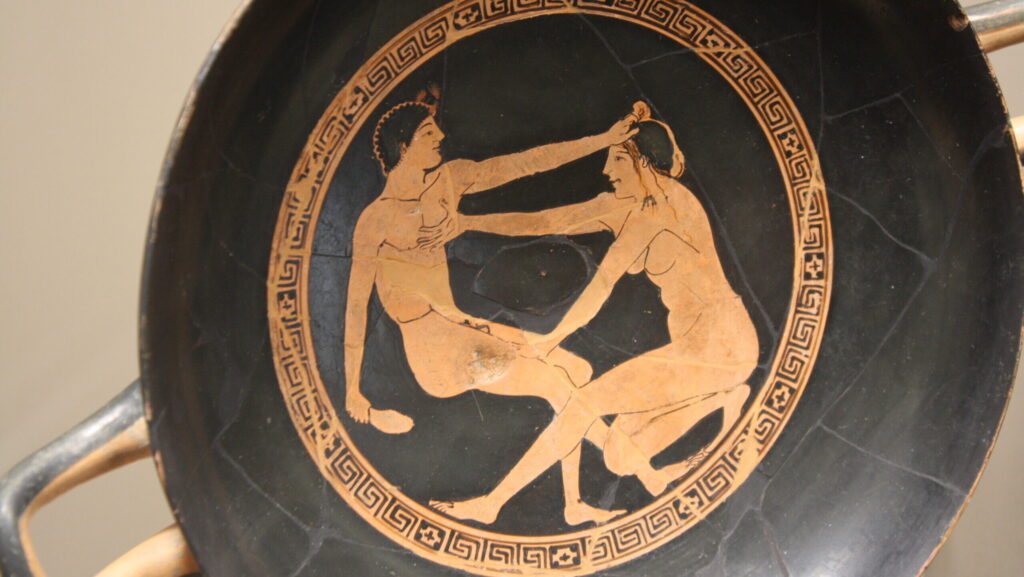
A recent controversy erupted over an exam question for the 2026 French history teaching certification (agrégation), which asked students to examine "Working in ancient Greece according to gender and status." The mention of "gender," a concept that has gained traction in academic circles since the 1950s, sparked debate about its applicability to historical contexts that predate it by centuries.
This situation is particularly resonant for those within academia and the education system, as it highlights a growing trend toward an ideological lens in historical study. Critics of the question, including myself, view the integration of contemporary concepts—especially those laden with political implications—into the examination of ancient societies as troubling and anachronistic. The agrégation exam is designed to select top educators who can provide comprehensive insights into history. Yet, the shift towards specific ideological frameworks may undermine this objective.
Upon sharing my initial reaction—which included disappointment over the exam's wording—my social media post was met with an avalanche of critiques. The backlash included names like "old bag" and "reactionary," terms that are ironic given my relatively young age. The critics accused me of being out of touch with modern historiography and even of denying the existence of gender differences, which is a misrepresentation of my views.
In their responses, many argued that using the term "gender" in a historical question was a necessary evolution in historiography. They contended that historical research must evolve and that employing modern concepts to analyze the past is valid. However, the crux of my argument lies in the nature of the term "gender" itself. Unlike neutral terms such as "work," the concept of gender carries significant ideological weight today. This is a fundamental difference that should not be overlooked.
Historically, concepts like "class struggle" dominated analyses in academia. Today, terms such as “gender” have emerged as the new lens through which many view history. The attempt to use a contemporary framework to analyze ancient societies risks distorting the very nature of those societies, which did not recognize concepts like gender in the same way we do now.
The Ideological Lens in Historical Education
My critics have argued that my stance ignores significant developments in gender studies, which have undeniably enriched our understanding of history. Yet, the controversy isn’t merely about engaging with new ideas; it’s about how those ideas are framed and the implications they carry. While it is entirely valid to explore how men and women lived in ancient Greece, framing that discussion through a politically charged term like "gender" may misrepresent both the historical figures involved and the nature of their experiences.
For instance, the very notion of "working" in ancient Greece was different and nuanced, shaped by a variety of social factors, including status and economic conditions. The complexities of these issues can become lost when viewed through a contemporary lens that seeks to impose modern categories and conflicts onto historical contexts.
Moreover, there’s an inconsistency among my critics, who shift between interpretations of "gender" without addressing the contradictions inherent in their arguments. Some defend the term as a necessary analytical tool for understanding ancient social structures, while others argue it should simply be synonymous with sex. If the latter is true, then why not frame the question as “Working in ancient Greece according to sex, status, and condition”? This alternative wording would be less likely to provoke ideological biases and would still allow for the significant exploration of the topic.
Many who engaged with my initial post showed a palpable misunderstanding of the stakes involved in this discussion. It’s not about resisting change; it's about ensuring that historical education remains rigorous and objective. The academic discourse should allow for a diversity of perspectives, not merely align with prevailing ideologies.
As one commentator humorously pointed out, there’s a sociological study to be done on how certain academic circles respond defensively to critiques like mine, especially when they come from what they label as the "reactionary" side. It’s evident that for many commentators, the ideological implications of the term "gender" are well understood, even if they feign a lack of comprehension in the name of scholarly dialogue.
In conclusion, the issue at hand transcends a simple debate over a single exam question; it reveals deeper tensions within the academic community regarding how history is taught and understood. Aspiring educators navigating this landscape must be cautious, as the current climate often favors a specific ideological adherence over rigorous, unbiased scholarship. This has significant implications for the future of historical education, both in France and beyond.
You Won't Believe Which 3 NBA Stars from North Carolina Are Missing from This Shocking Top 10 List!

You Won't Believe What Happened to YouTube's Fitness Star Stephanie Buttermore Just Weeks After Turning 30!

Strictly Star’s Son, Just 8, Faces Life-Altering Surgery After Shocking Finger Accident!

You Won't Believe What Just Happened in the NBA: Shocking Trades and Hidden Conflicts Revealed!

Why Did Trump Declare War on Iran? Shocking Truths and Hidden Motives Revealed!

Is Gavin Newsom Losing Ground? Shocking Polls Show Dark Horse Candidate Gaining Fast!
You might also like: