
Why This Abandoned Death Valley Town Closed in Just 2 Years Will Shock You!

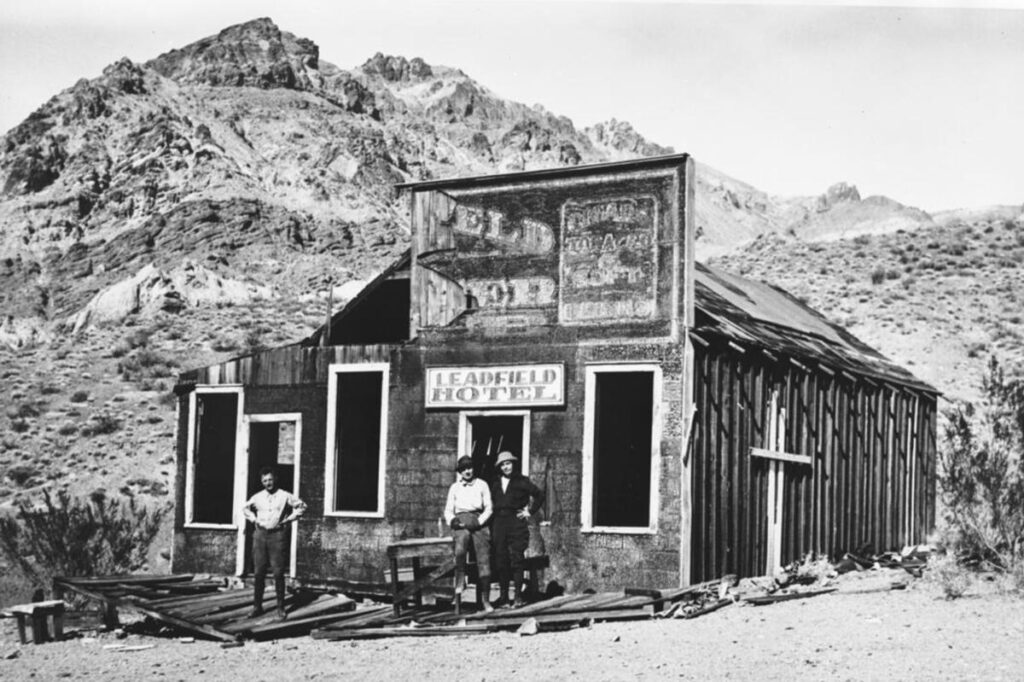
In the rugged expanse of Death Valley National Park, about 22 miles west of Beatty, Nevada, lies the remnants of Leadfield—a ghost town that serves as a poignant reminder of one of the American West’s most notorious tales of mining speculation and fraud. Once a booming settlement, Leadfield rose to fame in 1926 only to collapse within a year, leaving behind a stark landscape of dilapidated structures and a cautionary legacy.
Leadfield is often described as a town founded on “wild and distorted advertising,” a characterization echoed by the National Park Service. Its brief existence, punctuated by rapid growth and an equally rapid decline, illustrates the darker side of the mining industry during the early 20th century. The allure of untold riches promised by copper and lead drew hundreds of prospectors and dreamers to this remote corner of California, but the reality would soon prove disappointing.
By February 1926, Leadfield had swelled to a population of around 200 residents. The town boasted hotels, stores, and even plans for a church and a school. The excitement was palpable, with reports indicating that around 40,000 shares in Western Lead Mines were sold, driving the stock price up to $1.57 a share.
At the center of this frenzied activity was Charles C. Julian, the charismatic promoter who took on the role of president at Western Lead Mines. Described as “deeply unsavory” by nature photographer Walter Feller, Julian was known for his ability to sell dreams, with a 1971 issue of Desert Magazine likening him to someone who “could have sold ice to an Eskimo.” His promotion of Leadfield was characterized by exaggerated claims, and he was accused of using manipulated ore samples to misrepresent the value of the mines.
The Nevada State Journal, in February 1926, described Leadfield as an extraordinary district where activities typical of more established mining towns were taking place prematurely. Seven mining companies incorporated in March of that year, and the Inyo Register reported that a staggering 1,000 prospecting claims were already laid, with expectations of 5,000 in total.
However, the excitement was short-lived. Regulatory bodies, such as the California Corporation Commission, raised concerns over Julian’s methods, alleging that he had illegally sold shares without securing the necessary permits. This scrutiny led to a halt in trading on the Los Angeles Stock Exchange.
As the summer of 1926 rolled in, Julian’s optimism met a harsh reality. The main tunnel of Western Lead Mine—thought to harbor rich deposits—revealed nothing but low-grade ore. The immediate aftermath was devastating; the mining operations began shutting down almost as soon as they started, and by July 1927, only seven miners remained in Leadfield, laboring with hand tools in a town that had once promised prosperity.
Julian’s financial downfall was as swift as Leadfield’s rise. His legacy took a darker turn after he faced indictment in Oklahoma for an oil fraud case. In 1933, fleeing the consequences of his actions, he escaped to Shanghai, where he tragically ended his life in 1934 at the young age of 40.
Today, visitors can make the rough journey along Titus Canyon Road to the ghostly remains of Leadfield. Though only a few dilapidated shacks and scattered remnants of the mining operations remain, the site is a haunting testament to the speculative zeal that gripped the American West. The National Park Service preserves Leadfield not just as a historical curiosity but as an enduring example of the consequences of hype and deceit in the pursuit of wealth.
As curious travelers traverse the uneven terrain of this ghost town, they are reminded of the cautionary tales embedded in Leadfield’s history—tales that continue to resonate in the ever-evolving landscape of America’s mining endeavors.
Trump's Shocking Move: How He’s Changing the Future of the Army-Navy Game Forever!

GOP Governor Candidate Faces Unseen Challenge: Will He Be Stripped From the Ballot?

Luka Dončić's Shocking Technical Foul Ruling: What This Means for His NBA Future!

Is Earth's Climate on the Brink? Shocking Global Report Reveals Alarming New Data!

I Woke Up at 5 AM for 2 Years—Here’s the Shocking Truth That Changed Everything!

Ethan Roberts Shocks Penn Fans: Why This Star Forward Is Leaving for a Rival!
You might also like: