
Why the Melting Arctic Could Ignite a Global Power Struggle You Never Saw Coming!

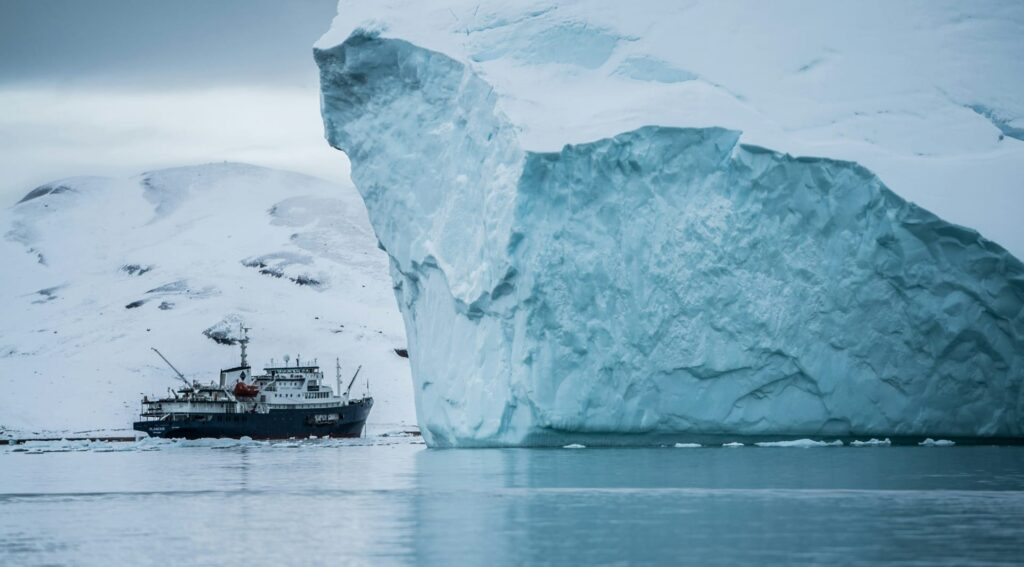
Once a largely inaccessible wilderness, the Arctic region has emerged as a significant arena for international competition, particularly among the major powers: the United States, Russia, and China. This shift poses a threat to the long-standing cooperative model in the region, often summarized by the phrase “High North, Low Tension.” One striking example of this competition is Greenland, which has become a focal point, highlighted by former President Donald Trump’s ambition to secure control of the island.
Since the end of the Cold War, the Arctic was largely viewed as an example of sustained international cooperation despite underlying tensions among key states. In 1996, the Arctic Council was established by eight countries, including the USA, Russia, Canada, and Denmark, to promote sustainable development and scientific cooperation in the region. However, recent years have seen an increase in great power rivalry, resembling a zero-sum game where states are more focused on maximizing their relative advantages.
This evolving geopolitical landscape is not limited to revisionist powers like Russia and China; the United States, traditionally the main guarantor of the existing international order, has also adapted its focus. As a result, the Arctic is increasingly featured in global strategic calculations, influenced heavily by the realities of climate change.
The effects of climate change are palpable in the Arctic, where temperatures are rising at a rate four times that of the global average. According to data from NASA, the extent of September sea-ice has declined by approximately 12% per decade since the 1981-2010 average. A 2023 report by the Intergovernmental Panel on Climate Change noted that multi-year ice aged at least five years has diminished by around 90% between 1979 and 2018. This melting ice not only poses new security challenges but also opens up economic opportunities, such as resource extraction and new shipping routes.
📰 Table of Contents
Greenland: A Strategic Asset
Greenland embodies several global trends intersecting with Arctic stability and sustainable development, linking local, regional, and international dynamics. The world’s largest island, with a population of fewer than 60,000, is predominantly inhabited by the indigenous Inuit population. It has transitioned from colonial rule under Denmark to a recognized semi-autonomous territory. However, Greenland remains economically dependent on Danish financial transfers, estimated at around 500 million euros annually, which constitutes about 20% of its GDP.
Despite growing support for independence fueled by dissatisfaction with socio-economic constraints, recent local parliamentary elections indicate a cautious approach toward achieving sovereignty. External actors have also sought influence in Greenland, with U.S. interest pre-dating the Trump administration. Trump's declaration that control over Greenland was necessary for “absolute” national security underscored the island's strategic significance.
Greenland’s strategic location has attracted U.S. attention since the Cold War. Since 1951, a defense agreement between Denmark and the United States has allowed for the operation of the Pituffik Space Base, formerly known as Thule Air Base, a crucial installation for NATO's space surveillance and missile defense systems.
Following the Cold War, Western nations reduced their focus on the Arctic. However, rising tensions with Russia and China, coupled with climate change and studies highlighting the region's mineral potential, have reignited interest from both governments and private entities. Trump’s 2019 proposal to purchase Greenland was not without precedent; President Harry Truman made a similar offer in 1946, motivated by the island’s uranium reserves deemed critical for military and civilian development.
As ice melts, new international shipping routes are becoming available between two potential Arctic passages: the Northwest Passage along North America’s northern coast and the Transpolar Sea Route crossing the Arctic Ocean. These routes could significantly reduce shipping times and costs. Projections indicate that the Arctic could experience its first ice-free day by 2030, shifting global shipping dynamics.
Greenland could play a pivotal role in supporting infrastructure for Arctic shipping, providing essential services such as ports and refueling. However, realizing these ambitions requires substantial investment, skilled labor, and prolonged periods without ice cover. The IPCC estimates that there is a 10-35% probability that the Arctic will be ice-free in September by the end of the century if global warming stabilizes at 2°C.
Natural Resources and Global Rivalry
Beyond shipping, Greenland’s most alluring aspect lies in its natural resources, including oil, gas, and critical minerals. The U.S. Geological Survey estimates that Greenland could possess up to 17.5 billion barrels of oil and 4 trillion cubic meters of gas. During the 2010s, the island attempted to develop these resources, encouraged by high oil prices, but found exploration costs prohibitive, averaging around $100 million per offshore exploratory well under favorable conditions.
Environmental concerns and climate policy prompted Greenland to suspend the approval of new exploration licenses in 2021. However, the push for a greener energy transition has renewed interest in Greenland’s mining sector, rich in critical minerals such as graphite, copper, rare earths, lithium, and uranium. As ice recedes, the potential for exploration and extraction attracts both governmental and private enterprise.
Greenland's control over its subsoil resources positions its mineral development as a pathway toward greater autonomy from Denmark. The island could become a strategic player in the global critical mineral supply chains essential for digital, military, and clean energy technologies. Estimates suggest that Greenland is home to at least 39 of the 50 minerals considered critical to U.S. national security.
In November 2023, the European Union signed a memorandum of understanding with Greenland to promote a strategic partnership on sustainable raw-material value chains. Yet, Greenland's natural resources minister cautioned that the island would not wait indefinitely for meaningful collaboration with transatlantic partners.
Ultimately, turning potential resources into reality depends on more than geology. Investment, human capital, infrastructure, market conditions, and political will are critical. Greenland’s mining future exemplifies how local, regional, and global dynamics are increasingly interconnected. As climate change opens new opportunities, addressing socio-economic and environmental challenges will be key to ensuring that these developments offer lasting benefits for the region.
Dow, S&P 500, and Nasdaq Futures Plunge: Are AI Fears About to Wreak Havoc on Your Portfolio?

This Little-Known Swiss AI Startup Just Landed $500K—Why You Need to Know Before It Explodes!

You Won't Believe What 1791 Outdoor Lifestyle Group Unveils at the 2026 February Outdoor Show!

Zuckerberg Faces Heartbreaking Truth: Could His Social Media Addiction Cost Lives? Discover the Shocking Details!
Is Your Browser Secretly Putting You at Risk? 7 Shocking Dangers You Need to Know NOW!

I Gave Up My MBA Dreams—Here's the Shocking 6-Figure Success I Found Instead!
You might also like: