
Why Renowned Scientist Shu Xiaokun's Shocking Move to China Will Change Global Research Forever!

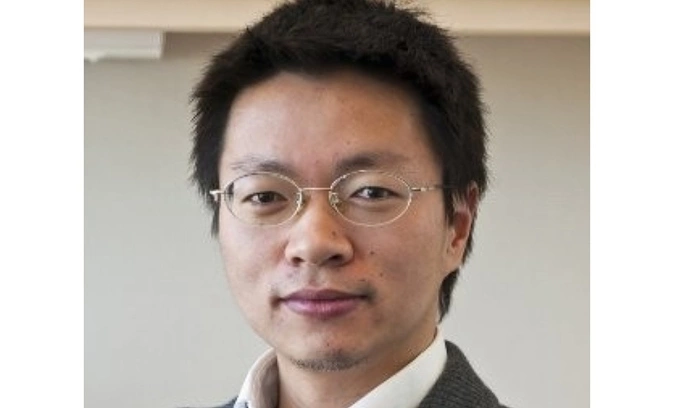
Shu Xiaokun's recent appointment as the distinguished professor and founding director of the Institute of Chemical and Open Biotechnology Research and Application at Fudan University marks a significant milestone in the scientific community. Scheduled to launch this month, the institute aims to pioneer long-term interdisciplinary research that integrates physics, chemistry, and biology. Key focus areas will include the development of next-generation fluorescent probes, innovative chemical genetics tools, and targeted therapies for cancer.
This transition comes on the heels of Shu's recent role as the Herfindahl Endowed Chair professor at the University of California, San Francisco, highlighting a remarkable academic trajectory that has spanned over two decades in the United States. During this time, Shu secured more than $20 million in funding from the National Institutes of Health (NIH), establishing a robust foundation for his research endeavors. Notably, he became an associate professor at the University of California, San Diego in 2010, and subsequently received the NIH Director’s New Innovator Award, providing him with a grant of $2.36 million over five years. In 2019, he was again recognized with the Maximizing Investigators’ Research Award, worth $5.91 million for another five-year period.
Shu’s journey into academia began in 1996 at the theoretical physics department at Sichuan University in southwestern China. After completing his master’s degree, he continued his studies in condensed matter physics at Fudan University. In 2003, he made a pivotal move to the United States to pursue a PhD at the University of Oregon, where he shifted his focus from physics to biophysics, particularly studying the luminescence mechanisms of visible fluorescent proteins.
Upon earning his doctorate in 2007, Shu joined the laboratory of Nobel laureate Roger Yonchien Tsien at the University of California, San Diego. During his postdoctoral studies, he developed an infrared fluorescent protein for imaging in live animals, with his significant findings published in the prestigious journal Science. He also created genetically encoded labeling techniques for electron microscopy, further expanding the toolbox available for biological and medical research.
After establishing his own laboratory, Shu continued to integrate concepts from physics, chemistry, and biology into his work, which spans various areas including physical biology, chemical biology, structural biology, protein engineering, and drug discovery. His interdisciplinary approach is not only innovative but also reflects a growing trend in scientific research that prioritizes collaboration across different fields to address complex biological questions.
Shu’s academic journey and future initiatives at Fudan University signal a promising future for research that bridges various scientific disciplines. As the institute gears up to launch, the broader implications of his work could potentially lead to breakthroughs in understanding and treating diseases like cancer, benefiting both local and global health communities.
Bitcoin to $150K? Shocking Rate Hold by Fed Amidst Iran War Chaos—Find Out What’s Next!

9 Shocking Rituals Boomers Swear By Before Doctor Visits—You Won't Believe #4!

Discover the 10 Shocking Daily Habits of Active Seniors—Are You Missing These Life-Changing Secrets?

Napa's Best-Kept Secret: How Arthur Goodrich Made $10M in Real Estate in Just 2 Years!

You Won't Believe How Timmons and Cody Shocked Rhode Island in a Nail-Biting 1st Round Upset!

Discover the 5 Smartphones That Will Leave You Charged All Day in 2026—Number 3 Will Shock You!
You might also like: