
Why Pennsylvania's Rural Health Funding is a Disaster: Shocking Medicaid Losses You Can't Ignore!

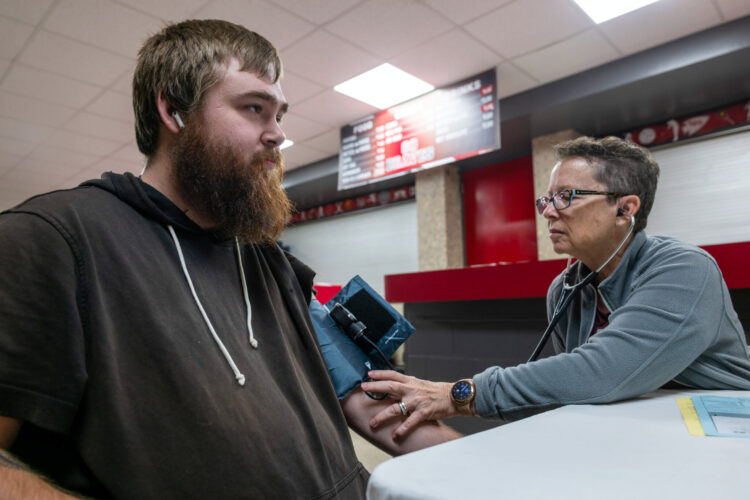
Amid growing concerns about healthcare access and resources in rural America, a significant financial initiative is poised to impact Pennsylvania’s healthcare landscape. Over the next five years, nearly $1 billion is earmarked for rural health investments in the state. This funding comes as part of a federal effort to support innovative healthcare solutions that typically struggle to attract dedicated funding. However, the initiative is overshadowed by anticipated cuts to Medicaid funding, projected to drastically affect the state’s healthcare services.
The Pennsylvania Department of Human Services Secretary, Val Arkoosh, estimates that Pennsylvania will lose a staggering $20 billion in Medicaid funding from 2028 to 2038 due to the federal legislation dubbed the “One Big Beautiful Bill,” signed by former President Donald Trump. “This RHTP grant, at most, is going to bring in a billion — maybe a tiny bit more than a billion — over the next five years,” Arkoosh stated, emphasizing the disparity between the incoming funds and the projected Medicaid losses. “There is absolutely no way that $1 billion can replace $20 billion,” she added.
The funding gap is even wider according to estimates from the health policy organization KFF, which projects that the state could lose between $34 billion and $57 billion. While KFF indicates that the average rural American may see $157 in benefits from the proposed plan, rural Pennsylvanians are forecasted to receive only $78 each—a figure that raises questions about the adequacy of support for the state's most vulnerable populations.
One major concern stemming from this funding shift is the restriction on federal rural health funds, which cannot be used to stabilize rural hospitals—many of which are already struggling. The center-left group Third Way has estimated that cuts to hospitals could amount to $1 billion in the commonwealth. Arkoosh highlighted the potential ramifications, stating, “Those Medicaid cuts are going to fall disproportionately on our rural hospitals, many of which are not profitable today.” She expressed grave concern that these financial pressures could lead to further closures of hospitals in rural areas.
Given the circumstances, it is evident that the incoming federal funds will not suffice to fill the void left by dwindling Medicaid resources. Joe Glinka, board president of PAMCO (Pennsylvania Medicaid Managed Care Organizations), stressed the necessity for states to rethink their healthcare delivery models. “The pressure is going to be on states to be able to perform. We’re not going to be just throwing money at rural areas of the country and hoping things improve,” Glinka asserted, urging a shift toward creating a more comprehensive healthcare ecosystem beyond the hospital-centric model.
The Shapiro administration has proactively addressed these issues, with Arkoosh noting that they were already focused on a rural health plan prior to receiving the federal grant. Listening sessions across the state have informed the development of priorities within the commonwealth’s plan. However, Glinka criticized this approach for overemphasizing hospitals while neglecting essential community and clinical support services that tackle broader socioeconomic factors impacting health, such as poverty and food insecurity.
As Pennsylvania prepares to implement the Rural Health Transformation Plan (RHTP), the first year will see approximately $193 million allocated to the state—a figure slightly below the $200 million requested. The state will need to adjust its budget plans to accommodate this difference, but Arkoosh assured that no significant programs would be eliminated due to these minor tweaks. Funds are expected to arrive after a 45-day federal review process, which means that local initiatives may take some time to launch.
Once the funding is secured, the state plans to leverage existing Partnerships for Regional Economic Performance to establish Rural Care Collaboratives (RCCs) across eight regions in Pennsylvania, excluding Philadelphia and its suburbs. These collaboratives will prioritize and manage rural health initiatives, and each will hire staff to handle administrative duties, such as data collection and progress reporting.
Arkoosh emphasized the importance of stakeholder involvement, stating, “Once the RCCs have a staff person, then they can start their local convenings and start to identify who should be at those tables—not only health and healthcare leaders, but also business leaders, philanthropic leaders, and local education leaders.” This collaborative approach aims to establish a sustainable model for rural healthcare that transcends the limitations of the five-year funding period.
In summary, while the nearly $1 billion in federal funding presents an opportunity for rural health investments in Pennsylvania, the stark reality of impending Medicaid cuts casts a long shadow on the potential impact of this initiative. As stakeholders work to implement solutions, the true test will lie in their ability to create sustainable healthcare systems that can withstand future challenges.
Fashion’s Biggest Names Are Plummeting—Is AI the Hidden Danger? Shocking Stats Inside!

This US Cardiologist's 5 Shocking Secrets to Longevity Could Change Your Life—Are You Ready?

Why Moderna Just Rejected Their Own mRNA Vaccine: Shocking Consequences for Global Health!
This Shocking Legal Case Went Viral—What They Don't Want You to Know Will Blow Your Mind!

Trump's Shocking Promise: How a Potomac River Sewage Crisis Could Change Everything!

You Won't Believe How Much Cheaper These 52.5lb Dumbbells Are—$180 Off Bowflex! Act Fast!
You might also like: