Why Former Prosecutor Nathan Wade's Shocking Testimony Could Change Everything in Trump's Georgia Case!

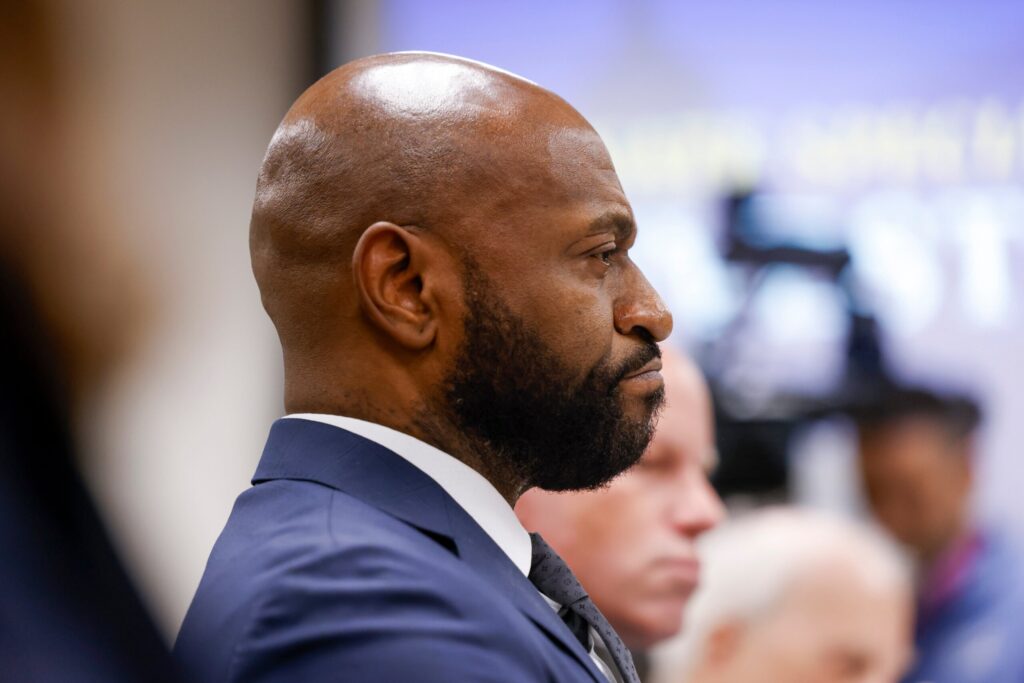
ATLANTA (AP) — In a tense hearing on Friday, state senators interrogated former special prosecutor Nathan Wade about his role in the controversial Georgia election interference case involving former President Donald Trump. As senators pressed for clarity regarding communications between Wade's team and federal investigators, they were met with frequent claims of forgetfulness from Wade, who could not recall significant details from his time in the role.
Wade's testimony took place before a subcommittee of the Special Committee on Investigations, created by the Republican-controlled state Senate in January 2024. This committee was tasked with probing allegations of misconduct against Fulton County District Attorney Fani Willis, a Democrat, centered around her prosecution of Trump for attempting to overturn the results of the 2020 election in Georgia. The committee's focus has since expanded to include Democratic figure Stacey Abrams, although no public action regarding her has been taken thus far.
In August 2023, Willis indicted Trump along with 18 others using Georgia's anti-racketeering law, alleging their involvement in a conspiracy to undermine the electoral process after Trump's narrow defeat in the state. Following the indictment, four individuals pleaded guilty after accepting plea deals with prosecutors.
The creation of the committee specifically scrutinized Wade’s hiring as a special prosecutor, citing a romantic relationship with Willis that was deemed a “clear conflict of interest and a fraud upon the taxpayers.” This relationship was noteworthy enough that an appeals court removed Willis from the case in December 2024, ruling that the connection created “an appearance of impropriety.” A new prosecutor subsequently dismissed the case in November.
Senators did question Wade about his hiring process, including the timing and rationale behind his selection. However, the personal relationship between Wade and Willis was notably absent from their inquiries. According to Wade's opening statement, there had been a prior agreement that their personal matters would remain off the record during the hearing.
Most of the questioning was led by Senator Greg Dolezal, who sought details regarding Wade's invoices, particularly entries that hinted at communications with the U.S. House committee investigating the January 6, 2021, attack on the Capitol, as well as meetings with officials from the U.S. Department of Justice. Unfortunately for the committee, Wade consistently stated he could not remember specifics regarding these contacts, including the timing or the parties involved.
Wade defended his team’s conduct by emphasizing that the investigation was primarily driven by Willis and that they did not receive outside assistance. "She led us, I led the team and we did the work," he stated. "We didn’t get assistance, coordination, however you want to characterize it. No one held her hand and guided her through the process. This is her work.”
After the hearing, Dolezal admitted that he did not obtain all the information he had hoped for, expressing a desire for Wade to have a better memory. However, he indicated satisfaction in confirming that Wade’s team did engage with individuals linked to the January 6 investigation and maintained contact with DOJ officials, raising questions about the level of coordination aimed at prosecuting Trump.
In response, Wade's attorney, Andrew Evans, pushed back against the committee's insinuations, labeling the focus on these communications as a diversion intended to distract from the pressing issues facing the Republican party as the midterm elections approach. Notably, four of the five Republican committee members, including Dolezal, are currently running for statewide office in 2026, raising concerns about potential conflicts of interest throughout the committee's proceedings.
During the session, the committee also heard from Fulton County Deputy District Attorney Jeff DiSantis, who addressed inquiries about Wade’s hiring. DiSantis stated that he was unaware of the decision until it had already been made, and he discussed the office's utilization of a media monitoring service to manage public communications.
This investigation into the Georgia election interference case continues to unfold, capturing the attention of the nation as political tensions run high. With midterm elections looming, the implications of this inquiry extend beyond the courtroom, resonating deeply within the Republican party and the broader American political landscape.
Trump’s SHOCKING Confession in Kentucky: What He Revealed to Jake Paul Will Change Everything!

Brooklyn FC's Shocking Move Could Change NYC Soccer Forever – Are You Ready for the Drama?

Nigeria's Shocking Social Media Survey Reveals 75% Want Age Verification—What Happens Next Will Surprise You!
You Won't Believe Why Access to This Page Was Denied—The Shocking Truth Inside!

Is Reducing US Tech Reliance a Recipe for Financial Disaster? Shocking Insights Revealed!

Shocking Truth: 1 in 4 Americans Risk Losing Healthcare Coverage – Are You One of Them?
You might also like: