Why Did Trump Declare War on Iran? Shocking Truths and Hidden Motives Revealed!

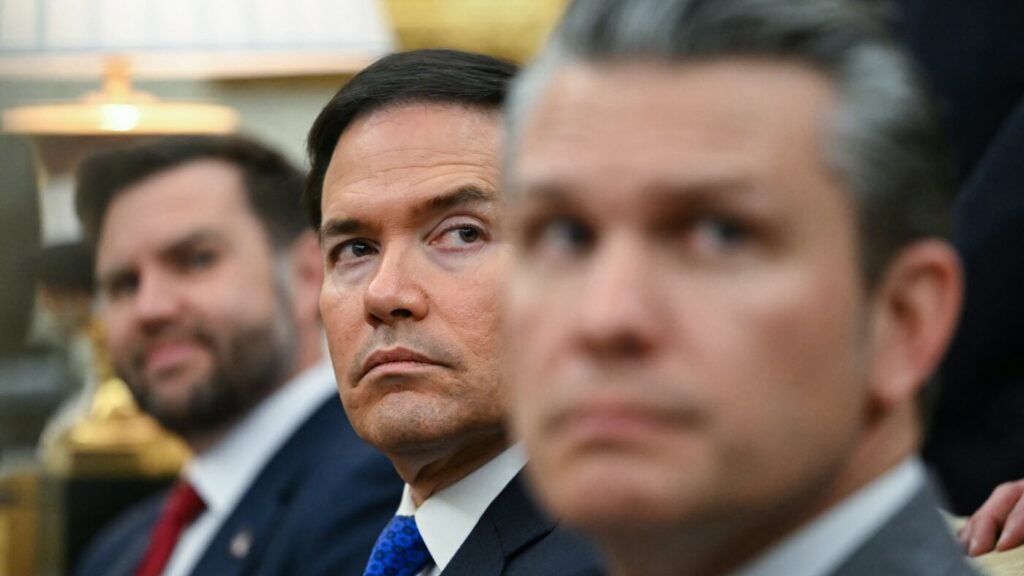
As tensions escalate between the United States and Iran, the Trump administration has publicly declared a "laser-focused" approach in its military actions against the Iranian regime. However, conflicting messages from President Trump, Secretary of State Marco Rubio, and Defense Secretary Pete Hegseth have muddled the rationale behind the administration's strikes. This leaves many questioning the motivations and implications as the situation continues to evolve.
In a statement on January 2, President Trump warned that if Iran continued to violently suppress peaceful protests, "the United States of America will come to their rescue. We are locked and loaded and ready to go." His remarks came amidst widespread protests in Iran, during which the regime was accused of killing demonstrators. As these incidents escalated, they reportedly crossed a threshold that compelled the administration to act militarily. Despite the initial focus on protecting protesters, the White House later downplayed this reasoning when justifying military strikes on February 28.
During a meeting with German Chancellor Friedrich Merz on March 3, Trump stated, "Something had to be done, and it's been 47 years. They've been killing people all over the world for a long time." His remarks highlighted a broader narrative that Iran had long been a destabilizing force, allegedly responsible for supporting militant groups like Hezbollah and Hamas across the Middle East. This assertion also led to immediate repercussions, as Hezbollah retaliated against Israeli forces, prompting a swift military response from Israel.
Throughout this conflict, Trump's rhetoric has often included alarming predictions. In one instance, he claimed, "If we don't stop them... you would have had a nuclear war." His statements suggest a belief that U.S. intervention was not only necessary but urgent to thwart Iran's nuclear ambitions. The administration previously launched strikes on June 3 targeting key nuclear sites, including the Fordo facility, yet subsequent intelligence assessments indicated that these actions merely delayed Iran's nuclear program by a matter of months.
Trump also claimed that Iran was close to developing missiles capable of reaching the American mainland, a statement that lacks backing from U.S. intelligence reports. According to a Defense Intelligence Agency assessment from last spring, Iran is not expected to develop long-range missile capabilities until at least 2035. Such discrepancies raise questions about the administration's justifications for military actions and whether these claims are being used to rally support for a prolonged engagement.
In a peculiar twist, Secretary of State Marco Rubio implied that the U.S. was responding to anticipated Israeli military actions against Iran, stating, "We knew that there was going to be an Israeli action... if we didn't preemptively go after them before they launched those attacks, we would suffer higher casualties." This sparked criticism that Trump was allowing Israel to dictate U.S. military strategy. The White House quickly attempted to reclaim the narrative, asserting that U.S. intelligence had identified imminent threats warranting military action.
The administration's messaging has been further complicated by Trump's ongoing insistence on "UNCONDITIONAL SURRENDER" from Iran. In a post on Truth Social, he called for a new leadership in Iran and vowed to work with allies to improve the country's stability. However, Trump’s rhetoric regarding regime change appears to be at odds with statements from his officials, who have attempted to distance the administration from the notion of initiating a regime change war.
As the conflict unfolds, the implications for both U.S. foreign policy and the Middle Eastern geopolitical landscape remain significant. The Trump administration's contradictory statements on military motivations, potential nuclear threats, and the future of Iranian leadership signal a turbulent path forward. While Trump insists that military objectives will continue until conditions are met, a clear and cohesive strategy remains elusive.
Omani Foreign Minister Badr al-Busaidi, who has played a mediating role in nuclear negotiations, expressed disappointment over the U.S. strikes, suggesting that they undermined ongoing diplomatic efforts. With the future of U.S.-Iran relations hanging in the balance, the administration's conflicting narratives may further complicate not just diplomatic resolutions but also regional stability in one of the world's most volatile areas.
Is Gavin Newsom Losing Ground? Shocking Polls Show Dark Horse Candidate Gaining Fast!

You Won’t Believe What Nutritionists Munch on When Chocolate Cravings Hit – #4 Will Shock You!

Fitness Star Stephanie Buttermore, 36, Shocks Fans with Untimely Death—What Fiance Jeff Nippard Revealed Will Leave You Heartbroken!

Sundar Pichai's Shocking $692 Million Pay Package: Is Google’s AI Future at Risk?

Sanford Health Shocks Everyone by Ranking as a Top Healthcare Workplace—What They’re Hiding!

Over 60 NFL Stars Ignited Chaos at ‘Bring The Juice’ Pro-Am – You Won’t Believe What Happened!
You might also like: