
Why 3 More Years of U.S. Health Policy Chaos Could Cost You Your Life Savings!

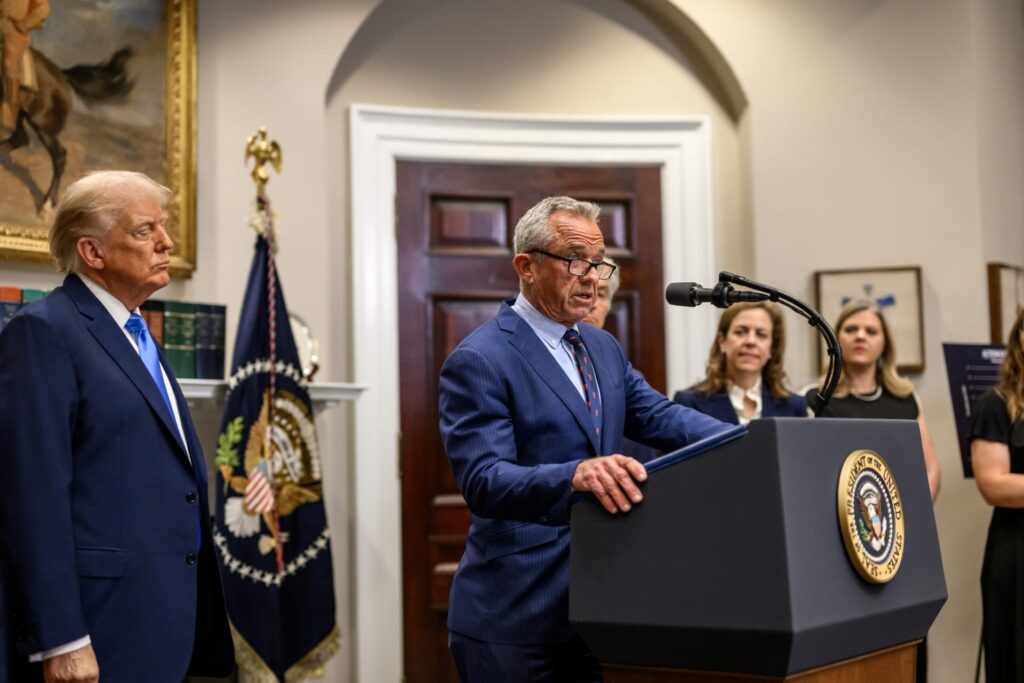
In an era marked by deepening public health crises and a surge in health-related misinformation, the political action committee “Make America Healthy Again” (MAHA) has emerged as a controversial player on the national stage. Under the leadership of Robert F. Kennedy Jr. (RFK Jr.), who now serves as Secretary of Health and Human Services (HHS), the MAHA agenda promotes alternative health treatments while simultaneously challenging established public health standards. Though the slogan may evoke notions of wellness and vitality, the foundation upon which it stands is riddled with anti-vaccine misinformation and conspiracy theories.
As of January 2026, warnings from health experts about Kennedy's policies have intensified, yet political polarization has left many even more divided. A significant faction of the Republican base continues to back Kennedy’s proposed overhaul of federal health agencies, even as numerous scientists and public health officials characterize his approach as reckless. It's worth noting that while Kennedy is a qualified lawyer and activist, he lacks formal training in medical science or public health, raising concerns about his suitability to lead such critical health initiatives.
This situation stands in stark contrast to the One Health approach, which emphasizes the interconnectedness of human, animal, plant, and environmental health. This integrated strategy aims to enhance health outcomes and prevent diseases globally, but Kennedy's policies have drawn criticism for lacking this ethical and scientific grounding. Political reactions to Kennedy’s initiatives reveal a partisan divide, with crucial bipartisan health policies—such as banning synthetic food dyes—receiving only tepid support.
Prominent figures, including former Surgeons General and Democrats, have condemned Kennedy’s policies as a “deepening threat to public health.” For instance, Pennsylvania Governor Josh Shapiro has accused him of “causing chaos and spreading misinformation,” particularly in relation to traditional childhood vaccine schedules. Despite this, Kennedy has garnered steadfast support from many Republican lawmakers, who view his MAHA agenda as a necessary shake-up of “corrupt” federal health agencies.
Public opinion remains starkly divided, with recent polling from Quinnipiac University indicating that 50% of Americans disapprove of Kennedy’s performance, compared to just 39% who approve. Alarmingly, only about 26% of Americans trust Kennedy for medical advice, while a substantial 79% place their trust in their personal physicians. Confidence in childhood vaccines, such as the measles, mumps, and rubella (MMR) vaccine, has notably waned among Republicans, dropping from 86% in 2023 to 78% by late 2025.
While the MAHA movement has gained some traction among the public—36% of Americans view it favorably—its association with anti-vaccine sentiment complicates its overall perception. Notably, 80% of parents support MAHA's goals to regulate food additives and sugars. This paradox highlights that while some aspects of Kennedy's agenda may resonate with public health concerns, they are overshadowed by the broader anti-science movement.
In response to the potential dangers posed by Kennedy’s policies, the medical community has moved beyond warnings and into legal actions. In January 2026, organizations, including the American Academy of Pediatrics, filed a lawsuit against the CDC and RFK Jr. to reverse a decision that reduced the recommended childhood vaccinations. Alarmingly, the CDC and FDA have seen a wave of early retirements and resignations, with many officials citing a “culture of intimidation” stifling evidence-based science.
Implications of Kennedy's Policies
As the U.S. navigates these transformative health policies under Kennedy's leadership, the future of American public health hangs in the balance. Legal challenges and legislative resistance against these changes are currently emerging but face significant obstacles. Major initiatives, like the phase-out of petroleum-based food dyes and revisions to dietary guidelines, are on the horizon, indicating that these policies may endure well beyond the current administration's term.
Additionally, Kennedy’s restructuring of HHS has led to significant staff reductions, resulting in a loss of institutional knowledge that may hinder future public health responses. As health advocates and public health professionals escalate their efforts to counteract these changes, the upcoming 2026 U.S. midterm elections may serve as a pivotal moment for public sentiment regarding the MAHA agenda. If dissatisfaction with Kennedy's policies is palpable among voters, it could catalyze much-needed reforms.
The impact of these health policies, particularly on vulnerable populations, is alarming. An estimated 11.8 million people may lose health insurance coverage due to various legislative measures, while a projected 25% reduction in HHS’s workforce could eliminate around 20,000 positions responsible for critical public health functions. Funding cuts of $11 billion to state and local governments have already weakened health departments' abilities to monitor and respond to disease outbreaks effectively.
Furthermore, Kennedy’s proposed changes to vaccine policies—removing COVID-19 vaccines for healthy children and rolling back universal hepatitis B vaccinations—risk a resurgence of preventable diseases. The U.S. has already faced its worst measles outbreak in over two decades in 2025, and experts warn that low vaccination rates will allow such diseases to persist.
Overall, the ongoing developments within the MAHA initiative and Kennedy's policies signify a troubling trend in American public health that may take decades to rectify. The implications of neglecting scientific guidance and evidence-based medicine could lead to far-reaching consequences for both current and future generations.
I Just Bet Big on a 95% Cratered Stock—Will You Miss Out on This Shocking Turnaround?
Stacy Garrity's Shocking Fundraising Gap: Is This the End of Her Governor Dreams?

Shocking Coaches Poll: Which Top 25 College Basketball Teams Are Predicted to CRUMBLE This Season?

Shocking Details of the Google-Apple Deal: Is Your Privacy at Risk? Find Out Now!

This $1,000 Smartphone Will Change Everything for Retail Workers—Find Out How at NRF 2026!

Mikie Sherrill's Shocking Move as Governor: What Two Princeton Professors Are Hiding!
You might also like: