
WHO's Shocking Decision: 194 Nations Extend Vital Pandemic Talks—What’s at Stake?

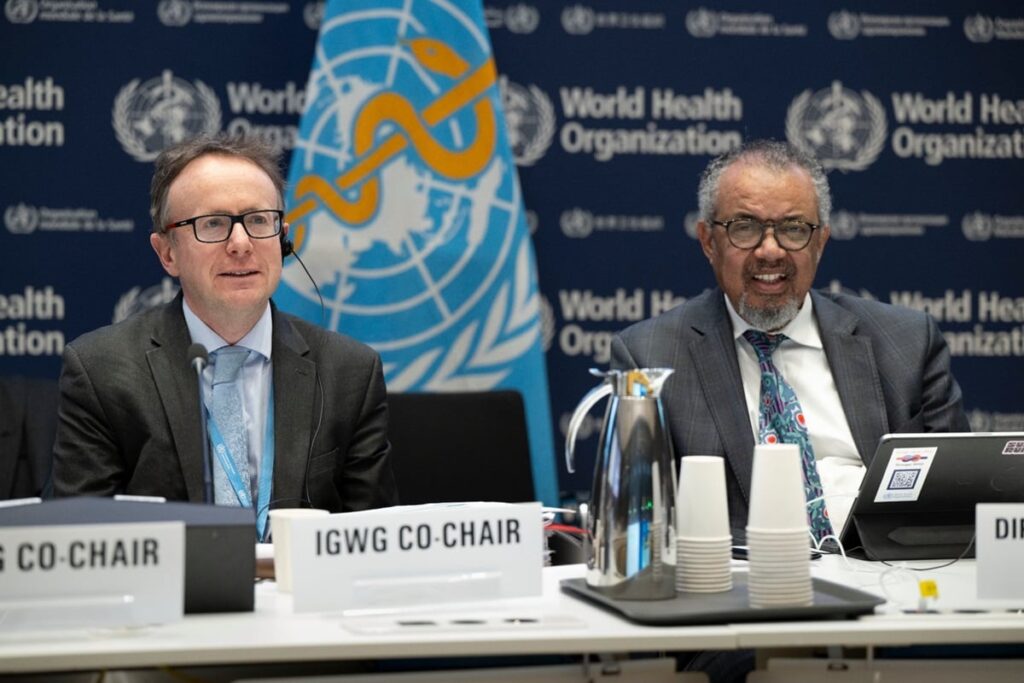
The World Health Organization (WHO) has announced that its Member States will continue negotiations on the Pathogen Access and Benefit Sharing (PABS) annex to the WHO Pandemic Agreement. Discussions are set to resume from April 27 to May 1, 2024, ahead of the World Health Assembly (WHA) scheduled for May. This decision underscores the commitment of WHO Member States to finalize the PABS annex, which is considered a fundamental aspect of the Pandemic Agreement.
Last year, the WHA adopted the Pandemic Agreement to address significant weaknesses revealed during the COVID-19 pandemic and to enhance global collaboration and equity in future pandemic prevention, preparedness, and response. Dr. Tedros Adhanom Ghebreyesus, WHO Director-General, emphasized the importance of the PABS system, stating, “The Pathogen Access and Benefit Sharing system lies at the heart of the WHO Pandemic Agreement and I thank WHO Member States for their commitment to work to bring it to life.” He urged all delegations to foster trust in one another and in shared institutions, highlighting the need for solidarity and equity in public health.
The PABS annex aims to ensure rapid sharing of pathogens that could potentially lead to pandemics, as well as the fair and equitable distribution of benefits derived from their use, including vaccines, diagnostics, and therapeutics. Ambassador Tovar da Silva Nunes of Brazil, Co-Chair of the Intergovernmental Working Group (IGWG), reported that member state negotiators are working diligently towards creating an ambitious and equitable PABS annex, with the goal of having it ready for adoption at the upcoming World Health Assembly.
In recent discussions, Member States engaged in intensive negotiations concerning several critical issues. They addressed how benefits from the sharing of pathogens should be defined and allocated, as well as the nature of contractual arrangements that will underpin the PABS system. Additionally, governance matters were discussed to ensure that the system operates effectively, transparently, and in the public interest. Mr. Matthew Harpur, another Co-Chair of the IGWG from the United Kingdom, noted the commitment shown by Member States, stating, “With less than two months until the World Health Assembly in May, I welcome the commitment shown this week by Member States towards finding consensus on outstanding areas in the Pathogen Access and Benefit Sharing system.”
While Member States acknowledged the constructive engagement in negotiations thus far, they recognized that additional time is needed to bridge remaining differences and finalize the text for the World Health Assembly. The collective aim remains to ensure a safer and more equitable world in the face of future pandemics, reaffirming the importance of solidarity and multilateralism in global health.
Emma Stone's 2-Ingredient Snack Will Change Your Life—And It's Only $2 a Day!

Eagles' A.J. Brown Trade: Shocking Insights from ESPN That Could Change Everything!

You Won't Believe How Calvin University's $100,000 Gym Upgrade Left Students Divided!

NIU’s Shocking Road Test at UMass: What They Discovered Will Leave You Speechless!

Caleb Wilson's Shocking NBA Draft Decision: What This Means for His Career and Fans!

Austria's Shocking New Law: Why Kids Under 14 Will Be Banned from Social Media—Parents, You Need to Know!
You might also like: