
White House’s Shocking AI Bill: 5 Details That Could Change Your Life Forever!

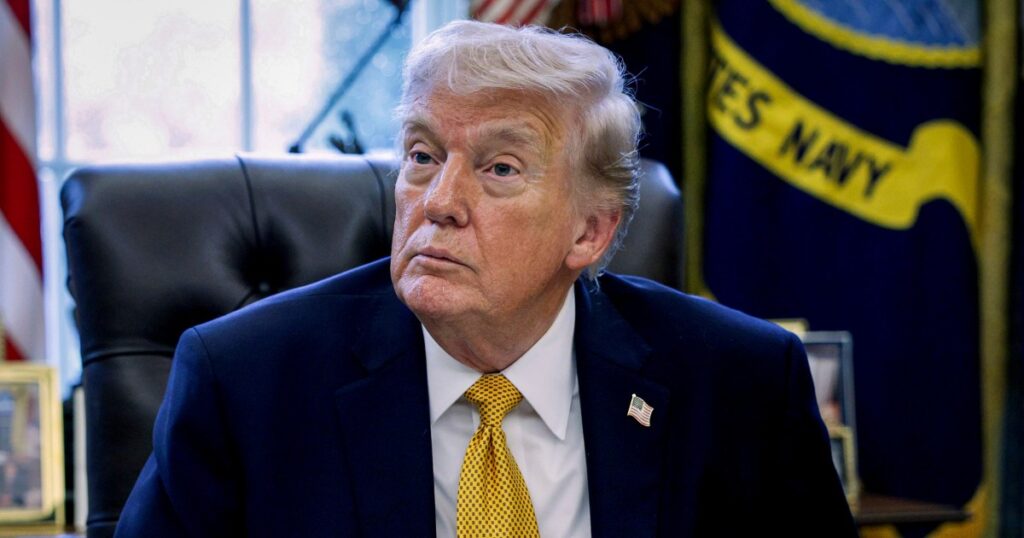
The White House has unveiled a new framework for national legislation on artificial intelligence (AI), aiming to strike a balance between fostering innovation and ensuring the safety of children in an increasingly digital world. Released on Friday morning, the proposal emphasizes the need for a cohesive federal approach to AI regulation, rather than allowing states to dictate their individual rules—which the White House argues could impede technological progress.
In an announcement accompanying the framework's release, the White House stated, “The Federal government is uniquely positioned to set a consistent national policy that enables us to win the AI race and deliver its benefits to the American people.” This sentiment underscores the administration’s intention to collaborate with Congress in the coming months to translate this framework into legislation that President Donald Trump can sign.
The framework is organized into seven primary areas, covering topics such as “Protecting Children and Empowering Parents,” “Respecting Intellectual Property Rights and Supporting Creators,” and “Educating Americans and Developing an AI-Ready Workforce.” Several provisions, particularly those focused on child protections and enhancing American AI infrastructure, were hinted at in Trump’s executive order from December, which directed key advisors, David Sacks and Michael Kratsios, to draft this framework.
A controversial aspect of the proposal is its support for limiting developers' legal liability for harms arising from AI systems. It specifically critiques “open-ended liability,” which it claims could lead to excessive litigation—especially concerning child safety. Additionally, the framework seeks to curtail states' authority to penalize AI developers for unlawful conduct tied to their models by third parties. These proposed liability restrictions resonate with Sacks and many Silicon Valley investors who argue that significant legal repercussions could stifle American innovation and deter future investments in AI technology.
The growing urgency to regulate America’s burgeoning AI landscape has emerged as a rare point of agreement among diverse political factions, from MAGA conservatives to progressive activists. In recent months, limiting the expansion and construction of data centers has surfaced as a pivotal bipartisan issue in various state legislatures. While there is currently no broad federal legislation governing AI, states like California and New York have already taken steps to set standards. California’s SB 53 and New York’s RAISE Act require leading AI firms—such as OpenAI, Anthropic, and Google—to implement additional whistleblower protections, report significant safety-related incidents, and disclose their testing methods for key risks.
However, the Trump administration’s attempts to restrict state-level AI legislation have raised eyebrows among Republican lawmakers. A letter signed by over 50 Republicans in early March expressed concern over the administration’s efforts to halt state AI regulation, suggesting that such actions indicate not just a desire for coordination, but an attempt to prevent the passage of measures holding the tech industry accountable. This letter specifically responded to the administration’s opposition to a proposed bill in Utah that would require AI companies to enhance transparency regarding their child safety measures and risk mitigation strategies—especially regarding potentially catastrophic uses of their models, such as aiding in bioweapons development or severe cyberattacks.
Notably, the framework asserts that states should maintain the authority to prosecute matters typically falling under state jurisdiction, including fraud prevention and consumer protection. Furthermore, the policy document highlights safeguarding against AI-related censorship, advocating for congressional action to prevent the federal government from pressuring technology providers, including AI developers, to alter or ban content based on partisan or ideological agendas.
This proposed framework represents a significant moment in the ongoing dialogue about how best to approach the rapidly evolving field of AI. As both innovation and regulatory pressures converge, the outcome of this legislative process could have lasting implications for how AI technologies develop, particularly in relation to child safety and corporate responsibility.
Weyauwega-Fremont Election: Shocking Write-In Candidates Could Change Everything—Are You Missing Out?

Wisconsin's Power Shift: Who Will Lead After LeMahieu's Shock Retirement? You Won't Believe the Candidates!

You’ll NEVER Guess the Top 19 Costco Healthy Snacks – #7 Will Shock You!
You Won't Believe What Happened After 50 Years of Service in the Governor's Office! 🎉

Record-Breaking Heatwave: Can the US Survive the 'Unthinkable' Climate Crisis? Shocking Details Inside!

You Won't Believe Who the Packers Are Secretly Banking On to Fix Their Cornerback Crisis!
You might also like: