White House Showdown: What Trump & US Bishops' Shocking Meeting Means for America!

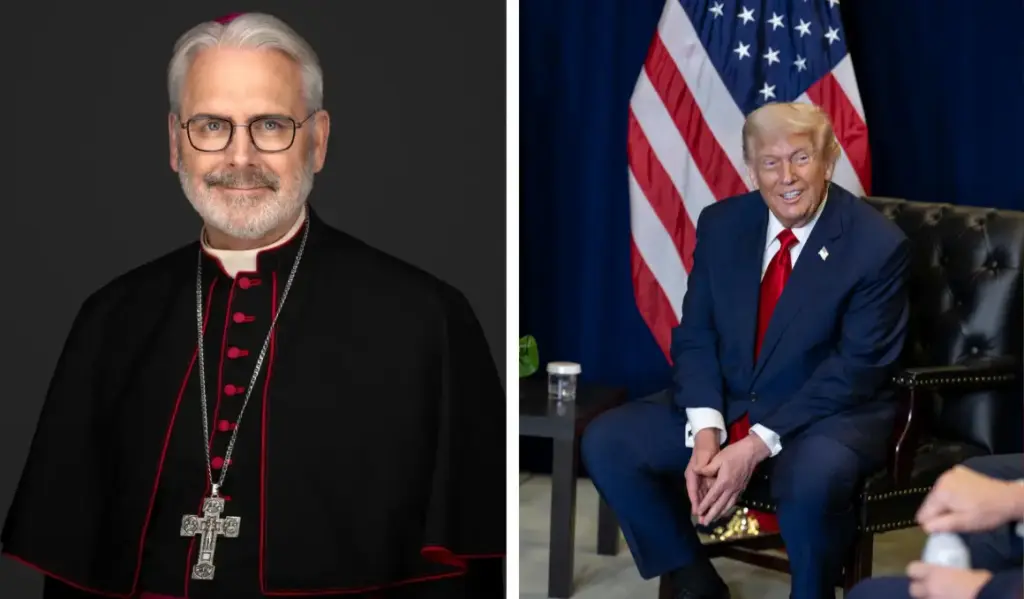
Archbishop Paul Coakley of Oklahoma City, Oklahoma, recently took on a significant role as the newly elected president of the United States Conference of Catholic Bishops (USCCB). On January 12, he met with President Donald Trump, Vice President JD Vance, and other key Trump administration officials at the White House. This meeting marks a noteworthy moment in the ongoing dialogue between the USCCB and the administration regarding various pressing issues.
In a statement shared on social media platform X, the USCCB noted that during their discussions, the leaders explored “areas of mutual concern, as well as areas for further dialogue.” Archbishop Coakley expressed gratitude for the engagement and emphasized his eagerness for ongoing conversations, a sentiment that highlights the importance of collaboration between the church and the government.
Archbishop Coakley, @ArchbishopOKC, had the opportunity for introductory meetings with President Trump, Vice President Vance, and other Administration officials, in which they discussed areas of mutual concern, as well as areas for further dialogue. Archbishop Coakley is grateful…
— U.S. Conference of Catholic Bishops (@USCCB) January 13, 2026
While specific details from the closed-door meeting have not been released, White House Press Secretary Karoline Leavitt indicated she would confirm whether President Trump would provide a readout of the discussions. However, it’s reasonable to speculate that immigration was likely a pivotal topic. Archbishop Coakley, who has been vocal about prioritizing immigration issues since assuming the USCCB presidency in November, previously stated that this topic would “undoubtedly” arise in discussions with the administration.
During a December 21 appearance on CBS News’ “Face the Nation,” Archbishop Coakley remarked that “there’s no conflict necessarily between advocating for safe and secure borders and treating people with respect and dignity.” His emphasis on the dual importance of border security and the humane treatment of individuals reflects a nuanced approach to an often contentious issue.
The meeting comes on the heels of recent comments from President Trump regarding the Hyde Amendment, which prohibits federal funding for most abortions. Trump's suggestion that Republicans be “flexible” on this issue elicited a response from the USCCB, which firmly rejected any attempts to allow taxpayer funding for abortion.
Archbishop Coakley expressed optimism about the potential for collaboration between the bishops and the administration, stating on “Face the Nation” that there are opportunities for both sides to “speak frankly with one another.” His commitment to fostering open dialogue underscores the importance of clear communication in addressing critical societal issues.
Emphasizing Human Dignity
As the USCCB continues to focus on immigration reform, Archbishop Coakley has been a vocal advocate against the "vilification of immigrants." His pastoral approach, including a recent letter on how to compassionately support individuals experiencing gender dysphoria, illustrates his commitment to upholding human dignity within the Catholic faith. This emphasis on respect and compassion is critical as the U.S. grapples with complex immigration policies and public attitudes toward migrants.
Having been ordained a priest in 1983, Archbishop Coakley has an extensive background in church leadership, serving on multiple USCCB committees and advising several religious organizations, including the Napa Institute and the Pope Paul VI Institute. His rich experience positions him as a significant voice in contemporary discussions on morality and public policy.
In conclusion, Archbishop Coakley’s recent meeting with President Trump and his administration illustrates the potential for meaningful dialogue on issues of broad concern. As both sides navigate the complexities of policy and faith, the emphasis on mutual respect and human dignity will be vital in shaping future discussions. The ongoing relationship between the USCCB and the administration will undoubtedly influence the landscape of various social issues in America.
Vievé's New Protein Bars: Are These the Secret to Losing 10 Pounds in Just 2 Weeks?

Could Your Sweet Tooth Be a Silent Killer? Shocking Studies Link Sugary Snacks to 80% Higher Dementia Risk!
Massive Outage: 20,000 Users Locked Out of Popular Social Media—Is Your Account Next?
Inflation Stays Stubborn at 5%: Is Your Wallet Safe? White House's Bold Move Could Change Everything!

Mitski’s Cryptic Post Drops Hints – Is a Shocking New Album Coming THIS WEEK? You Won’t Want to Miss This!

Ukrainian Startup Haiqu Just Secured $11M—Is This the Future of Cheap Computing?
You might also like: