
Vivek Ramaswamy's Shocking $10 Million Advantage: Will This Destroy Ohio's Democrats?

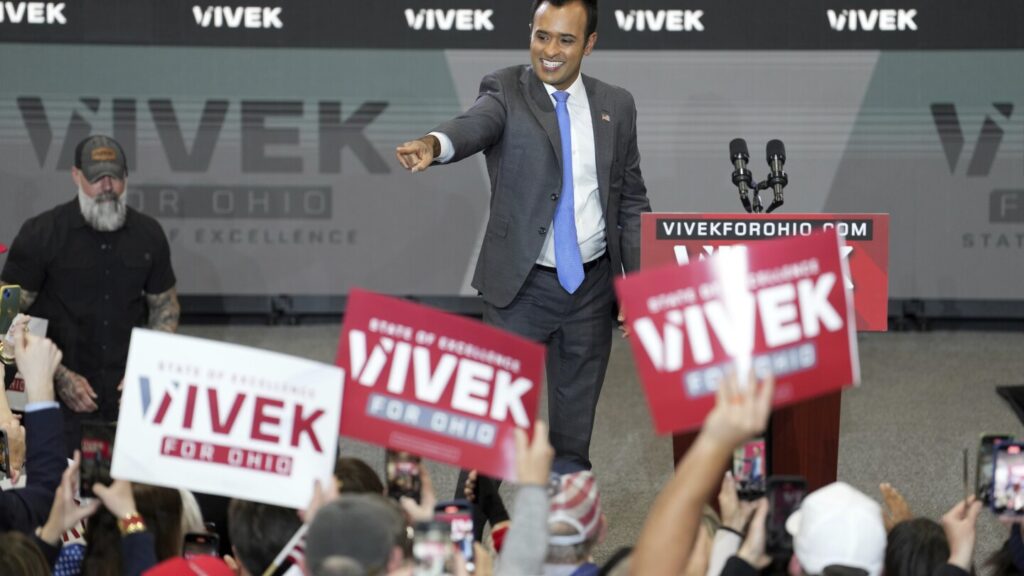
With both Democrats and Republicans in Ohio bracing for an unprecedented governor's race this year, all eyes are on the financial battle shaping up between billionaire Republican candidate Vivek Ramaswamy and his Democratic opponent, Amy Acton. This election cycle is set to break financial records, with Ramaswamy’s fundraising efforts already surpassing those of Acton.
In 2025, Ramaswamy raised an impressive $19.8 million, bolstered by his vast personal fortune. In contrast, Acton managed to secure $5 million—a record for a Democratic nominee for Ohio governor in a non-election year—though much of that amount, around $4 million, came in just the last quarter. This disparity in fundraising has raised questions about the viability of Acton’s campaign, especially as she faces a well-funded opponent.
Despite the fundraising lead, Ohio Democrats express cautious optimism regarding Acton’s prospects. Former Dayton mayor and Democratic nominee for governor, Nan Whaley, stated, “I think in politics there’s a law of diminishing returns on the money these days. You have to have enough to get your message out. But I think there are other things that play in politics these days.” This sentiment reflects a belief that money alone may not dictate the outcome of the race.
While Ramaswamy’s campaign is gaining traction, fueled by his vast financial resources and name recognition from his past presidential bid in 2024, Democrats argue the billionaire's wealth could be a double-edged sword. A Democratic strategist noted, “It’s really difficult for a billionaire who has spent $1 million of his own money on a private jet on the campaign to win the argument that he understands what people are going through and is going to do something about it.”
The political landscape in Ohio has become more complex following the decisions of prominent Democrats. Former Representative Tim Ryan opted out of the race in November, while former Senator Sherrod Brown chose to focus on a Senate campaign. This led to a prolonged period of uncertainty for Acton, who faced a “shadow primary” but still managed to raise an unprecedented amount for a Democratic candidate in an off-year election.
As the campaign unfolds, polling indicates that Acton is competitive against Ramaswamy, with some surveys placing her within the margin of error. However, Ramaswamy holds a slight edge in name identification, boasting a 40% approval rate and a 41% disapproval rate, compared to Acton’s numbers, which sit in the 30s.
Ramaswamy’s campaign maintains that his fundraising success reflects grassroots support across Ohio. Campaign manager Jonathan Ewing stated, “Our opponents will try to downplay this record-breaking fundraising haul, but the numbers speak for themselves. We’ve never seen anything like this in the history of gubernatorial campaigns in Ohio.” The campaign claims that the average donation was $76, suggesting broad-based support.
As Ohio voters prepare for what is shaping up to be a high-stakes election, the candidates will need to articulate their visions for the future amid rising costs of living and other economic concerns. Both parties acknowledge that while fundraising is critical, connecting with voters on issues that matter will ultimately determine who prevails in this pivotal race.
You Won't Believe How This Bizarre MWC 2026 Phone Can Start Fires—And Why You NEED One!

Bitcoin Plummets 30% Overnight—Could This Be the End for Crypto? Don’t Miss the Shocking Details!

You Won't Believe Which 3 Cryptos Could Skyrocket After This 50% Dip—And One to Ditch NOW!

Are You the Next Victim? How Social Media Turns You Into a Dupe Influencer—Shocking Truths Inside!

You Won't Believe What Happens When Oregon Ducks Clash with Illinois Fighting Illini—Find Out How to Watch This Epic Showdown!

Is Your Portfolio at Risk? Discover the Shocking Truth Behind 2026's Stock Market Chaos!
You might also like: