
Vietnam's Secret Engineering Revolution: Is This the Next Silicon Valley? Find Out Why You Can’t Afford to Miss It!

In the wake of hiring volatility and economic uncertainty, companies are re-evaluating their workforce strategies with a focus on cost efficiency, delivery stability, and long-term scalability. This shift does not represent a retreat from technological investment; in fact, demand for capabilities in artificial intelligence, data management, cloud infrastructure, and cybersecurity is on the rise as businesses accelerate their digital transformation and automation efforts.
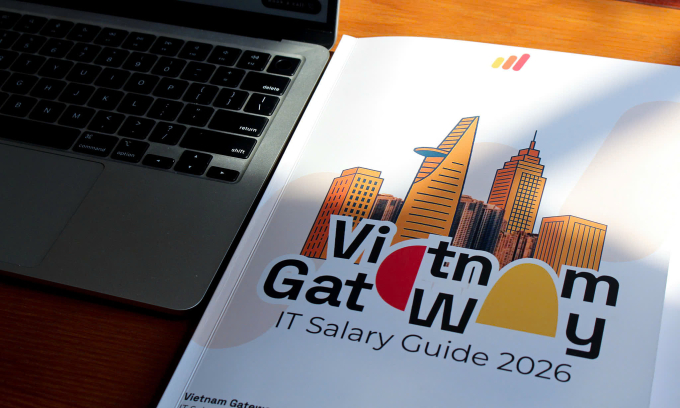
The strategic focus for technology leaders has evolved from whether to invest in engineering to how best to allocate engineering resources across global markets. Insights from the IT Salary Guide 2026 - Vietnam Gateway, published by JT1, highlight that Vietnam is increasingly seen as a viable engineering hub, rather than merely a low-cost outsourcing option.
Cost Pressure Reshapes Offshore Decisions
The global technology sector has undergone significant changes, with many companies streamlining management structures to enhance cost control and operational efficiency. Offshore engineering models are now viewed as long-term strategic decisions rather than quick fixes for cost savings. Notably, despite salary differentials showing that engineering compensation in Vietnam is typically around 30% of comparable roles in the United States and roughly half of Western European benchmarks, cost arbitrage alone is no longer sufficient to justify offshore expansion.
Executives are increasingly focused on the total cost of delivery, which includes productivity per engineer, onboarding timelines, costs associated with employee turnover, and management overhead. Within this framework, stability and predictability of delivery have become as critical as the initial labor costs.
Vietnam's Evolving Role in Global Engineering
While many mature technology markets are restructuring, Vietnam's IT sector continues to expand in both scale and capability. Sustained investments in digital infrastructure, a young and technically trained workforce, and the migration of projects from higher-cost markets have all contributed to this growth. JT1 notes a shift from transactional outsourcing to a deeper integration of Vietnamese engineering teams into global product development cycles. As multinational corporations and fast-growing startups establish technology hubs and R&D centers in Vietnam, local teams are being embedded into core engineering workflows rather than remaining in peripheral support roles.
This evolution underscores Vietnam's capability to align with Western engineering standards while maintaining low coordination overhead, thereby supporting reliable delivery at scale and fostering long-term product development. Moreover, Vietnam's regulatory environment is increasingly conducive to technology development and foreign investment, with government initiatives aimed at expanding the digital economy and promoting innovation-led growth. This translates to clearer regulatory pathways and lower execution risks for international firms seeking to establish or expand engineering operations in the region.
Compared to other well-established offshore destinations in Asia, Vietnam presents a balanced profile in terms of talent availability, operational alignment, and retention rates. While India boasts unmatched scale and enterprise experience, it grapples with challenges related to skill variability and employee attrition. The Philippines is noted for its English proficiency and service alignment, though it has limitations in advanced engineering capabilities. Malaysia offers stability and multilingual skills but has a smaller talent pool.
In contrast, Vietnam is increasingly recognized as capable of sustaining engineering hubs, with demand for experienced engineers who can effectively integrate into global product teams. This reflects a growing depth of seniority and relatively stable retention rates within the Vietnamese technology workforce, which now exceeds 600,000 professionals, supported by a steady influx of graduates from universities and technical training institutions. The talent mix is progressively shifting toward more senior roles, especially in cloud, data, and AI-driven projects.
Moreover, workforce expectations are evolving. According to JT1's findings, experienced engineers are increasingly prioritizing stability, clearly defined roles, and structured project environments over short-term, high-risk opportunities. As a result, factors such as salary predictability, transparent career paths, and long-term organizational direction have begun to outweigh speculative incentives.
The IT Salary Guide 2026 - Vietnam Gateway also provides essential data on salary ranges, role-level benchmarks, and hiring model comparisons across major cities like Ho Chi Minh City, Hanoi, and Da Nang. This information is crucial for executives planning offshore hubs or reassessing long-term cost structures.
As we approach the critical period from 2025 to 2026, global technology leaders face a pivotal decision-making window. After years of experimenting with remote and offshore models, companies are now rebuilding their engineering capabilities with renewed discipline, emphasizing delivery resilience and sustainable cost efficiency. JT1's analysis suggests that organizations that engage early and strategically with Vietnam's technology talent ecosystem are likely to gain substantial advantages as competition for skilled engineers intensifies.
Thrift Store Jeans Hide This Shocking Secret: You Won't Believe What She Found!

You Won't Believe What Aaronson and McKennie Did to Secure USMNT's World Cup Fate—Shocking Details Inside!

Why 'Fire and Ash' Just Hit $1B — You Won’t Believe What Happened Next!

Ridgewater's Stunning Upset: You Won't Believe How They Took Down the Raiders in an Epic Finish!

Lakers' Shocking Trade Plans: Could LeBron Be on the Chopping Block Before 2026?

Boston College Shocks Fans: You Won't Believe Why They Signed Saginaw Valley's QB McKenzie!
You might also like: