
US Federal Reserve's Shocking Move: How It Could Cost You Thousands This Year!

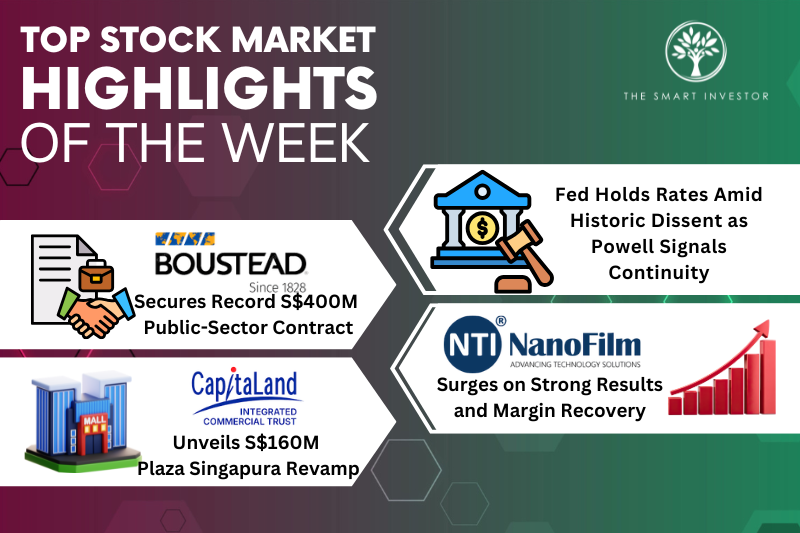
This week’s economic landscape was marked by significant transitions and developments, highlighting an ongoing power struggle in Washington and notable achievements in Singapore. The U.S. Federal Reserve made headlines by holding interest rates steady, but the move was overshadowed by intense internal dissent, a rarity for the central bank.
The Federal Reserve's decision to keep interest rates at 3.5% to 3.75% came amid an 8-4 vote, showcasing the most dissent within the board since 1992. This dissent stemmed from apprehensions about future rate cuts. Specifically, three officials opposed any signal of potential reductions while a fourth, Stephen Miran, advocated for an immediate quarter-point decrease. Adding to the intrigue, Jerome Powell, the outgoing chair, announced he would remain on the Board of Governors past his scheduled exit on May 15. This decision effectively blocks President Donald Trump from appointing a new member and complicates the transition for his successor, Kevin Warsh, whose nomination for the chair position was advanced by the Senate Banking Committee on the same day.
The backdrop of rising energy prices due to heightened tensions in the Middle East adds complexity to the Fed's leadership challenges. With energy prices reaching a four-year high, the risk of entrenched inflation looms large, threatening economic growth and complicating monetary policy decisions.
Record Achievements in Singapore's Economy
Meanwhile, across the Pacific, Boustead Singapore (SGX: F9D) achieved a remarkable milestone by securing its largest-ever contract, valued at over S$400 million. This contract, awarded to its engineering and construction arm, Boustead Projects E&C, involves constructing an office complex in Singapore. Over a three-year timeline, this project boosts Boustead’s order backlog in its real estate solutions division to S$837 million and to S$1 billion across its broader engineering segment. However, the company clarified that this contract is not anticipated to materially impact profitability or earnings for the financial year ending March 31, 2027. Despite this, the win solidifies Boustead’s reputation as a key player in Singapore's public sector projects, which also include notable ventures like Singapore’s first multi-storey recycling facility.
In another development, shares of Nanofilm Technologies International (SGX: MZH) surged an impressive 40.2%, closing at S$1.43 after the company reported robust first-quarter results for 2026. Revenue rose by 24% year on year, reaching S$55 million, primarily driven by its advanced materials division, which accounted for 89% of total revenue. Within that sector, consumer advanced materials saw a remarkable 32% increase year on year. The company also reported significant improvements in profit margins, with gross profit margin expanding to 39% in the first quarter, up from 27% in the previous year, and EBITDA margin doubling to 26%.
The outlook for FY2026 remains positive, projecting growth across key segments, including smart eyewear and health sensing devices, although risks such as demand fluctuations in consumer electronics and potential cost pressures persist.
Further developments from Singapore's commercial sector include a significant upgrade initiative by CapitaLand Integrated Commercial Trust (SGX: C38U). The trust has announced a S$160 million revamp of Plaza Singapura and The Atrium@Orchard, aiming to enhance their positioning on Orchard Road. Scheduled to commence in the third quarter of 2026, the project will unfold in phases over two years, ensuring the mall remains open throughout the renovations. The revamp is expected to enrich the shopping experience for both locals and tourists, featuring upgraded infrastructure and a refreshed tenant mix, and aligns with plans by the Urban Redevelopment Authority to pedestrianize the area.
As the economic landscape continues to evolve, American readers may find these international developments particularly noteworthy. The Federal Reserve's internal divisions reflect underlying tensions in U.S. monetary policy, while achievements in Singapore signal a resilient and adaptive economy in a global context. As inflationary pressures mount and geopolitical tensions rise, the interconnectedness of these markets will likely have implications that resonate well beyond their borders.
Zayn Malik's Shocking Hospitalization: Will His Career Survive This Unexpected U.S. Tour Cancellation?

This Beloved Bird Could Disappear Forever—Are We Ignoring the Signs?

Thousands at Risk: Why Behavioral Health Providers are Furious Over CareSource's Shocking $10 Million Overpayment Crisis!

You Won’t Believe Which 5 NFL Legends Are Trying to Make a Comeback—One Shocking Invite!

Urgent: Whitehall Police Nab Man Making Disturbing Threats to Schools – What Did He Say?

Iran's Shocking FIFA Meeting: Will World Cup Dreams Hang in the Balance?
You might also like: