
Urgent: Jailed Ugandan Leader Besigye’s Health Deteriorating Rapidly—What His Party Fears Next!

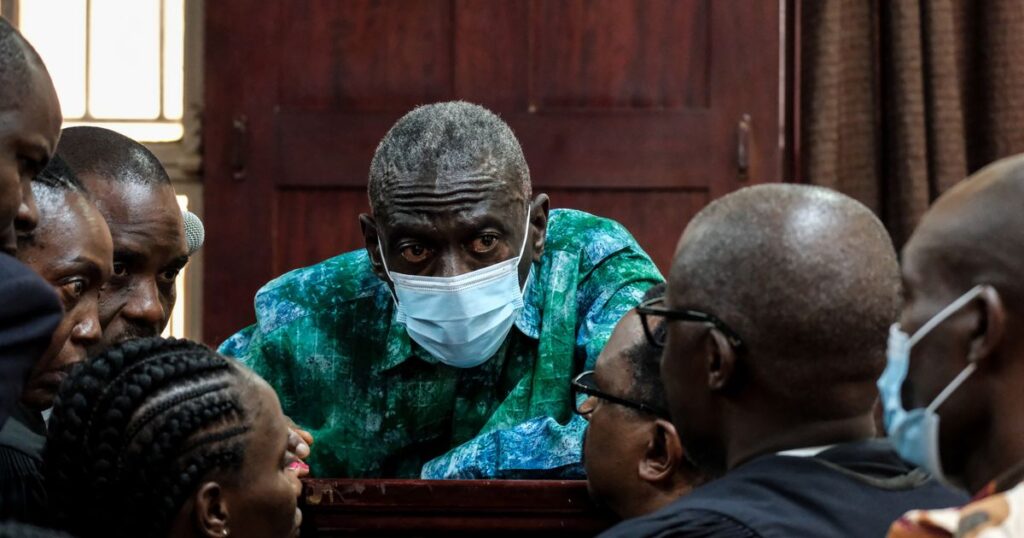
KAMPALA, Uganda (AP) — The health of jailed Ugandan opposition leader Kizza Besigye has reportedly taken a turn for the worse, according to a statement from his party, the People's Front for Freedom. Besigye was transported overnight to a medical facility in the capital, Kampala, as concerns grow over his well-being.
His party declared that Besigye's health “has reached a critical and deteriorating state” and is demanding that he be granted unrestricted access to his personal doctors and family. "It is a tragedy that a man who has dedicated his life to the health and freedom of others is being denied his own right to medical dignity," the statement continued. "We hold the regime and the prison authorities fully accountable for his well-being."
Besigye, a veteran politician and a prominent figure in Uganda's opposition politics, has been held in a maximum-security jail in Kampala. He faces treason charges that he contends are politically motivated. His case is emblematic of the broader struggles faced by opposition figures in Uganda, particularly as the country prepares for a political transition away from long-serving President Yoweri Museveni, who has been in power since 1986.
In a contrasting statement, Frank Baine, a spokesperson for Uganda's prison system, downplayed concerns about Besigye's health, stating, “It was a general checkup.” He added, “This morning he was doing his exercises.” Such assertions may do little to alleviate fears among Besigye's supporters, who worry that he is being targeted for his political beliefs.
Besigye last contested the presidency in 2016, after which he declared that elections in Uganda are futile under a regime reliant on military force. In a recent election, President Museveni was declared the winner with 71.6% of the vote, while his closest opponent, Bobi Wine, received 24.7%. Bobi Wine has rejected these results as fraudulent, and the election itself was marred by an internet shutdown and failures in biometric voter identification systems that activists argue are necessary to prevent voter fraud.
At 81 years old, Museveni has managed to maintain power by amending the constitution to eliminate term limits and age restrictions, effectively sidelining potential rivals. Besigye, once a military assistant and personal doctor to Museveni, now finds himself at odds with the very regime he once served. Since his detention in November 2024, he has been accused of plotting to overthrow the government — allegations that his followers argue are intended to eliminate his influence in Uganda's political landscape.
These escalating tensions have broader implications for Uganda, where many citizens are starting to question the future of leadership in a post-Museveni era. The absence of a clear successor within the ruling National Resistance Movement party adds an unpredictable element to the political transition, raising fears of instability, especially as Besigye remains a significant voice in opposition.
Moreover, tensions have escalated within Museveni's family, evidenced by the comments of his son, Gen. Muhoozi Kainerugaba, who has accused Besigye of plotting to kill his father and has publicly suggested severe repercussions for the opposition figure. Museveni himself has stated that Besigye “must answer for the very serious offenses he is alleged to have been planning,” and has called for a quick trial to clarify the situation.
The situation around Kizza Besigye serves as a microcosm of the ongoing struggle for democracy in Uganda. His detention and the associated health concerns reflect the fraught landscape in which political dissent is often met with harsh repercussions. While the world watches, the fate of Besigye and the potential for a political transition in Uganda remain uncertain.
Is Casio’s Shocking New G-Shock With Heart Rate Tracking About to Change Fitness Forever? Find Out Why You Can’t Miss This!
You Won't Believe What Happens When Access is Denied: 7 Shocking Consequences You Need to Know!

Why This One Night at Cullman High Could Make or Break Their Soccer Season—Don’t Miss Out!

Is The Second Sphere About to Change Everything at National Harbor? Don’t Miss This Shocking Reveal!

Why This Year's Sunset Strides 5K Could Save Lives—And How You Can Get Involved Before It's Too Late!
Discover the 3 Shocking Secrets Mel B & Ellie Goulding's Trainer Uses to Transform Your Body in 2026 – Don’t Miss Out!
You might also like: