
UK Councils Are Killing Climate Action—Discover the Shocking Truth Behind This Controversy!

In a striking shift away from climate policy, seven out of ten councils controlled by Reform UK have eliminated their climate targets since the party's rise to power in May. This alarming trend has been documented in a recent analysis conducted by the Grantham Research Institute on Climate Change and the Environment at the London School of Economics. The findings indicate that Reform-run councils have not only removed references to climate change from their strategic documents but have also succeeded in rescinding Climate Emergency Declarations in three councils.
Moreover, instances of climate change denial have emerged from councillors affiliated with Reform UK in at least five councils, including Kent, Durham, Nottinghamshire, Lincolnshire, and Lancashire. A notable example occurred in September 2025, when Kent County Council attempted to repeal its Climate Emergency Declaration by citing a "supposedly unproven view of anthropogenic climate change" and referencing widely discredited sources.
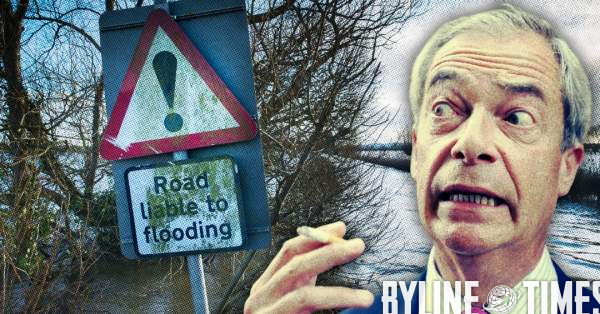
Reform councillor Chris Hespe characterized the notion of human-induced climate change as "nonsense" and referred to it as an "anthropogenic global warming hoax." This rejection of climate science is particularly concerning, especially considering a Byline Times investigation that projected over 700,000 homes in Reform UK-controlled councils facing medium to high flood risk by mid-century. This figure is equivalent to roughly one in five households within these jurisdictions, raising serious questions about the practical implications of the party's climate stance.
Despite public protests in response to these councils' climate policies, Reform UK continues to espouse discredited ideas about climate change. Deputy Leader Richard Tice has described the push for net-zero emissions as an "extreme cult," a sentiment echoed in the party's local election literature from 2025, which promised to "scrap Net Zero" as a means of reducing energy bills.
However, the reality paints a different picture. Every council governed by Reform UK has raised council tax, often by the legal maximum, contrary to their promises to reduce taxes and waste. The authors of the Grantham report concluded that the party's actions demonstrate a failure to acknowledge the considerable risks that climate change poses to the public, including rising sea levels and extreme weather events. Their analysis further underscores the lack of evidence-based policymaking within Reform UK.
The report also notes a lack of clarity surrounding what these councils consider "net zero spend" and how they account for savings linked to the rollback of climate-related targets. The authors were unable to secure detailed estimates regarding savings associated with these motions, leading to skepticism surrounding the headline figures cited by Reform UK.
As the party positions itself to gain more seats in the upcoming May 2026 elections, there is cause for concern about the implications for national climate goals. The report calls for stronger incentives to ensure that local authorities contribute to climate progress and emphasizes the need for standardized emissions reporting.
Eight councils under Reform UK's control have replaced mentions of climate change or decarbonization in official documents with more ambiguous language pertaining to "the environment," "sustainability," or "energy efficiency." For instance, Kent replaced its Net Zero Plan with an Energy Efficiency Plan, while Staffordshire's Climate Emergency Declaration has been transformed into a supposedly "broader and more practical" Environmental Strategy.
The variation in Reform UK councils' adherence to climate policies reflects a broader divergence in the party's stance on climate change. While Kent has committed to maintaining emissions reporting as a key performance indicator, Lancashire County Council is set to cease voluntary carbon footprint reporting. This inconsistency raises questions about the party's overall commitment to climate action.
Despite tensions within the party regarding climate policy, Reform UK continues to lead in public opinion polls, with predictions suggesting they may take control of several councils in upcoming elections. However, the findings of the Grantham report indicate that the party is largely fulfilling its promise to abandon net-zero commitments at the local level, which could have far-reaching consequences for climate initiatives across the UK.
The report highlights the urgent need for the government to be vigilant about the challenges posed by local councils and emphasizes that assumptions regarding voluntary action on climate change may no longer suffice. As these changes unfold, voters—especially those in areas facing significant flood risks—should take note of the implications of the current political landscape for future climate policies.
Egypt’s Shocking Drop to 103rd in Climate Change Index: What This Means for Our Future!

You Won't Believe What Austin High Midfielder Kate Loudamy Revealed About Her Secret Training Regimen!
Your Browser is OUTDATED! Discover the Shocking Risks You're Ignoring Right Now!

You Won't Believe What Happens When a 40-Something Man Suddenly Transforms His Life—Is He Hiding a Shocking Secret?
Shocking Survey: 60% of Americans Say AI Could Make Homeownership a Distant Dream!

UK's Healthy Snack Market Set to Explode to $28 Billion by 2032—Are You Ready for the Free-From Revolution?
You might also like: