
Tuscany & Umbria: The Hidden Wealth Secret Rich Investors Don't Want You to Know!

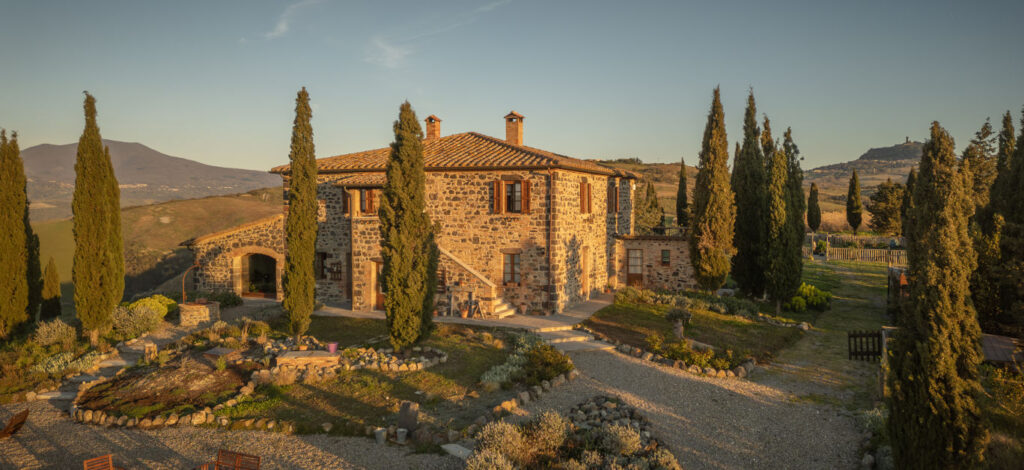
As Italy’s countryside enters 2026, it stands out as one of Europe’s most compelling real estate narratives. In 2025, sales reached a remarkable €76.3 million, according to Great Estate. The demand from British and American buyers is not just growing; it is evolving. More than ever, Italian property is being perceived as a strategic asset that offers both lifestyle benefits and financial resilience, often viewed as a means of ensuring generational continuity.
Market confidence in Italy’s housing sector is bolstered by strong data. National house prices rose by approximately 4.4 percent year on year in early 2025, while transaction volumes increased by more than 11 percent. The influence of foreign buyers is particularly noteworthy; international purchasers accounted for nearly 20 percent of sales in the first half of 2025, nearly double the previous year's figures. Unlike the more volatile metropolitan markets, prime countryside properties in central Italy benefit from a structural scarcity. Strict planning laws, protected landscapes, and heritage preservation policies all help to limit overdevelopment, which reassures investors about long-term value retention.
Favorable mortgage conditions further enhance this attractive landscape. Following adjustments by the European Central Bank, average mortgage rates in Italy have stabilized between 3.2 and 3.8 percent, enhancing purchasing power compared to other prime European markets.
📰 Table of Contents
Leading Regions: Tuscany and Umbria
Tuscany continues to set the standard for international real estate, attracting affluent buyers drawn to its vineyard estates and restored farmhouses, as well as proximity to iconic cities like Florence and Siena. In Lucca province, residential values have surged significantly over the past five years, indicating sustained overseas interest.
However, it is Umbria that has emerged as the quiet frontrunner heading into 2026. Often referred to as Italy’s green heart, Umbria boasts preserved medieval towns, lower tourism density, and exceptional landscape quality. Great Estate reports that 70 percent of its Umbrian transactions in 2025 were concentrated in Perugia province, with growing demand noted across Terni.
The allure for British and American buyers lies in the combination of authenticity and privacy. Properties ranging from 300 to 400 square meters, priced between €850,000 and €3.5 million, offer ample space and flexibility, making them ideal for extended family living.
Tax Strategy Meets Lifestyle Design
Italy’s favorable flat tax regime has proven to be a significant draw for globally mobile wealth. New residents can choose to pay a fixed annual tax on foreign income, providing clarity and predictability for international financial planning. As discussions about potential changes to the flat tax emerge, 2025 became a pivotal year for many buyers eager to secure advantageous positions before any increases take effect.
Quality of life metrics also bolster Italy's appeal. The country consistently ranks among the highest for life expectancy, a testament to its healthcare standards, diet, and lifestyle. In a climate of rising stress and economic uncertainty in both the United Kingdom and the United States, relocating to the Italian countryside represents not just a wellness decision but also a sound financial move.
Moreover, the architecture of traditional Italian estates supports multi-generational living. Stone farmhouses, historic villas, and rural compounds are designed for extended family structures, featuring multiple wings, guest annexes, and expansive outdoor spaces that allow for privacy without isolation.
This flexibility transforms property from a passive holding into an integrated lifestyle asset. A countryside estate can serve as a primary residence, a seasonal retreat, a rental income generator, and a long-term family investment. Short-term rental yields in select central Italian locations can reach between 6 and 10 percent annually, fueled by sustained tourism demand and favorable taxation on rental income.
Sustainability and Future Value
The importance of energy performance is increasingly influencing buyer decisions. Italy is witnessing rapid growth in high-efficiency renovations and new constructions that meet top energy classifications. Homes boasting strong sustainability credentials are commanding premium valuations and attracting faster resale interest, particularly among international investors who are increasingly aware of evolving EU environmental standards.
Countryside estates equipped with solar energy systems, sophisticated water management solutions, and restored heritage materials merge historical character with modern infrastructure. For families looking to invest with a long-term vision, the balance between tradition and innovation becomes especially appealing.
Looking ahead, projections indicate a continued moderate price growth of approximately 3 to 4 percent annually in Italy, supported by constrained supply and robust foreign demand. Great Estate anticipates that this momentum will strengthen into the first half of 2026, particularly among UK and US buyers who prioritize tax efficiency, remote-working flexibility, and environmental quality.
The defining shift in this market goes beyond mere financial metrics. High-net-worth buyers are increasingly looking for assets that deliver emotional satisfaction, health benefits, and intergenerational cohesion alongside capital preservation. In Tuscany and Umbria, this synthesis appears uniquely attainable, with properties that not only appreciate steadily but also preserve the beauty of the landscape and the integrity of homes built to endure for generations.
As 2026 approaches, the phrase "prima la dolce vita" resonates more than ever, representing not just a romantic notion but a savvy allocation of both wealth and lifestyle.
You Won't Believe What iProov's Founder Revealed About Owning Your Mistakes – This Could Change Everything!

Pennsylvania's Shocking Secret: $10 Million Wasted in Special Elections—Are Your Taxes Funding This?

You Won’t Believe What Makes Penn’s Cam Thrower the ONLY Big 5 Player to Watch This Season!

Minnesota's White Earth Nation Shocks Nation as First Tribe to Achieve Historic Health Care Accreditation! What This Means for YOU!

PENN Entertainment's Shocking Q4 Earnings: You Won't Believe the $1B Revelation!

Why Bybit and Block Scholes Are Warning: Shocking Divergence in Bitcoin Signals Could Cost You Big!
You might also like: