
Trump's Shocking Ultimatum: 10 Countries at Risk of Severe Sanctions for Protecting Cyber-Criminals!

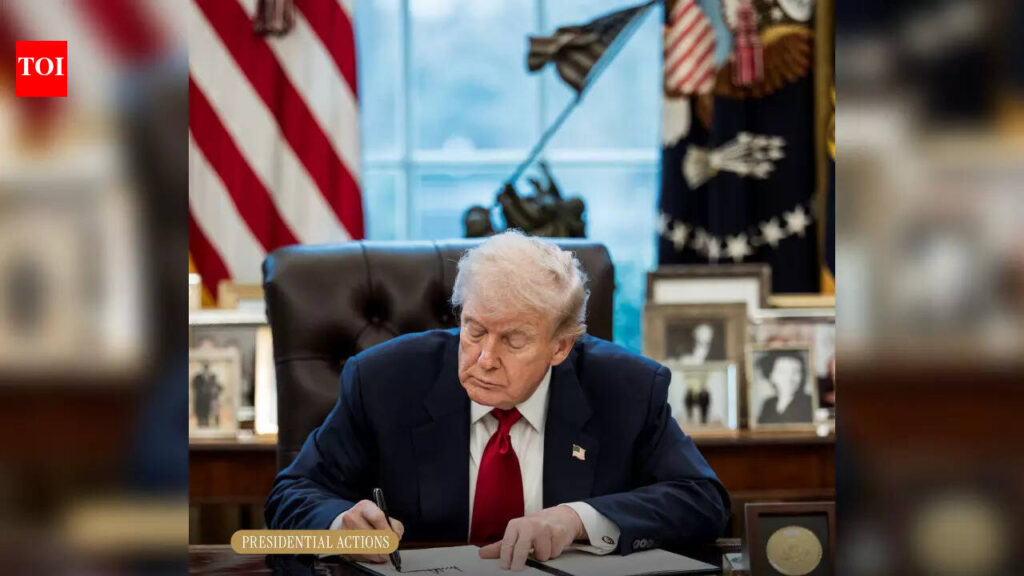
In a decisive move to address the growing threat of cybercrime, President Donald Trump has signed an executive order aimed at combating cyber-enabled fraud and predatory schemes that target American families, businesses, and critical infrastructure. The order reflects a recognition of the alarming scale of cybercrime, which officials describe as reaching crisis levels. It emphasizes the need for a coordinated and robust response against transnational criminal organizations (TCOs) that have increasingly exploited American vulnerabilities.
The White House released a statement underscoring the administration's commitment, declaring, “President Trump is unleashing every available tool to stop foreign-backed criminal networks that exploit vulnerable Americans through cyber-enabled fraud and extortion.” Central to this initiative is the directive for the Secretary of State to engage with foreign governments, demanding they take enforcement action against TCOs operating within their borders. Countries that fail to comply may face consequences such as sanctions, visa restrictions, and reductions in foreign assistance.
Key Components of the Executive Order
The executive order outlines a six-point plan designed to enhance the government's capacity to combat cybercrime:
- The Order mandates a comprehensive review by relevant administration officials to identify improvements in operational, technical, diplomatic, and regulatory tools against TCOs involved in cyber-enabled crime.
- It requires the submission of an action plan that identifies TCOs responsible for cybercrime and proposes solutions to prevent, disrupt, investigate, and dismantle their operations. This includes the establishment of a dedicated operational cell within the National Coordination Center (NCC).
- The Attorney General is instructed to prioritize the prosecution of cyber-enabled fraud and scam schemes, targeting the most serious offenses.
- The Secretary of Homeland Security is tasked with partnering with the NCC to offer training and technical assistance to state and local partners, enhancing resilience against cyber threats.
- The Attorney General will also offer recommendations for establishing a Victims Restoration Program, which aims to return seized or forfeited funds directly to victims of fraud.
- Finally, the Secretary of State will engage with foreign governments to ensure they take action against TCOs, imposing penalties on nations that allow such criminal activities to flourish.
This executive order marks a pivotal shift in the U.S. government's approach to cybercrime, moving from reactive to proactive measures. Officials noted that outdated frameworks and a lack of significant repercussions had previously allowed these criminal networks to thrive. The White House pointed out that various cyber threats—ransomware attacks, phishing campaigns, financial fraud, sextortion schemes, and impersonation scams—are not merely isolated incidents but rather coordinated efforts by sophisticated criminal enterprises.
The significance of this initiative lies not just in its immediate enforcement actions but also in the broader implications for U.S. cybersecurity policy. As cyber threats continue to evolve, the federal government’s response must also adapt, creating a more resilient infrastructure that can withstand such attacks. With cybercrime affecting millions of Americans annually, the need for swift and effective action has never been more urgent.
As the administration moves forward with this comprehensive approach, it will be essential to monitor the effectiveness of these measures and their impact on the ground. The success of President Trump's executive order will ultimately hinge on international cooperation and the ability of domestic agencies to implement these strategies effectively. Ensuring that American citizens are protected from the rising tide of cybercrime is a challenge that requires concerted efforts at all levels—from federal authorities to local law enforcement.
Dana White Drops SHOCKING Truth About Jon Jones: You Won’t Believe His Decision for the White House Card!

Unlock the Secret: How Your Neighborhood Could Boost Your Daily Steps by 50%—Are You Missing Out?
You Won't Believe What Happens When This Request Fails – 5 Shocking Consequences Revealed!

Finalissima Shock: Players Left Confused as Unexpected Twist Changes Everything - Will You Miss the Drama?
Your Browser Is Secretly Putting Your Personal Data at Risk—Find Out How Before It’s Too Late!

NBA Scandal Exposed: You Won't Believe Which Star Player Could Face 50-Game Suspension!
You might also like: