
Trump’s Shocking Tariff Plans: Will Your Wallet Feel the Pain After the State of the Union?

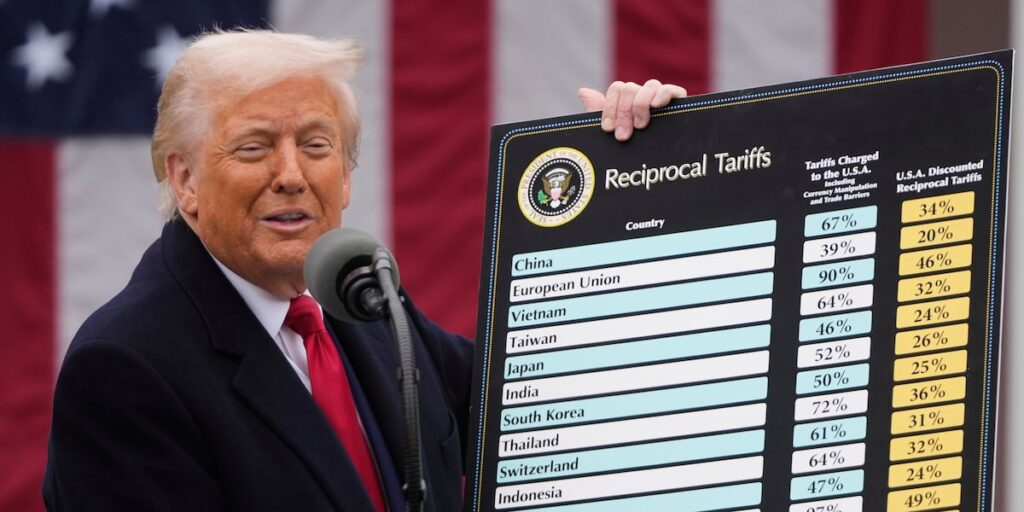
In a landmark decision on Friday, the Supreme Court struck down President Donald Trump’s controversial “Liberation Day” tariffs in a decisive 6-3 ruling, declaring that the imposition of such tariffs was illegal without congressional approval and overstepped presidential authority. This ruling arrives as Trump’s tariff policy, a cornerstone of his trade agenda during his second term, nears its one-year anniversary and just days before his upcoming State of the Union address.
Chief Justice John Roberts emphasized during the November oral arguments that the authority to impose tariffs has historically resided within Congress. The court specifically targeted the tariffs enacted under the International Emergency Economic Powers Act, which Trump leveraged to impose sweeping global tariffs.
Expressing his discontent with the ruling, Trump stated he was “deeply disappointed” and criticized certain members of the court. In response, he swiftly signed an executive order on Friday to reimplement a 10% global tariff using alternative legal avenues, increasing that figure to 15% the following day.
While the Supreme Court ruling nullified the basis for the “Liberation Day” tariffs, it left untouched existing National Security tariffs, prompting questions about whether the government would have to refund the tariff revenue already collected from American businesses and consumers. Research from the nonpartisan Tax Foundation estimated that these tariffs generated approximately $132 billion in net tax revenue over the previous year. However, projections suggest that the impact of these tariffs could cost the average U.S. household about $1,300 by 2026.
Furthermore, a report from the Federal Reserve Bank of New York revealed that U.S. consumers and businesses bore nearly 90% of the tariff costs, which contradicts claims made by the Trump administration that foreign countries would absorb these expenses.
Trump's administration positioned the tariffs—specifically the global 10% tax on nearly all countries under the “Liberation Day” banner—as a strategy to bolster U.S. manufacturing and recalibrate trade dynamics. Trump claimed these tariffs would “supercharge our domestic industrial base.” Yet, the realities on the ground tell a different story.
Aaron Brown, owner of Town Center Music, a retail and instruction shop in Suwanee, Georgia, reflected on the challenges faced by small businesses under the tariff regime. “It’s never been this unpredictable," Brown noted, describing a significant decline in sales, particularly in the fall, with October being “way down” and November seeing a 10% dip. “How many businesses like mine need to go under before we reach that point where it’s ‘better’?” he questioned, highlighting the mounting pressures small businesses are facing as a result of these trade policies.
Criticism of Trump’s tariff policy has not only come from the courts but also from lawmakers who have raised concerns about its broader economic implications. The fallout from the tariffs has sparked a debate about the effectiveness of such measures and their impact on American consumers and businesses alike.
As the administration navigates the aftermath of this ruling, the implications for trade policy and the economy remain uncertain. With the Supreme Court’s decision shining a spotlight on the limits of presidential power, the future of Trump's tariff approach and its reverberations through various sectors of the economy will be a crucial issue to watch in the coming months.
Unlock $50 Instantly on Crypto.com – Discover the Shocking Secret Behind NBA Bets! Don’t Miss Out!

Southern Miss Football's Spring Practice Schedule: Shocking Key Dates That Could Change Everything!

Shocking Cancellation of Election Rite: What This Means for Your Vote on February 22!

You Won't Believe How Much These College Football Coaches Are Raking In—Top Salaries Revealed!

How Climate Change is Turning the Sunderbans’ "Tiger Widows" into Desperate Survivors—Are You Ready for the Shocking Truth?

Google VP Drops Bombshell: Two AI Startup Models Could Face TOTAL Collapse—Is YOUR Investment at Risk?
You might also like: