Trump's Shocking Plan: A White House Ballroom Larger Than the Entire Residence? You Won't Believe the Details!

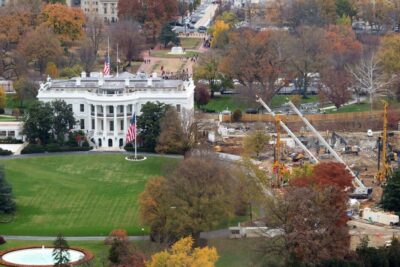
The White House is preparing to submit plans for a new ballroom, envisioned by President Donald Trump, to the National Capital Planning Commission (NCPC) before the year concludes. This development comes approximately three months after construction first began. Will Scharf, the chairman of the NCPC and a senior aide to Trump, announced during the panel's monthly meeting that he expects the plans to be filed in December. “Once plans are submitted, that’s really when the role of this commission, and its professional staff, will begin,” Scharf remarked.
In a separate update, the White House confirmed that architect Shalom Baranes has joined the project as the administration transitions into a new construction phase. Baranes, whose firm is based in Washington, D.C., has a portfolio that includes significant federal properties, such as the Pentagon and the Treasury buildings. “As we begin to transition into the next stage of development on the White House Ballroom, the Administration is excited to share that the highly talented Shalom Baranes has joined the team of experts to carry out President Trump’s vision on building what will be the greatest addition to the White House since the Oval Office — the White House Ballroom,” said White House spokesperson Davis Ingle in an emailed statement. He added that Baranes' extensive experience would be invaluable for the project.
The initial architectural firm, McCrery Architects, remains involved as a consultant. If completed as planned, the proposed ballroom would span 90,000 square feet, nearly double the size of the White House itself, with the capacity to host up to 999 attendees. The project’s estimated cost has escalated from an initial $200 million to approximately $300 million. Trump has stated that this project will not burden taxpayers, as it is being financed entirely through private donations from individuals he describes as “patriots,” corporations, and his own funds. However, he has not disclosed how much he is personally contributing.
A list released by the White House identifies 37 donors, including notable figures from various sectors: crypto billionaires, sports team owners, influential financiers, and supporters of Republican causes. Trump's long-standing desire for a ballroom stems from frustrations with the limitations of existing spaces for hosting large events, such as the State Dining Room and the East Room. In a recent dinner honoring Saudi Arabia's Crown Prince Mohammed bin Salman, Trump expressed disappointment over the lack of capacity, stating, “I only wish we had about 2,000 more seats. We would have filled every one of them two times over.”
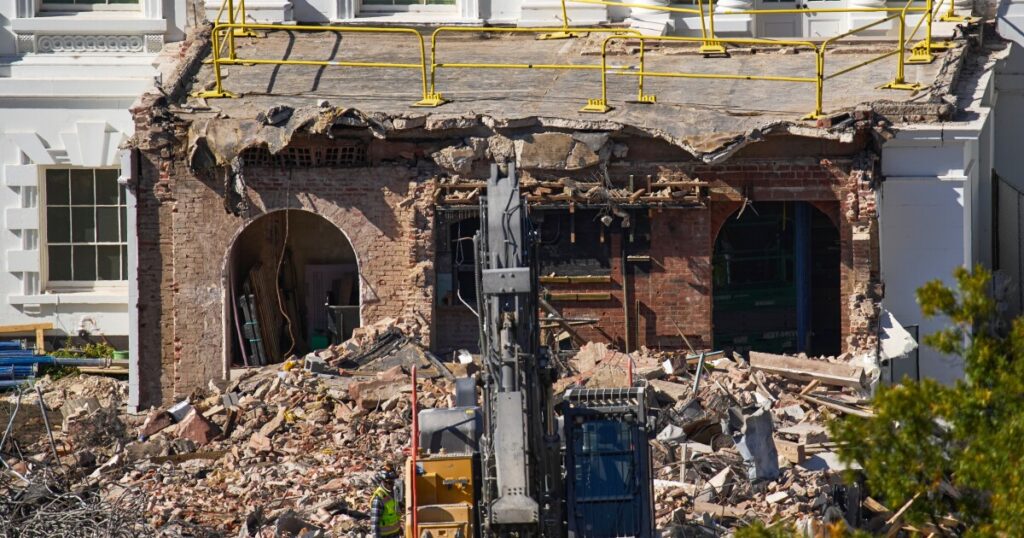
The construction timeline has already seen some significant actions. In September, Trump initiated site preparation work for the ballroom ahead of receiving formal approval from the NCPC, which governs construction on government property. Scharf clarified that the commission's jurisdiction only extends to above-ground construction, which has led to some controversy regarding the demolition of the East Wing, a space traditionally used by the First Lady and her staff. Following its demolition, former chair of the commission L. Preston Bryant Jr. noted that the approval process typically involves four stages, starting with early consultations.
While construction continues, the former East Wing staff have been relocated to other areas within the White House and to an adjacent office building. The sounds of ongoing construction can be heard amid the usual hustle and bustle of the White House, signaling a shift in how this historic building will serve in the future.
As these developments unfold, the implications of transforming a key part of the White House into a grand ballroom are multifaceted. Not only does it reflect the current administration's vision for larger ceremonial spaces, but it also raises questions about historical preservation and the future of the White House as a symbol of American governance. The project's completion is anticipated before Trump's term ends in 2029, aligning with his aspirations for both grandeur and functionality within the executive residence.
Trump’s Shocking $300-Million White House Ballroom Makeover: You Won’t Believe Who’s Out!

You Won’t Believe What Holiday Magic Is Transforming Indianapolis’ Factory Arts District This Weekend!

Long Island Real Estate Giant’s Shocking $35M Bankruptcy: Could Your Investment Be Next?

Baron Esterhazy Unveils 5 Shocking Truths About Society You’ll Regret Ignoring!

Mark Cuban’s Bold 'Buy American' Startup Flopped – Here’s the Shocking Reason Why!

Louisiana's $47M Party-Primary Shift: What You MUST Know Before Voting!
You might also like: