
Trump's Shocking NFL Rename Proposal Sparks Outrage—Is ‘Football vs. Soccer’ the Next BIG Scandal?

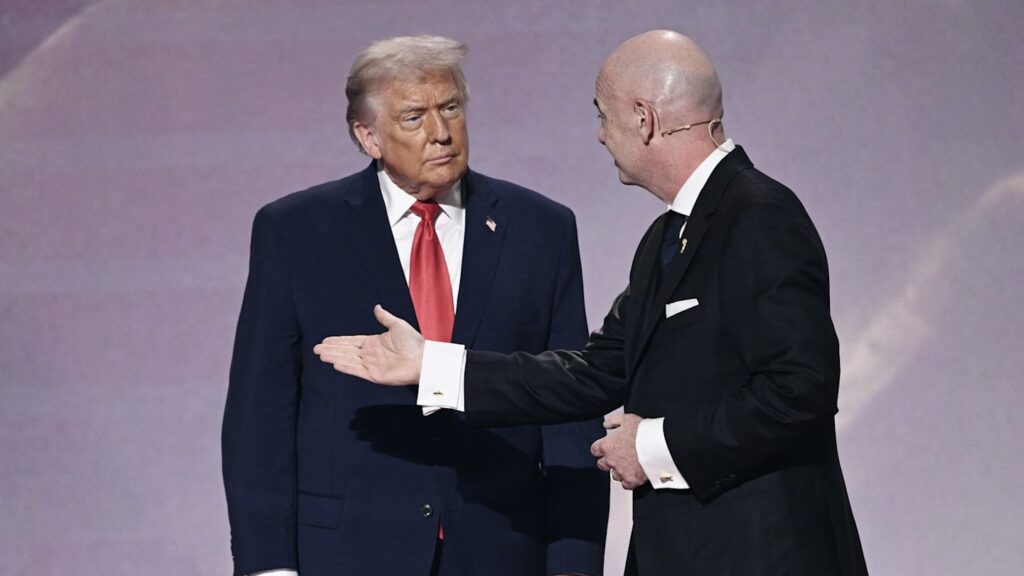
In a bold statement at the draw for the 2026 World Cup, President Donald Trump urged the United States to align itself with the global term “football” rather than “soccer.” Speaking while accepting the FIFA Peace Prize, he suggested that the National Football League (NFL) should reconsider its name to reduce the confusion surrounding the terminology used for the world’s most popular sport.
The debate over “football” versus “soccer” has long divided sports fans across the globe. While most countries refer to the sport as football, the United States has retained the term soccer, which has its roots in Britain. In fact, the term “soccer” originated as a colloquial abbreviation of "association football," a designation used to differentiate it from rugby football. This distinction was necessary in Britain to avoid confusion, as both sports share similar origins.
In his remarks, Trump emphasized the growing popularity of soccer in the U.S., stating, “When you look at what has happened to football in the United States, which is soccer in the United States, we seem to never call it [football] because we have a little bit of a conflict with another thing that’s called football.” He continued by questioning the current designation of the NFL, saying, “But when you think about it, shouldn’t it really be called ... this is football, there’s no question about it. We have to come up with another name for the NFL. It really doesn’t make sense when you think about it.”
Despite the NFL's longstanding name, established in 1922, the sport of "gridiron football" has taken root in American culture, overshadowing association football. Historically, as gridiron football rose in prominence, the term “football” became synonymous with American football in the U.S., leading to the adoption of “soccer” to describe the sport known globally as football.
The United States’ soccer narrative dates back to the late 19th century, but it wasn’t until the 20th century that the sport started to gain serious traction. In 1945, the United States Football Association evolved into the United States Soccer Football Association, eventually becoming the United States Soccer Federation in 1974. Today, major leagues and a growing fan base highlight the sport’s increasing relevance in American sports culture.
Trump’s call to action reflects a broader trend of growing interest in soccer within the nation, especially with the upcoming 2026 World Cup set to be co-hosted by the United States, Canada, and Mexico. This tournament is expected to draw significant attention to soccer, providing an opportunity for the sport to further penetrate American culture.
The conversation around terminology isn’t just semantic; it touches on issues of identity and cultural perception. As the United States continues to grapple with its dual identity in sports, the question remains whether a shift in language could signify a deeper acceptance and integration of soccer into the American sports landscape. With the FIFA Peace Prize highlighting the sport's global significance, the potential for soccer to establish a more prominent foothold in the U.S. could be on the horizon.
As the nation prepares for the World Cup, this discussion around names may seem trivial to some, but it represents a larger cultural shift—a recognition of the sport that has captivated billions worldwide. How the U.S. responds to this challenge may shape the future of soccer in America and its relationship with the term “football.”
Access Denied? This Shocking Reason Will Leave You Speechless! Find Out NOW!
The Untold Secrets of Joseph B. Greiner: What Made Him a Real Estate Legend? You'll Be Shocked!

You Won't Believe Why Governor Sanders Chose Ro Arrington as Arkansas' New Finance Chief!

You Won't Believe the $10 Million Home That Sold This Week—Find Out Which One!
Kevin Durant’s SHOCKING Admission About Wilt Chamberlain's Record Will Leave You Breathless!
US Loses 32K Jobs Amid GDP Surge – Is This the Secret to Trump's Unseen Victory?
You might also like: