
Trump's Shocking Mistake in Davos: Why Calling Greenland 'Iceland' Could Change Everything!

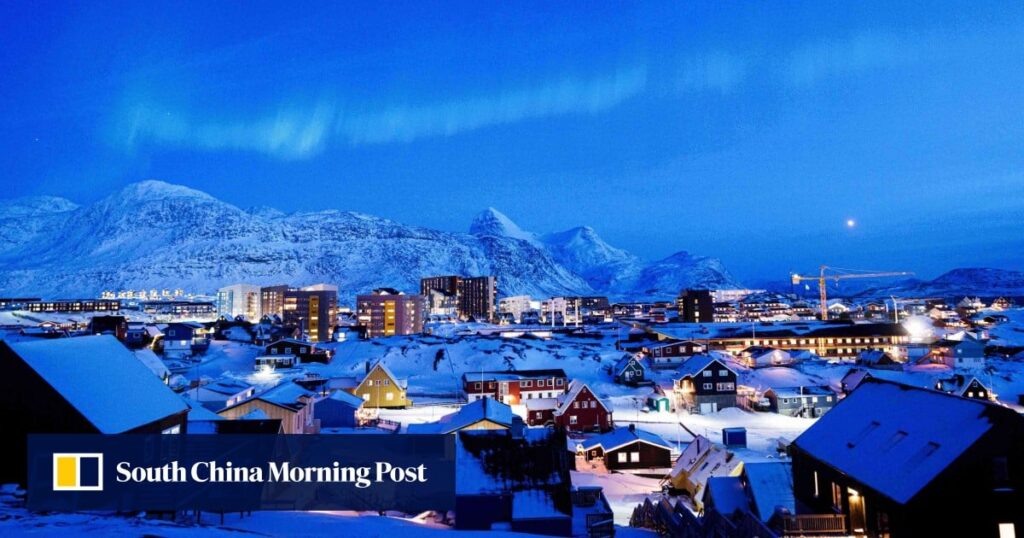
In a rather bewildering moment during a speech at the World Economic Forum in Davos, Switzerland, President Donald Trump mistakenly referenced “Iceland” multiple times while discussing his aspirations to acquire “Greenland.” This apparent gaffe has drawn considerable attention, with the White House quickly stepping in to deny any confusion on the President's part.
The 79-year-old Republican leader has expressed interest in acquiring Greenland, a large island territory of Denmark, citing concerns about security threats posed by Russia and China in the Arctic region. His comments at the forum, intended to outline a “framework” for a potential deal regarding Greenland, instead highlighted diplomatic tensions with NATO allies, particularly in light of his recent threats to impose tariffs on European nations that opposed his plans.
“I’m helping NATO, and until the last few days, when I told them about Iceland, they loved me,” Trump stated, adding, “They’re not there for us on Iceland – that I can tell you. I mean, our stock market took the first dip yesterday because of Iceland. So Iceland’s already cost us a lot of money.”
It was evident that Trump was referring to Greenland, not Iceland—the smaller, neighboring island well-known for its stunning volcanic landscapes. This mix-up not only raises questions about the President's focus but also underscores the delicate nature of U.S. foreign relations, particularly with European allies.
The ongoing discussions about Greenland are set against a backdrop of rising geopolitical tensions. As Arctic routes become more accessible due to climate change, the region has attracted the attention of world powers, including the U.S., Russia, and China. Trump’s push for acquisition has often been met with skepticism and outright opposition from Denmark and other nations, complicating U.S. efforts to solidify its presence in this increasingly strategic area.
The President's remarks come at a time when the U.S. stock market is sensitive to international developments. Trump's assertion that events in Iceland had a negative impact on the stock market, while perhaps hyperbolic, reflects the interconnectedness of global economies and the potential fallout of diplomatic missteps. As tension mounts, both U.S. investors and international observers are watching closely to see how these geopolitical maneuverings will unfold.
The fallout from Trump's comments may extend beyond mere confusion. Diplomatic relations with NATO countries, which are crucial for American security strategy, appear strained, particularly as Trump’s administration seeks to renegotiate terms that were previously accepted by U.S. allies. The implications of this gaffe highlight not only the importance of clarity in political discourse but also the potential consequences of miscommunication in international relations.
As the story develops, the administration’s handling of both Greenland and its broader foreign policy approach remains critical. For American readers and global observers alike, this incident serves as a reminder of the complexities inherent in international diplomacy and the high stakes involved in U.S. foreign relations.
Election Frenzy: Why Parties Are Spending $1 Billion on Social Media—You Won't Believe the Shocking Reasons!

You Won't Believe the Shocking Reason NBA Star LeBron James Is Considering Retirement Now!

Knicks Shock the NBA: You Won’t Believe How They Humiliated Brooklyn by 54 Points!

Shocking Study Reveals Shingles Vaccine Could Add Years to Your Life – Find Out How!

Why Goodwill Entertainment's Shocking $50M Gamble Could Change Everything—Are You Missing Out?

Mark Zuckerberg’s $2 Billion Gamble Backfires: Customers of This Chinese Company Are Furious—Find Out Why!
You might also like: